Whiskey Highball Guide: Master the Japanese Art of Mizuwari


Discover how to make the perfect whiskey highball with Japanese techniques. Learn about Suntory tradition, ice craftsmanship, ratios, and highball machines for the ultimate refreshing cocktail.
Whiskey Highball Guide: Master the Japanese Art of Mizuwari
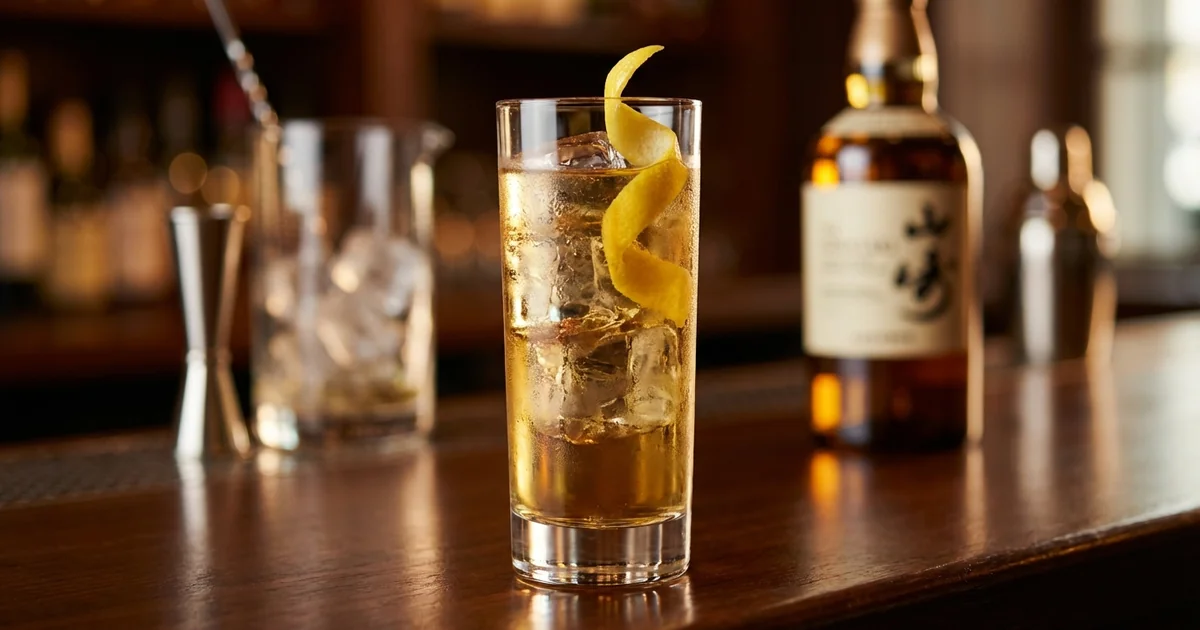
The whiskey highball is deceptively simple: whiskey, soda water, ice. Yet in Japan, this humble combination has been elevated to an art form, a ritual as precise as the tea ceremony and as culturally significant as sake. What the Japanese call "mizuwari" (literally "mixed with water") represents not just a cocktail but a philosophy of restraint, balance, and respect for ingredients.
Key Takeaways
- The Japanese highball elevates a simple whiskey and soda into an art form through meticulous technique
- Ice quality and technique are paramount - use crystal-clear ice and pack the glass tightly
- The ideal ratio is 1:3 to 1:4 whiskey to soda, but adjust based on whiskey strength and preference
- Stir exactly 13.5 times using proper Japanese technique for optimal integration and carbonation
- Highball machines deliver restaurant-quality results by precisely controlling carbonation and temperature
While Americans might casually pour whiskey over ice and top it with club soda, the Japanese approach transforms this simple highball into something transcendent. In Tokyo's izakayas and whisky bars, bartenders craft each highball with surgical precision—measuring ratios to the milliliter, carving crystal-clear ice spheres, and stirring exactly 13.5 times in a specific circular motion. The result is a cocktail so perfectly balanced, so impeccably carbonated, that it has sparked a global highball renaissance.
This comprehensive guide explores the Japanese highball tradition while providing practical techniques you can master at home. Whether you're using Suntory Toki, Buffalo Trace bourbon, or Islay scotch, understanding proper highball technique will forever change how you experience whiskey and soda.
The Japanese Highball Revolution
From Suntory to Global Phenomenon
The modern Japanese highball story begins with Suntory, Japan's pioneering whisky distillery founded in 1923. In the post-war era, as Japanese whisky production soared, Suntory faced a challenge: convincing a sake-drinking nation to embrace whisky.
Their solution was brilliant. Rather than promoting whisky neat—which seemed too strong for Japanese palates—Suntory championed the highball as the perfect introduction. Light, refreshing, lower in alcohol, and ideal for pairing with food, the highball became Japan's gateway to whisky appreciation.
The 1950s-60s Boom: Suntory's aggressive marketing campaign positioned the highball as sophisticated yet approachable. Advertisements featured elegant glassware, perfectly clear ice, and the promise of refinement. The highball became synonymous with modern Japanese business culture—the drink of choice after work at izakayas across the country.
The 1980s-90s Decline: As beer and other beverages gained popularity, highball consumption declined. Whisky became associated with older generations.
The 2008 Renaissance: Suntory launched a revolutionary campaign to revive the highball, targeting younger drinkers with sleek advertising and the introduction of the Kakubin bottle specifically designed for highballs. They emphasized food pairing—particularly with Japanese cuisine—and the drink's refreshing, low-alcohol appeal.
The revival worked spectacularly. By 2010, highball sales had increased 400%, with izakayas across Japan installing specialized highball machines. This Japanese renaissance eventually spread globally, inspiring bartenders worldwide to reconsider this classic cocktail.
Izakaya Culture and the Highball
In Japanese izakayas (casual drinking establishments), the highball holds sacred status. It's the mandatory first drink, the palate cleanser between dishes, the social lubricant that facilitates conversation. Unlike complex cocktails that demand attention, the highball complements food without competing.
Why Izakayas Love Highballs:
- Speed: Can be made quickly during busy service
- Profit Margins: Lower whisky content means better economics
- Food Pairing: The carbonation and lightness complement Japanese cuisine perfectly
- Social Drinking: Lower ABV allows for extended socializing without excessive intoxication
- Consistency: Highball machines ensure every drink is identical
Walk into any izakaya in Tokyo, and you'll hear the distinctive sound of highball preparation—ice clinking against glass, the precise hiss of soda, the rhythmic stirring. It's become the soundtrack of Japanese social drinking.
The Classic Whiskey Highball Recipe
At its essence, the highball is minimalist perfection. But perfection requires precision.
Essential Ingredients
The Whiskey:
- 1.5 to 2 oz whiskey (45-60ml)
- Japanese, bourbon, rye, or scotch all work
- Choose based on desired flavor profile
The Soda:
- 4.5 to 8 oz soda water (135-240ml)
- Must be ice-cold (refrigerated, not room temperature)
- Quality matters—premium soda has finer, more persistent bubbles
The Ice:
- Large format cubes or hand-carved ice
- Crystal-clear ice preferred (no cloudiness)
- Pack glass completely—no gaps
The Garnish:
- Lemon peel (most common)
- Lime peel (alternative)
- No garnish (purist approach)
The Golden Ratio
Japanese bartenders typically use a 1:3 to 1:4 ratio of whiskey to soda:
- 1:3 (Stronger): 2 oz whiskey + 6 oz soda
- 1:3.5 (Balanced): 2 oz whiskey + 7 oz soda
- 1:4 (Lighter): 2 oz whiskey + 8 oz soda
The ratio you choose depends on three factors:
- Whiskey Proof: Higher-proof whiskeys need more soda
- Whiskey Character: Bold whiskeys can handle more dilution
- Personal Preference: Some prefer whiskey-forward, others lighter
Pro Tip: Start with 1:3.5 and adjust. The highball should taste balanced—you should taste the whiskey's character but not the alcohol burn.
Step-by-Step Japanese Technique
The Japanese highball method is ritualistic and precise. Here's the authentic approach:
Step 1: Pre-chill Everything
- Place your highball glass in the freezer for 10-15 minutes
- Refrigerate soda water until ice-cold (ideally 34-38°F)
- Have ice ready from freezer, not sitting in ice bucket
Step 2: Pack the Glass with Ice
- Fill glass completely with large ice cubes
- Pack tightly—no gaps between ice pieces
- Ice should reach the rim
- Why: Densely packed ice prevents premature dilution
Step 3: Pre-chill the Glass with Ice
- Once packed, stir ice in the empty glass for 10-15 seconds
- This chills the glass to ice temperature
- Discard any water that accumulates
- Why: Prevents first addition of whiskey from warming
Step 4: Add the Whiskey
- Pour precisely measured whiskey over the ice
- Let it settle for 2-3 seconds
- The whiskey should flow into gaps between ice
Step 5: The Stir (Critical Step)
- Insert bar spoon to bottom of glass
- Stir with a vertical circular motion
- Exactly 13.5 rotations (one half-rotation to finish)
- Use smooth, controlled movements
- Why: Integrates whiskey and chills it without excessive dilution
Step 6: Add Soda Water
- Pour soda very gently down the side of the glass
- Never pour directly onto ice (kills carbonation)
- Fill to rim
- Why: Preserves maximum carbonation
Step 7: One Final Stir
- One single, gentle vertical stir from top to bottom
- Do not over-stir (destroys bubbles)
- Why: Integrates ingredients without sacrificing fizz
Step 8: Express and Garnish
- If using citrus, express the peel over the glass
- Rub around rim
- Drop in or discard (preference varies)
- Serve immediately
Time from Start to Finish: 60-90 seconds maximum
The entire process should feel meditative. Every movement has purpose. This isn't just making a drink—it's practicing precision.
The Science of Ice: Why It Matters
In Japanese highball culture, ice isn't just frozen water—it's the most critical ingredient.
Crystal-Clear Ice vs. Cloudy Ice
Cloudy Ice Problems:
- Contains trapped air and impurities
- Melts faster (lower density)
- Creates off-flavors
- Looks unprofessional
Clear Ice Advantages:
- Denser molecular structure
- Melts much slower
- Pure water taste
- Aesthetic beauty
How to Make Clear Ice at Home:
Method 1: Directional Freezing
- Use an insulated cooler in your freezer
- Fill with filtered or distilled water
- Leave lid off
- Freeze for 24 hours
- Ice freezes from top down, pushing impurities to bottom
- Remove before fully frozen, cut off cloudy bottom
- Cut into large cubes with serrated knife
Method 2: Boiling Method
- Boil water twice, cooling between boils
- Removes dissolved gases
- Freeze in silicone molds
- Results less dramatic than directional freezing but still improved
Method 3: Buy It
- Premium clear ice is now available commercially
- Services deliver clear ice blocks for cocktails
- Most cost-effective if you make highballs frequently
Ice Size and Shape
Large Format Cubes (2x2 inches):
- Best for standard highballs
- Optimal surface-area-to-volume ratio
- Easy to pack tightly
- Most practical for home use
Ice Spheres:
- Even slower melting than cubes
- Aesthetically stunning
- Requires sphere molds
- More difficult to pack tightly (creates gaps)
Hand-Carved Ice:
- Professional Japanese approach
- Carved from large ice blocks with ice picks
- Custom shapes for perfect fit
- Impractical for home use but demonstrates commitment to craft
Avoid Completely:
- Crushed ice (melts instantly)
- Standard ice cube trays (too small, melt too fast)
- Ice that's been sitting in freezer for weeks (absorbs odors)
The Tight Packing Technique
Simply dropping ice into a glass isn't enough. Japanese bartenders pack ice with precision:
- Select ice pieces of similar size
- Place first piece at bottom
- Add additional pieces to fit snugly
- Gently press and arrange to eliminate gaps
- Continue until glass is completely filled
The Goal: When you look down at your glass, you should see minimal gaps between ice pieces. This creates maximum cold contact with minimal surface area exposed to liquid—the perfect equation for controlled dilution.
Selecting Your Whiskey: Japanese, Bourbon, or Scotch?
The beauty of the highball is its versatility. Different whiskeys create dramatically different experiences.
Japanese Whisky (Traditional Choice)
Japanese whisky was designed for the highball. Its typically lighter, more delicate character shines in this format.
Suntory Toki:
- Purpose-built for highballs
- Light, refreshing, citrus-forward
- Affordable and widely available
- Ratio: 1:3.5
- Garnish: Lemon peel
Suntory Kakubin:
- The original highball whisky
- Medium body with caramel and vanilla
- Slightly more robust than Toki
- Ratio: 1:3.5
- Garnish: Lemon or no garnish
Hibiki Harmony:
- Premium option for special occasions
- Honeyed, floral, incredibly smooth
- Complex enough to appreciate in highball format
- Ratio: 1:3 (let the whisky shine)
- Garnish: Expressed lemon peel, then discarded
Nikka From The Barrel:
- Higher proof (51.4% ABV)
- Rich, spicy, full-bodied
- Can stand up to more dilution
- Ratio: 1:4
- Garnish: Lemon twist
Why Japanese Whisky Works: Japanese distillers prioritized balance and elegance over power. Their whiskies don't disappear in the highball—they transform, revealing new dimensions with dilution and carbonation.
Bourbon (American Style)
Bourbon creates a sweeter, fuller-bodied highball perfect for those who want more robust flavor.
Buffalo Trace:
- Excellent value, widely available
- Vanilla, caramel, oak balance
- Not too sweet, not too spicy
- Ratio: 1:3.5
- Garnish: Lemon or lime
Maker's Mark:
- Wheated bourbon (softer, sweeter)
- Creates an approachable, crowd-pleasing highball
- Great for bourbon newcomers
- Ratio: 1:3.5
- Garnish: Orange peel
Four Roses Small Batch:
- Floral, spicy, complex
- Higher proof requires more soda
- Creates a sophisticated bourbon highball
- Ratio: 1:4
- Garnish: Lemon peel
Wild Turkey 101:
- Bold, spicy, high-proof
- For those who want whiskey character front and center
- Can handle significant dilution
- Ratio: 1:4 or even 1:4.5
- Garnish: Lime wedge
American Highball Character: Bourbon highballs are bolder and sweeter than Japanese versions. The corn-forward mash bill creates a richer mouthfeel that some prefer, especially when pairing with American cuisine.
Scotch (Complex Alternative)
Scotch highballs are less common but offer intriguing possibilities, particularly with lighter styles.
Speyside Scotch (Best Option):
- Glenlivet 12: Light, floral, fruity—excellent in highballs
- Glenfiddich 12: Apple, pear, subtle oak
- Ratio: 1:3.5
- Garnish: Lemon peel
Highland Scotch:
- Glenmorangie 10: Vanilla, citrus, slight spice
- Slightly heavier than Speyside but still works
- Ratio: 1:3.5
- Garnish: Orange peel
Islay Scotch (Advanced):
- Peated scotch creates a dramatically different highball
- Smoky, maritime, not for everyone
- Laphroaig 10 or Ardbeg 10: Only for peat lovers
- Ratio: 1:4 (smoke is powerful)
- Garnish: Lemon peel or none
Avoid: Heavily sherried scotches, expensive single malts (wasted in highballs), grain whisky (too neutral)
Scotch Highball Character: Generally more complex and nuanced than bourbon, but can be overwhelmed by carbonation if too delicate. Choose robust enough expressions that won't disappear.
Soda Water Science: Carbonation Matters
Not all soda water is created equal. In the highball, where soda comprises 75% of the drink, quality is non-negotiable.
Premium vs. Standard Soda
Standard Club Soda (Acceptable):
- Basic carbonated water with added minerals
- Larger, less persistent bubbles
- Carbonation fades quickly
- Examples: Canada Dry Club Soda, Schweppes Club Soda
Premium Soda Water (Preferred):
- Finer, more persistent carbonation
- Often naturally carbonated or higher-pressure carbonation
- Purer water source
- Examples: Topo Chico, San Pellegrino, Q Club Soda
Why It Matters:
- Finer bubbles = more surface area = more carbonation sensation
- Persistent carbonation keeps the highball lively through entire drinking experience
- Better water source means cleaner flavor
Carbonation Level Explained
High Carbonation (Best for Highballs):
- Strong fizz, persistent bubbles
- Creates that crisp, refreshing mouthfeel
- Examples: Topo Chico (very high), Q Club Soda
Medium Carbonation:
- Balanced fizz
- Most standard club sodas
- Acceptable but not optimal
Low Carbonation:
- Gentle fizz that fades quickly
- Some European sparkling waters
- Avoid for highballs
The Japanese Standard: Japanese bartenders often use soda from commercial soda fountains or specialized highball machines that deliver ultra-high carbonation. This creates the signature "sharp" sensation of a perfect Japanese highball.
Temperature is Critical
Ice Cold (34-38°F): Optimal
- Cold liquid holds carbonation better (basic chemistry)
- Provides immediate refreshment
- Less temperature shock to ice (slower melting)
Room Temperature: Avoid
- Carbonation escapes faster
- Warm soda melts ice quickly
- Results in flat, watery highball
Pro Tip: Store soda in the back of your refrigerator (coldest spot). If using canned soda, it's often colder than bottled. Never use warm soda—wait the extra hour for it to chill properly.
Preserving Carbonation
Opening:
- Open soda gently to preserve CO2
- If using bottles, don't shake before opening
Pouring:
- Pour down the side of glass, never directly onto ice
- Gentle stream, not aggressive pour
- Fill in one continuous pour (don't stop and start)
Stirring:
- Minimize stirring after adding soda
- One gentle stir maximum
- Vertical motion is less destructive to bubbles than horizontal
Serving:
- Serve immediately after building
- Don't let it sit (carbonation fades)
- Fresh bubbles are everything
The 13.5-Stir Technique: Japanese Precision
Perhaps no aspect of Japanese highball culture seems more mysterious than the exactly 13.5 stirs. Is it superstition? Tradition? Science?
Why 13.5 Stirs?
The Science: Japanese bartenders discovered through extensive testing that 13.5 counter-clockwise rotations achieves optimal integration of whiskey with minimal dilution. Fewer stirs leave the whiskey and water incompletely mixed. More stirs begin melting ice excessively and reducing carbonation.
The Technique:
- Insert bar spoon (or chopstick in traditional izakayas) vertically to bottom of glass
- Begin stirring in counter-clockwise circular motion
- Keep spoon touching ice and glass wall
- Maintain consistent speed (approximately 1 rotation per second)
- Complete 13 full rotations
- Final half-rotation brings spoon back to starting position
- Lift spoon straight out
The Motion:
- Smooth, controlled, circular
- Spoon stays vertical
- Ice moves in unified mass (not chaotically)
- No aggressive motion
The Purpose:
- Chills whiskey to optimal temperature (25-30°F)
- Integrates whiskey throughout ice matrix
- Adds minimal dilution (approximately 5-10%)
- Prepares glass for soda addition
Counter-Clockwise vs. Clockwise
Most Japanese bartenders stir counter-clockwise, though regional and personal variations exist. The direction matters less than the consistency and control.
Theory: Counter-clockwise stirring (when viewed from above) aligns with natural right-handed motion and creates a slightly different flow pattern around ice.
Reality: Consistency matters more than direction. Choose one direction and perfect it.
Stirring After Soda Addition
After adding soda, the approach changes dramatically:
One Stir Only:
- Single vertical motion from top to bottom
- Chopstick or bar spoon
- Gentle and brief
Why So Minimal:
- Soda is already carbonated—stirring reduces bubbles
- The goal is integration, not dilution
- Over-stirring creates flat highball
Some purist bartenders skip the post-soda stir entirely, trusting that the whiskey (already integrated with ice) will naturally disperse through the soda. Experiment and find your preference.
Highball Machines: Restaurant-Quality at Home
Walk into any modern izakaya in Japan, and you'll see them: sleek highball machines that dispense perfect highballs at the push of a button.
What is a Highball Machine?
Suntory Highball Machines: Specialized equipment that controls two critical variables:
- Temperature: Ultra-chills both whiskey and soda to near-freezing (28-30°F)
- Carbonation: Delivers soda at extremely high pressure for maximum fizz
How They Work:
- Whiskey and soda stored in chilled compartments
- When activated, machine dispenses precisely measured amounts
- Soda is carbonated at high pressure immediately before dispensing
- Result: Consistently perfect highballs, every time
Commercial Versions: Suntory manufactures commercial machines for bars and restaurants. These are the gold standard—essentially a combination of whiskey dispenser, soda fountain, and ice bath.
The Output: Machine-made highballs have distinctly sharper carbonation and colder temperature than hand-built versions. The fizz is almost aggressive—exactly what Japanese highball culture celebrates.
Home Highball Solutions
True commercial highball machines aren't available for home use, but you can approximate the results:
Option 1: SodaStream + Deep Freezer
- Store whiskey in freezer (won't freeze due to alcohol content)
- Carbonate ultra-cold water at maximum setting
- Use within minutes of carbonating
- Result: Very close to machine-quality
Option 2: Soda Siphon
- Professional soda siphons carbonate at higher pressure than SodaStream
- Use CO2 cartridges
- Chill siphon in ice bath before dispensing
- Result: Excellent carbonation, professional feel
Option 3: Kegerator Setup
- Install CO2 line for water
- Carbonate water at 40+ PSI
- Keep whiskey and carbonated water refrigerated
- Result: Best home solution, but expensive
Option 4: Premium Pre-Made Soda + Proper Technique
- Buy highest-quality canned soda (Topo Chico)
- Refrigerate everything (whiskey, soda, glass)
- Perfect your manual technique
- Result: Surprisingly excellent, most practical
Do You Need a Machine?
Pros of Machines:
- Ultimate consistency
- Maximum carbonation
- Professional presentation
- Speed during parties
Cons of Machines:
- Expensive (commercial versions)
- Home versions limited
- Removes ritual and craft
- Requires maintenance
Verdict: For serious highball enthusiasts with budget, home carbonation systems are worthwhile. For most, perfecting manual technique with premium soda delivers 95% of the result at 5% of the cost.
Japanese vs. American Highball Styles
While the basic formula is identical, approach and culture differ significantly.
Japanese Highball Style
Characteristics:
- Lighter ratio (1:4 typical)
- Emphasis on technique and presentation
- Clear ice, pristine glassware
- Minimal or no garnish
- Served ice-cold
- Sipped slowly with food
Cultural Context:
- Part of izakaya meal experience
- Paired with small dishes (yakitori, edamame, sashimi)
- Social drink, not spotlight cocktail
- Represents restraint and refinement
Whiskey Choice: Japanese whisky preferred, but bourbon gaining popularity
Glassware: Tall, thin collins glass or slim highball glass
American Highball Style
Characteristics:
- Stronger ratio (1:3 to 1:3.5 typical)
- More casual approach
- Standard ice acceptable
- Citrus garnish common (lemon or lime wedge)
- Served cold but technique less rigid
- Can be sipped or drunk more quickly
Cultural Context:
- Bar drink or home cocktail
- Less tied to food pairing
- Often consumed as primary drink, not accompaniment
- Represents refreshment and simplicity
Whiskey Choice: Bourbon or rye most common
Glassware: Standard highball glass or collins glass
British/Colonial Highball Legacy
The original highball concept actually comes from late 19th-century America and Britain:
Historical Highball:
- Scotch and soda in British colonial contexts
- Term "highball" refers to tall glass
- Casual, refreshing drink for hot climates
- No elaborate technique—just spirit and soda
Modern Evolution: Japanese culture refined the basic concept into an art form, while American and British traditions remained more casual.
Glassware Matters
The vessel shapes your highball experience more than you might expect.
Traditional Highball Glass
Specifications:
- 10-12 oz capacity
- Tall, narrow shape
- Straight sides
- Thick bottom
Why This Shape:
- Narrow opening concentrates aromatics
- Tall shape shows off carbonation
- Holds ice column efficiently
- Classic aesthetic
Recommended: Spiegelau Perfect Serve Collection, Bormioli Rocco Bodega Glass
Collins Glass
Specifications:
- 12-14 oz capacity
- Taller than highball glass
- Slightly wider
- Straight sides
Why This Works:
- Accommodates larger format (more soda)
- Versatile for multiple cocktail types
- Shows off layering of drink
Use When: You prefer a lighter ratio (1:4 or 1:4.5)
Japanese-Style Slim Glasses
Characteristics:
- Very tall, very narrow
- 10 oz capacity
- Elegant, minimalist
- Often made of thin glass
Why Japanese Bartenders Prefer:
- Aesthetic beauty
- Maximizes carbonation visibility
- Forces slower drinking
- Feels refined in hand
Finding Them: Search for "Japanese highball glass" or "slim tumbler"—many specialty barware retailers now stock them.
Ice Implications
Narrow Glass = Better: Less ice surface area exposed to liquid means slower melting. If you're using imperfect ice, a narrow glass compensates somewhat.
Wide Glass = Worse: More exposed surface area means faster melting. Only use wide glasses if you have perfect ice.
Highball Variations Worth Exploring
Once you've mastered the classic, these variations offer delicious detours.
Ginger Highball
Replace soda water with ginger beer for a spicy, complex twist.
Recipe:
- 2 oz bourbon or Japanese whisky
- 6 oz ginger beer (Fever-Tree preferred)
- Lime wedge garnish
Character: Spicy, warming, more complex than standard highball. The ginger complements whiskey's vanilla and caramel notes beautifully.
Green Tea Highball
Popular in modern Japanese izakayas, this replaces soda with chilled sparkling green tea.
Recipe:
- 2 oz Japanese whisky
- 6 oz sparkling green tea (Ito En Oi Ocha Sparkling)
- No garnish
Character: Earthy, refreshing, lower carbonation. The tannins in tea complement whisky's complexity.
Umeshu Highball
Adds Japanese plum wine for fruity sweetness.
Recipe:
- 1.5 oz Japanese whisky
- 0.5 oz umeshu (plum wine)
- 6 oz soda water
- Lemon peel
Character: Fruity, slightly sweet, very easy drinking. Popular with those who find standard highballs too dry.
Lemon Sour Highball
Adds fresh lemon juice for tartness.
Recipe:
- 2 oz whiskey
- 0.5 oz fresh lemon juice
- 6 oz soda water
- Lemon wheel garnish
Character: Tart, refreshing, similar to a whiskey sour but lighter. The carbonation adds textural interest.
Shiso Highball
Incorporates shiso (Japanese herb) for aromatic complexity.
Recipe:
- 2 oz Japanese whisky
- 3-4 fresh shiso leaves (muddled gently)
- 6 oz soda water
- Shiso leaf garnish
Character: Herbaceous, aromatic, uniquely Japanese. Shiso has minty-basil notes that complement whisky beautifully.
Pairing Highballs with Food
The Japanese elevated highballs specifically because they pair so well with food.
Why Highballs Pair Well
Carbonation: Cleanses palate between bites Low ABV: Won't overwhelm subtle flavors Refreshing: Provides contrast to rich or fatty foods Lightness: Doesn't compete with food
Japanese Cuisine Pairings
Yakitori (Grilled Chicken Skewers):
- Best Whiskey: Japanese whisky or bourbon
- Why: Carbonation cuts through umami and char
Sashimi:
- Best Whiskey: Light Japanese whisky (Toki)
- Why: Delicate fish needs delicate whiskey
Tempura:
- Best Whiskey: Any style
- Why: Carbonation refreshes palate after fried food
Ramen:
- Best Whiskey: Bourbon or robust Japanese whisky
- Why: Rich broth needs bold flavors
Edamame:
- Best Whiskey: Any style
- Why: Classic izakaya pairing—salty and refreshing
Western Cuisine Pairings
Burgers:
- Best Whiskey: Bourbon
- Why: American whiskey with American food
BBQ:
- Best Whiskey: Bourbon or rye
- Why: Sweet and smoky flavors complement each other
Fried Chicken:
- Best Whiskey: Bourbon or Japanese whisky
- Why: Carbonation cuts richness
Oysters:
- Best Whiskey: Scotch or Japanese whisky
- Why: Minerality complements brininess
Frequently Asked Questions
Conclusion: The Art of Simplicity
The whiskey highball proves that sophistication doesn't require complexity. With just whiskey, soda, and ice, you can create something transcendent—but only if you respect the details.
The Japanese understood this intuitively. By elevating the humble highball through meticulous technique, they transformed a simple mixed drink into a meditation on balance, restraint, and craft. The ritual of carefully packing ice, measuring precisely, stirring exactly, and pouring gently isn't pretension—it's the recognition that details matter.
Whether you're using Suntory Toki in a Tokyo izakaya, Buffalo Trace at your home bar, or Laphroaig at a Scottish pub, the principles remain constant: quality ingredients, proper technique, and respect for the drink's essential simplicity.
Master the classic formula first. Understand how ice quality affects dilution. Learn why carbonation matters. Practice the stirring technique until it becomes muscle memory. Then experiment—try different whiskeys, adjust ratios, explore variations.
The perfect highball isn't about following rules dogmatically. It's about understanding principles well enough to make the drink your own. The Japanese highball tradition offers a template for excellence, but your perfect highball is the one you most enjoy drinking.
Now clear some space in your freezer for those glasses, buy quality soda, and start practicing. The whiskey highball awaits—simple, refreshing, endlessly rewarding. For more whiskey cocktails to explore, check out our guides to the Whiskey Sour and Old Fashioned.
Cheers, or as they say in Japan, "Kanpai!"
Tags:

About James
Spirits & Whiskey Expert at Hero Cocktails, passionate about crafting exceptional cocktails and sharing mixology expertise.