Gin Rickey Recipe: Zero-Sugar Classic
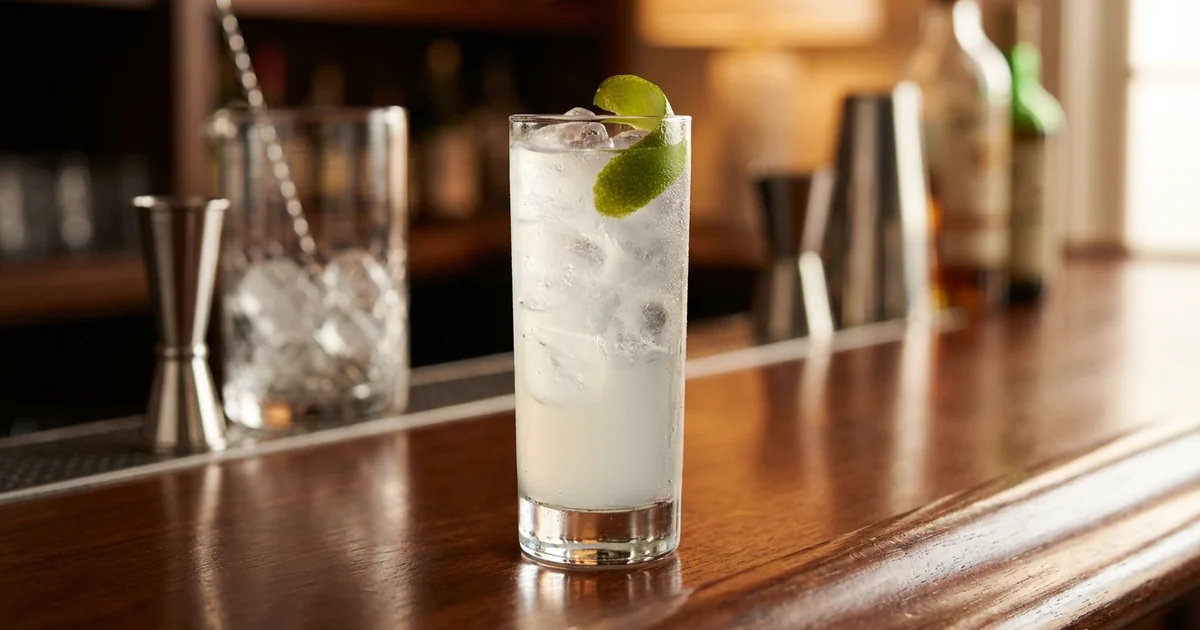
Master the Gin Rickey recipe with gin, fresh lime, and soda water. Zero sugar, 110 calories, perfect refresher. Washington DC history and technique.
Advertisement
Gin Rickey Recipe: The Original Zero-Sugar Classic
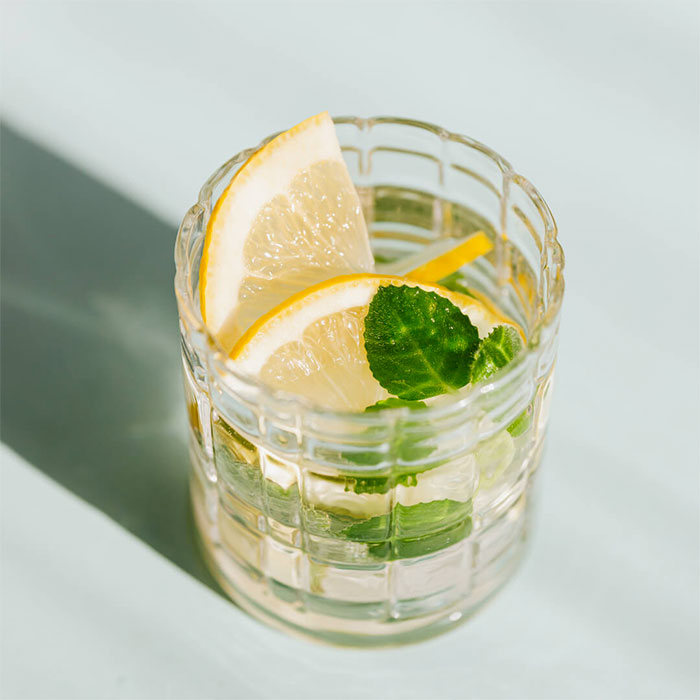
In an era of craft cocktails loaded with house-made syrups, liqueurs, and sweeteners, the Gin Rickey stands as a refreshing reminder that simplicity can be sophisticated. With just three ingredients—gin, fresh lime, and soda water—this Washington DC original delivers maximum refreshment with zero added sugar. It's the cocktail equivalent of minimalist architecture: every element matters, nothing is wasted.
Key Takeaways
- The Gin Rickey contains zero sugar, making it one of the lowest-calorie classic cocktails
- Created in 1880s Washington DC by bartender George Williamson for Colonel Joe Rickey
- Fresh lime juice is essential - never use bottled lime juice or add sugar
- Premium soda water quality dramatically impacts the final drink
- The Bourbon Rickey was the original version before gin became the standard
Created in the sweltering summers of 1880s Washington, when air conditioning didn't exist and politicians needed something crisp to survive Capital humidity, the Gin Rickey became America's original health-conscious cocktail. Over a century later, it remains the perfect choice for anyone seeking a clean, refreshing drink that doesn't sacrifice flavor for fewer calories.
The Classic Gin Rickey Recipe
The beauty of the Gin Rickey recipe lies in its radical simplicity. Unlike its cousin the Tom Collins recipe, which adds simple syrup, the Rickey celebrates the natural tartness of lime balanced only by gin's botanicals and soda's effervescence.
Ingredients:
- 2 oz London Dry gin
- Half a fresh lime (approximately 0.75 oz juice)
- 4-5 oz club soda (chilled)
- Ice cubes
Glassware: Highball glass (10-12 oz)
Garnish: The spent lime shell (traditional) or fresh lime wheel
Instructions:
- Fill a highball glass with ice cubes to the rim
- Pour the gin directly into the glass over ice
- Squeeze the lime half directly into the drink, getting every drop of juice
- Drop the spent lime shell into the glass (this is traditional and adds aromatic oils)
- Top with cold club soda (4-5 oz depending on glass size)
- Stir gently once or twice with a bar spoon to integrate
- Serve immediately
Time: 2 minutes | ABV: Approximately 12-14% | Calories: Approximately 110-120
The key distinction: no sugar, no sweetener, no simple syrup. The Gin Rickey is intentionally tart and refreshing, not sweet. If you find yourself reaching for sugar, you're making a different cocktail entirely.
Colonel Joe Rickey: The Man Behind the Name
Every great cocktail has an origin story, but few are as well-documented as the Gin Rickey. This drink didn't emerge from bartender experimentation—it was created for one specific customer with very particular tastes.
Washington DC, 1883
The setting was Shoomaker's Bar, a popular establishment near the Capitol where politicians, lobbyists, and powerbrokers gathered to conduct the real business of government. Bartender George Williamson presided over the mahogany bar, mixing drinks for Washington's elite.
Among his regular customers was Colonel Joseph Kyle Rickey, a Democratic lobbyist and bourbon enthusiast from Missouri. Rickey was known for his discriminating palate and his dislike of sweet drinks. In the summer heat, he wanted refreshment without the cloying sweetness of the juleps and cobblers that dominated the era.
The Original Creation
George Williamson crafted a drink specifically for the Colonel's preferences:
- Bourbon (Rickey's spirit of choice)
- Fresh lime juice (not the lemon more common at the time)
- Soda water
- Ice
- No sugar whatsoever
The drink was a revelation. Crisp, refreshing, and clean-finishing, it quenched thirst without coating the palate. Colonel Rickey became so associated with the drink that other patrons began ordering "Rickey's drink," which eventually shortened to simply "the Rickey."
The Transition to Gin
While Colonel Rickey drank his version with bourbon, gin quickly became the more popular base spirit. By the 1890s, the Gin Rickey had eclipsed the bourbon original in popularity, particularly during hot summer months when lighter spirits were preferred.
The timing was perfect. The 1890s saw the height of gin's popularity in America, before Prohibition would temporarily derail the spirits industry. The Gin Rickey became the quintessential summer refresher in bars from Washington to San Francisco.
Cultural Impact
By the early 1900s, the Rickey had become so ubiquitous that "rickey" became a generic term for any spirit mixed with lime and soda water. Bourbon Rickey, Rum Rickey, Vodka Rickey—the template was endlessly adaptable.
F. Scott Fitzgerald immortalized the drink in "The Great Gatsby," where characters sip Rickeys during the sweltering summer that serves as the novel's backdrop. Tom Buchanan orders them. Daisy drinks them. The Rickey was the drink of jazz age summers.
Why Fresh Lime Is Non-Negotiable
If there's one place where home bartenders cut corners, it's citrus. Bottled lime juice seems convenient. It's not. For the Gin Rickey, fresh lime isn't just preferred—it's absolutely essential.
The Chemistry of Fresh vs. Bottled
Fresh Lime Juice:
- Bright, vibrant acidity
- Complex citrus oils from the peel
- Natural sugars balancing the tartness
- Aromatic compounds that evaporate quickly
- pH around 2.0-2.2
Bottled Lime Juice:
- Flat, one-dimensional acid
- Preservatives (sodium benzoate, potassium sorbate)
- Cooked flavor from pasteurization
- No aromatic oils
- Often contains added water
The difference is dramatic. Fresh lime juice tastes like citrus. Bottled lime juice tastes like sour water with a chemical aftertaste.
The Squeezed Shell Technique
The traditional Gin Rickey technique—dropping the spent lime shell into the drink—isn't just for show. The lime peel contains aromatic oils that continue to express into the cocktail as it sits. These oils add complexity and aroma that pure juice alone cannot provide.
Proper Technique:
- Cut the lime in half across the equator (not pole to pole)
- Hold the lime half cut-side down over the glass
- Squeeze firmly, rotating to extract maximum juice
- Drop the spent shell into the drink, cut side up
- The oils from the peel will continue to flavor the drink
Lime Selection Tips
Not all limes are created equal:
Best Choice: Key limes (if available)
- More aromatic
- Slightly sweeter
- Authentic to the original recipe era
- Requires 2-3 limes for sufficient juice
Standard Choice: Persian limes (standard supermarket limes)
- Readily available
- Consistent size and juice content
- One lime yields about 1.5 oz juice
- Choose limes that feel heavy for their size
Preparation: Roll the lime on the counter with firm pressure before cutting. This breaks down the internal membranes and yields more juice.
Storage: Keep limes at room temperature until cutting. Cold limes yield less juice and have muted aromatics.
Soda Water Quality: The Unsung Hero
The Gin Rickey is 60-70% soda water. This isn't a minor ingredient—it's the majority of your drink. Quality matters enormously.
What Makes Premium Soda Water Different
Standard Club Soda:
- High carbonation levels that fade quickly
- Added minerals for flavor (sodium bicarbonate, potassium sulfate)
- Often over-mineralized, creating a slightly salty taste
- Aggressive bubbles that dissipate rapidly
Premium Club Soda:
- Finer, more persistent carbonation
- Balanced mineral content
- Clean, neutral flavor
- Longer-lasting effervescence
Top Soda Water Choices
Q Club Soda:
- Purified water base
- Light mineral content
- Fine, persistent bubbles
- Neutral flavor that doesn't compete with gin
- Best overall choice for Rickeys
Fever-Tree Club Soda:
- Spring water from the UK
- Balanced minerality
- Excellent carbonation
- Slightly more mineral-forward than Q
Topo Chico:
- Mexican mineral water
- Higher mineralization
- Very aggressive carbonation
- Interesting option for those who want more mineral character
Pellegrino or Perrier:
- Natural mineral waters
- Can work in a pinch
- More minerality than club soda
- Different character but still refreshing
The Temperature Factor
Cold soda water is crucial. Warm soda water loses carbonation the moment it hits ice, and it dilutes the drink more rapidly as the ice works harder to cool it.
Best Practice:
- Store soda water in the refrigerator, not at room temperature
- Use individual bottles (7-8 oz) rather than 1-liter bottles
- Once opened, soda water loses carbonation within 24-48 hours
- Never use soda from a bar gun at home—bottled is always superior
The Gentle Pour
How you add soda water affects carbonation retention:
- Pour down the side: Tilt the glass slightly and pour soda down the inside surface
- Don't pour from height: Keep the bottle close to the glass
- Stir minimally: One or two gentle lifts with a bar spoon, maximum
- Serve immediately: Carbonation begins degrading the moment soda hits ice
Highball Glass Presentation
Glassware isn't just about aesthetics—it affects how the drink tastes and how long it stays cold and carbonated.
Why a Highball Glass
The traditional Gin Rickey is served in a highball glass (10-12 oz), and there are specific reasons for this choice:
Narrow Diameter:
- Minimizes surface area exposure to air
- Preserves carbonation longer
- Concentrates aromatic oils from lime peel
Tall Profile:
- Allows for plenty of ice without over-dilution
- Creates visual appeal
- Provides room for proper stirring
Capacity:
- Perfect for the 2:4-5 ratio of gin to soda
- Leaves room at the top to prevent spills
- Allows for the lime shell garnish
Alternative Glassware
If you don't have highball glasses:
Collins Glass: Actually ideal—slightly taller, same narrow profile
Double Old Fashioned Glass: Works but use less soda (3-4 oz) to maintain proper ratio
Copa Glass (Spanish style): Interesting presentation, emphasizes aromatics
Avoid: Wide-mouth glasses or coupes—they kill carbonation and lose the drink's character
Pre-Chilling Your Glass
A frozen glass keeps your Rickey colder longer:
- Place glass in freezer for 15-30 minutes before building
- Or fill with ice water, let stand 2 minutes, dump, then build
- Cold glass means less ice melt and better temperature retention
Why the Gin Rickey Is So Refreshing
What makes the Gin Rickey particularly refreshing isn't just temperature—it's the unique combination of elements that make it more thirst-quenching than similar cocktails.
The Science of Refreshment
No Sugar = No Palate Fatigue: Sugar coats the mouth and triggers more thirst. The sugar-free Rickey actually quenches rather than creating the need for another sip.
Carbonation + Citric Acid: The combination of CO2 bubbles and lime's citric acid creates a scrubbing effect on the palate, cleansing taste buds and making each sip as refreshing as the first.
Lower Alcohol Perception: At 12-14% ABV (lower than a martini's 25-30%), the Gin Rickey doesn't create the warming sensation that makes you more thirsty.
Hydration Factor: With 4-5 oz of water (via ice and soda) per drink, you're actually getting meaningful hydration alongside your cocktail.
Low Calorie Appeal
For those watching caloric intake, the Gin Rickey is remarkably virtuous:
Calorie Breakdown:
- 2 oz gin (80 proof): 97 calories
- Fresh lime juice: 8-10 calories
- Club soda: 0 calories
- Ice: 0 calories
- Total: 105-110 calories
Compare this to:
- Margarita: 280+ calories
- Mojito: 240+ calories
- Tom Collins: 180+ calories
- Old Fashioned: 180+ calories
The Gin Rickey delivers full cocktail satisfaction for fewer calories than a glass of wine.
The Summer Heat Solution
Why the Rickey became Washington DC's summer staple:
High Humidity Environments: The tartness cuts through heavy, humid air Zero sugar means no sticky feeling Carbonation provides a cooling sensation
Day Drinking: Lower ABV means you can have multiple without overindulging Refreshing enough to replace water Won't weigh you down like heavier cocktails
Post-Exercise: Actually somewhat hydrating (though water is still better) Replenishes electrolytes via lime juice Light enough not to upset an active stomach
Gin Selection for the Perfect Rickey
Unlike spirit-forward cocktails where gin is the star, the Rickey showcases gin's interaction with lime and bubbles. This changes what you should look for in your gin selection.
London Dry Gin: The Classic Choice
Why It Works:
- Crisp, dry profile doesn't compete with lime's tartness
- Juniper-forward flavor provides botanical backbone
- Clean finish allows carbonation to shine
- Traditional and historically accurate
Recommended Bottles:
Budget-Friendly ($20-25):
- Beefeater London Dry: Classic juniper profile, excellent value
- Gordon's London Dry: What Colonel Rickey would have known
- New Amsterdam: Smooth, neutral, very affordable
Mid-Range ($25-35):
- Tanqueray: Perfectly balanced, iconic Rickey gin
- Bombay Sapphire: Softer juniper, more citrus-forward
- Ford's Gin: Created for classic cocktails, ideal for Rickeys
Premium ($35-50):
- Plymouth Gin: Slightly earthier, fuller body
- Sipsmith London Dry: Traditional pot-still methods, pristine quality
- Beefeater 24: Japanese sencha tea and Chinese green tea botanicals add complexity
Contemporary Gins: Proceed with Caution
New Western or contemporary gins can work but require more thought:
Hendrick's (Cucumber & Rose): Works beautifully—the cucumber actually enhances the refreshing quality. Consider adding a cucumber ribbon garnish.
The Botanist (22 Botanicals): Almost too complex for a Rickey. The simplicity of the drink gets lost in the botanical noise.
Roku (Japanese Botanicals): Interesting option—the yuzu and sencha tea botanicals complement lime beautifully.
Aviation (Lavender-forward): The floral notes fight with lime's tartness. Save it for aviation cocktails.
What to Avoid
Old Tom Gin: Too sweet for a sugar-free cocktail Navy Strength Gin: Too high proof—throws off the delicate balance Sloe Gin: Not actually gin, and far too sweet Flavored Gins: Defeats the purpose of the classic template
For deeper exploration of gin styles and their applications, check out our comprehensive gin cocktails guide featuring London Dry, contemporary, and specialty gin selections.
Classic Variations: Beyond Gin
While the Gin Rickey became the standard, the template works with virtually any spirit. These variations maintain the zero-sugar philosophy while offering different flavor profiles.
Bourbon Rickey: The Original
This is what Colonel Joe Rickey actually drank before gin took over.
Recipe:
- 2 oz bourbon (rye works too)
- Half a fresh lime
- 4-5 oz club soda
- Ice
Best Bourbons for a Rickey:
- Four Roses Yellow Label: Light, fruity, not too heavy
- Buffalo Trace: Balanced, accessible, classic profile
- Old Forester: Spicy kick complements lime beautifully
Flavor Profile: Richer, more robust than gin. The bourbon's caramel and vanilla notes create interesting contrast with lime's brightness.
When to Drink It: Cooler evenings when you want something slightly more substantial.
Vodka Rickey: The Minimal Route
For those who prefer neutrality.
Recipe:
- 2 oz vodka
- Half a fresh lime
- 4-5 oz club soda
- Ice
Vodka Recommendations:
- Tito's Handmade: Clean, neutral, American-made
- Ketel One: Wheat-based, subtle sweetness
- Reyka: Icelandic, exceptionally pure
Flavor Profile: The cleanest expression of lime and soda. Vodka disappears, leaving just refreshment.
Best For: Those who want the refreshment without gin's botanicals.
Rum Rickey: The Tropical Variation
White rum brings a subtle sweetness that works surprisingly well.
Recipe:
- 2 oz white rum
- Half a fresh lime
- 4-5 oz club soda
- Ice
Rum Recommendations:
- Flor de Caña 4 Year: Nicaraguan, smooth, subtle
- Bacardi Superior: Classic, widely available
- Plantation 3 Stars: Blend of Caribbean rums, more complex
Flavor Profile: Lighter than bourbon, more character than vodka. Subtle sugarcane sweetness balances lime without needing added sugar.
When to Drink It: Beach settings, tropical vacations, when you're feeling nostalgic for warmer climates.
Tequila Rickey: The Modern Twist
Blanco tequila's agave character creates fascinating interplay with lime.
Recipe:
- 2 oz blanco tequila
- Half a fresh lime
- 4-5 oz club soda
- Ice
- Optional: Light pinch of salt on the rim
Tequila Recommendations:
- Espolòn Blanco: Excellent value, bright flavor
- Cimarrón Blanco: Traditional, agave-forward
- El Tesoro Platinum: Premium choice, exceptionally smooth
Flavor Profile: Essentially a deconstructed, sugar-free margarita with bubbles. Agave and lime are natural partners.
Best For: Those who love margaritas but want fewer calories and more refreshment.
Mezcal Rickey: The Smoky Adventure
For the adventurous.
Recipe:
- 2 oz mezcal
- Half a fresh lime
- 4-5 oz club soda
- Ice
Mezcal Recommendations:
- Del Maguey Vida: Entry-level, approachable smoke
- Banhez: Balanced, not overly smoky
- Madre Mezcal: Artisanal, complex
Flavor Profile: Smoke meets citrus meets bubbles. Complex, intriguing, not for everyone but fascinating for those who love mezcal.
When to Drink It: When you want to impress cocktail nerds or challenge your palate.
The Great Gatsby Connection
F. Scott Fitzgerald's masterpiece elevated the Rickey from popular drink to literary icon.
Jazz Age Summers
"The Great Gatsby" takes place during one sweltering summer in 1922, and the heat is almost a character itself. As temperatures rise and tensions escalate, characters constantly reach for cold drinks—and Rickeys feature prominently.
Textual References
In Chapter 7, during the climactic confrontation at the Plaza Hotel, Tom Buchanan orders Rickeys. This isn't accidental. The Rickey represents:
Old Money Sophistication: Tom's class knows the established classics, not flashy new drinks
Prohibition Irony: The book takes place during Prohibition, yet cocktails flow freely among the wealthy
Summer Heat: The oppressive temperature that drives characters to desperate actions also drives them to tall, cold drinks
Moral Clarity: The Rickey's zero-sugar purity mirrors the narrative's eventual clarity about characters' true natures
Cultural Context
The 1920s were the Rickey's peak popularity. Despite Prohibition, speakeasies and private clubs served them continuously. The drink represented:
- American cocktail culture before Prohibition changed everything
- Pre-war elegance and simplicity
- A direct link to the 1890s-1900s "Golden Age" of American cocktails
Modern Gatsby Parties
Hosting a Gatsby-themed event? The Rickey is more authentic than most realize:
Period-Accurate Service:
- Highball glasses
- Simple, fresh ingredients
- No elaborate garnishes
- Served cold but not frozen
- Multiple variations available (guests could choose their spirit)
The Aesthetic: Rickeys fit the jazz age perfectly—they look elegant in a tall glass, they're sophisticated without being pretentious, and they're drinkable enough for a long summer evening of dancing and conversation.
Frequently Asked Questions
Tips for the Perfect Gin Rickey Every Time
Ingredient Quality Hierarchy:
- Fresh lime (most important)
- Premium club soda (second most important)
- Quality gin (important but more forgiving)
- Clean ice (often overlooked)
Temperature Mastery:
- Freeze your glass for 30 minutes before building
- Use ice straight from the freezer
- Keep gin and soda refrigerated
- Work quickly to minimize ice melt
The Gentle Touch:
- Stir only once or twice after adding soda
- Pour soda down the side of the glass
- Never shake a Rickey
- Serve immediately
Seasonal Adjustments:
Summer: Standard recipe, served extremely cold
Winter: Use 1.5 oz gin instead of 2 oz, slightly less soda (3-4 oz), for a less diluted version when you don't need maximum refreshment
Garnish Experimentation:
- Standard: Lime shell only
- Upgraded: Fresh lime wheel on the rim
- Adventurous: Cucumber ribbon alongside lime
- Contemporary: Fresh mint sprig (but this moves it toward mojito territory)
Common Mistakes to Avoid:
- Using bottled lime juice (ruins the drink)
- Adding sugar "to balance it" (makes it a different cocktail)
- Over-stirring (kills carbonation)
- Using flat or warm soda water (kills refreshment)
- Choosing overly botanical gins (competes with the simplicity)
The Rickey Renaissance
After decades of relative obscurity, the Gin Rickey is experiencing renewed appreciation in the craft cocktail era.
Why Modern Bartenders Love It
Ingredient Integrity: The stripped-down formula showcases quality ingredients without hiding behind sweetness or complexity.
Low-ABV Trend: As lighter, sessionable cocktails gain popularity, the Rickey fits perfectly.
Health-Conscious Consumers: Zero sugar appeals to keto, paleo, and low-carb dieters without sacrificing flavor.
Speed of Service: In busy bars, a Rickey takes 30 seconds to make—no shaking, no muddling, no elaborate prep.
Contemporary Interpretations
The Clarified Rickey: Some high-end bars clarify fresh lime juice (removing pulp and cloudiness) for an ultra-clean presentation while maintaining fresh flavor.
The Barrel-Aged Rickey: Pre-batching gin and lime in small oak barrels for 1-2 weeks adds subtle vanilla and wood notes without sweetness.
The Garden Rickey: Adding cucumber, fresh herbs, or even jalapeño while maintaining the zero-sugar profile.
The Japanese Rickey: Using yuzu juice instead of lime with a Japanese gin like Roku for an elegant variation.
For more classic gin cocktails and techniques, explore our comprehensive gin cocktails guide featuring detailed recipes and expert tips.
The Gin Rickey proves that the best cocktails don't need complexity—they need quality ingredients treated with respect. Three components, properly executed, create something far greater than the sum of their parts.
In a world of increasingly elaborate cocktails, the Rickey's radical simplicity is revolutionary. No syrups to make. No exotic ingredients to source. No complicated techniques to master. Just gin, lime, and bubbles.
Make one this afternoon. Feel the Washington heat (or imagine it). Drop that lime shell into the glass. Take the first sip. Understand why this drink survived 140 years with its formula unchanged.
Some things don't need improvement. They just need to be made properly.
Cheers to Colonel Rickey.
Tags:
Advertisement
About Elena
Classic Cocktails & Gin Expert at Hero Cocktails, passionate about crafting exceptional cocktails and sharing mixology expertise.
Advertisement