Sazerac Recipe: Master America's Oldest Cocktail

Learn how to make an authentic Sazerac with our complete recipe guide. Master the rye whiskey technique, absinthe rinse, and Peychaud's bitters traditions.
Advertisement
Sazerac Recipe: New Orleans' Legendary Cocktail
The Sazerac stands as a monument to American cocktail culture—a drink so steeped in history and tradition that it was officially named the official cocktail of New Orleans in 2008. With a heritage dating back to the 1830s, the Sazerac recipe lays claim to being America's first cocktail, predating even the Old Fashioned. This isn't just a drink; it's liquid history, a taste of antebellum New Orleans captured in a glass.
Key Takeaways
- The Sazerac is widely recognized as America's first cocktail, originating in 1830s New Orleans
- The classic recipe requires rye whiskey, though the original used French Cognac
- Peychaud's bitters are essential and non-negotiable for an authentic Sazerac
- The absinthe rinse is a signature technique that defines this cocktail's distinctive character
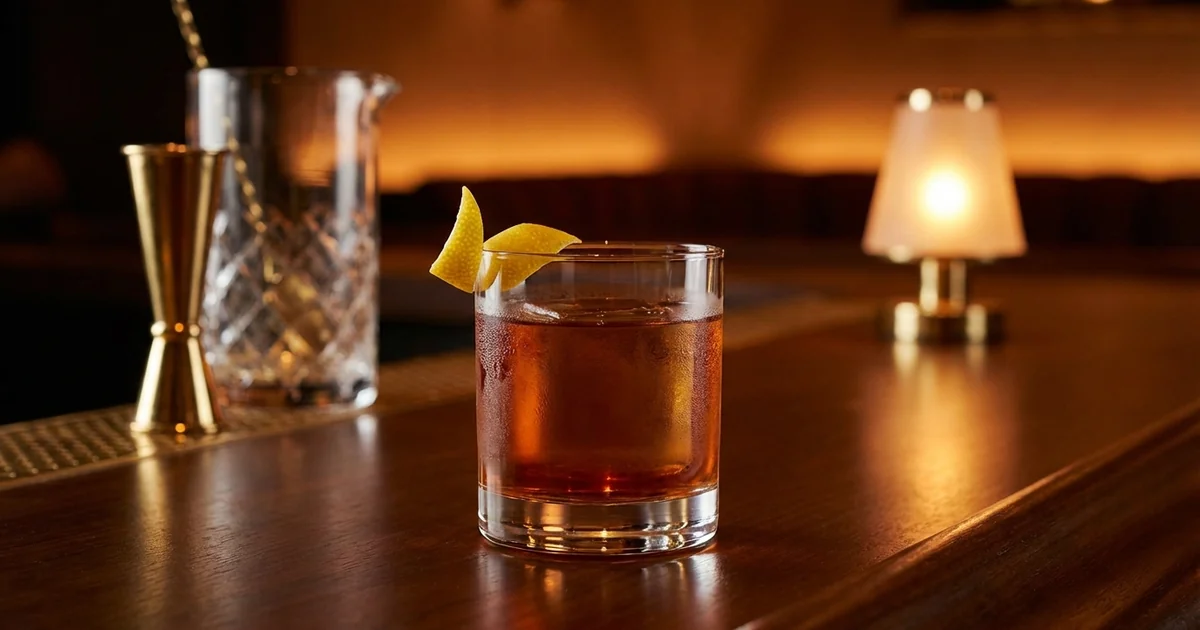
- Traditionally served neat (without ice) in an Old Fashioned glass after stirring
What makes the Sazerac truly remarkable is its ritualistic preparation. From the methodical absinthe rinse to the precise muddling of a sugar cube with Peychaud's bitters, every step carries significance passed down through generations of New Orleans bartenders. The Sazerac is unapologetically boozy, elegantly simple, and absolutely uncompromising—a cocktail that refuses to bend to modern trends while remaining timelessly relevant.
Learning how to make a Sazerac properly means understanding not just the ingredients, but the cultural heritage and meticulous technique that make this cocktail legendary. This is a drink that demands respect, quality ingredients, and careful execution. In return, it offers one of the most sophisticated and flavorful cocktail experiences you'll ever encounter.
The Classic Sazerac Recipe
The authentic Sazerac recipe is deceptively simple, containing just a handful of ingredients that combine to create extraordinary complexity. Here's the classic preparation that has survived nearly two centuries:
Ingredients:
- 2 oz rye whiskey
- 1 sugar cube (or 1/4 oz simple syrup)
- 3-4 dashes Peychaud's bitters
- Absinthe or Herbsaint (for rinse)
- Lemon peel
- Ice (for stirring only, not serving)
Instructions:
- Fill an Old Fashioned glass with ice and water to chill it
- In a separate mixing glass, place the sugar cube
- Add Peychaud's bitters directly onto the sugar cube
- Add a small splash of water and muddle until the sugar dissolves completely
- Add the rye whiskey and ice to the mixing glass
- Stir for 30-40 seconds until well-chilled
- Discard the ice water from the Old Fashioned glass
- Pour a small amount of absinthe into the chilled glass and swirl to coat the interior
- Discard the excess absinthe
- Strain the whiskey mixture into the absinthe-rinsed glass (no ice)
- Express the lemon peel over the drink by twisting it skin-side down
- Discard the peel or rub it around the rim (traditionally not placed in the drink)
The result is a beautifully aromatic cocktail with layers of anise, spice, citrus, and the warm complexity of rye whiskey. The Sazerac is served neat—without ice in the glass—which is crucial to the authentic experience. For more essential bar techniques, see our guide on cocktail techniques for beginners.
The History of the Sazerac: America's First Cocktail
The Sazerac's origin story is as colorful and complex as New Orleans itself. The drink traces its lineage to 1838, when Antoine Amédée Peychaud, a Creole apothecary, began serving a proprietary blend of bitters mixed with French Cognac in his pharmacy at 437 Royal Street in the French Quarter.
Peychaud served these medicinal tonics in a double-ended egg cup called a "coquetier" (French for egg cup), which Americans supposedly mispronounced as "cocktail"—potentially giving us the term we use today. Whether or not this etymology is accurate, the connection between Peychaud and early American cocktail culture is undeniable.
The drink took its current name from the Sazerac Coffee House, a popular New Orleans establishment that opened in 1850. The bar began serving Peychaud's creation using Sazerac de Forge et Fils Cognac, a brand imported from France. The combination was so successful that the drink became known simply as a "Sazerac."
The Great Spirit Switch
The Sazerac underwent a fundamental transformation in the 1870s and 1880s when the phylloxera epidemic devastated French vineyards, making Cognac scarce and expensive. American rye whiskey became the substitute, and the spirit swap stuck. Today, rye is considered the standard base for a Sazerac, though Cognac versions remain a respected variation that honors the cocktail's origins.
The absinthe component entered the recipe sometime in the mid-to-late 19th century, adding the distinctive anise character that defines the modern Sazerac. When absinthe was banned in the United States in 1912, New Orleans entrepreneur J. Marion Legendre created Herbsaint as a legal substitute, cementing the connection between this anise-flavored spirit and the Sazerac tradition.
The Sazerac Bar Legacy
No discussion of Sazerac history is complete without mentioning the Sazerac Bar in the Roosevelt Hotel (now the Roosevelt New Orleans). Opened in 1949, this Art Deco masterpiece became the spiritual home of the Sazerac cocktail, where bartenders elevated the drink to an art form. The bar's meticulous standards and theatrical preparation style influenced generations of bartenders and helped enshrine the Sazerac as a quintessential New Orleans experience.
Rye Whiskey vs Cognac: Understanding the Base Spirit
The choice between rye whiskey and Cognac fundamentally shapes your Sazerac experience. Understanding both options allows you to appreciate the cocktail's evolution and choose the version that speaks to your palate.
Rye Whiskey: The Modern Standard
Rye whiskey brings spicy, peppery notes with hints of baking spices, citrus, and a drier finish than bourbon. This assertive character stands up beautifully to the anise from the absinthe rinse and the complex botanicals in Peychaud's bitters. The result is a bold, masculine cocktail with distinctive edge.
Top Rye Choices for Sazerac:
Sazerac Rye (naturally) is the most historically appropriate choice, offering a balanced profile with just enough spice without overwhelming the other ingredients. At 90 proof, it's perfectly calibrated for cocktails.
Rittenhouse Rye (100 proof) provides more intensity and bold rye character that some enthusiasts prefer. The higher proof creates a more robust Sazerac that can handle the absinthe rinse without being overpowered.
Bulleit Rye offers an accessible, widely available option with pronounced spice notes and a 90 proof that works excellently in Sazeracs.
Old Overholt represents the budget-friendly classic, a historically significant rye that has been continuously produced since 1810. It's light enough to showcase the other ingredients while providing authentic rye character.
For those exploring more rye-based cocktails, check our guide to the Manhattan cocktail recipe, another classic that showcases rye beautifully. Learn more about rye whiskey options in our bourbon cocktails for beginners guide.
Cognac: The Original Way
The Cognac Sazerac offers an entirely different experience—softer, more elegant, and decidedly French in character. Cognac brings notes of dried fruit, vanilla, oak, and subtle grape sweetness that create a more refined, less aggressive cocktail.
Recommended Cognacs:
Pierre Ferrand 1840 Original Formula is historically recreated specifically for classic cocktails and works magnificently in a Cognac Sazerac.
Rémy Martin VSOP provides excellent quality at a reasonable price point, with sufficient complexity to shine in cocktails without overwhelming the bitters and absinthe.
Hennessy VS offers a widely available, consistent option that delivers authentic Cognac character suitable for mixing.
Some modern bartenders split the base, using 1 oz rye and 1 oz Cognac to bridge the old and new traditions, creating a hybrid Sazerac that captures both the spicy American character and the elegant French heritage.
Peychaud's Bitters: The Non-Negotiable Ingredient
If there's one ingredient you absolutely cannot substitute in a Sazerac recipe, it's Peychaud's bitters. These distinctive red bitters are as essential to the Sazerac as the glass itself. Created by Antoine Amédée Peychaud in the 1830s from a secret family recipe brought from Saint-Domingue (modern-day Haiti), Peychaud's bitters define the Sazerac's flavor profile.
What Makes Peychaud's Unique
Unlike the ubiquitous Angostura bitters, Peychaud's offers a lighter, more floral character with pronounced anise notes, hints of cherry, and a distinctive sweetness. The bright red color also contributes to the Sazerac's subtle pink hue when muddled with the sugar cube.
The flavor profile includes gentian root (for bitterness), anise, cherry, and various proprietary botanicals. This combination creates an aromatic complexity that complements rather than competes with the absinthe rinse. Using Angostura or other aromatic bitters fundamentally changes the cocktail—it might be delicious, but it's not a Sazerac.
Proper Bitters Technique
The traditional method calls for adding 3-4 dashes of Peychaud's directly onto the sugar cube before muddling. This ensures the bitters fully integrate with the sugar, creating a concentrated flavor base that disperses throughout the drink when the whiskey is added.
Some bartenders prefer to add one additional dash of Angostura bitters alongside the Peychaud's for extra complexity, though this is a modern innovation that purists debate. Try both ways and decide which version you prefer.
Mastering the Absinthe Rinse Technique
The absinthe rinse is perhaps the most distinctive and theatrical element of the Sazerac recipe. This technique coats the glass with a whisper of absinthe, adding aromatic complexity without overwhelming the drink with anise flavor.
What is an Absinthe Rinse?
An absinthe rinse involves coating the interior of your serving glass with a small amount of absinthe (typically 1/4 oz or less), then discarding the excess. This leaves behind just the essence of absinthe—the aromatic oils clinging to the glass walls—which influences every sip without dominating the flavor profile.
How to Execute the Perfect Rinse
Traditional Method:
- Pour about 1/4 oz of absinthe into your chilled Old Fashioned glass
- Tilt and rotate the glass to coat the entire interior surface
- Continue swirling until the glass is completely coated
- Discard the excess absinthe (into a small waste vessel)
Atomizer Method: Some modern bars use a small atomizer or spray bottle to mist absinthe into the glass. This provides even lighter coverage and reduces waste. Simply spray 2-3 spritzes into the chilled glass and proceed with building the drink.
Common Mistakes:
- Using too much absinthe, which overpowers the whiskey
- Skipping the rinse entirely, which removes a defining characteristic
- Adding absinthe directly to the mixing glass instead of rinsing (creates an overly anise-forward drink)
Absinthe vs Herbsaint
Absinthe is the historically accurate choice now that it's legal again in the United States. Real absinthe contains anise, fennel, and wormwood (Artemisia absinthium), creating a complex herbal profile with that distinctive green fairy mystique. Recommended brands include Pernod Absinthe, St. George Absinthe Verte, and Kübler Absinthe Supérieure.
Herbsaint was created in New Orleans specifically as an absinthe substitute during the ban era (1912-2007). Made without wormwood but capturing similar anise and herbal flavors, Herbsaint has become synonymous with New Orleans cocktail culture. Many locals still prefer it for Sazeracs, considering it the authentic New Orleans choice.
Pastis can work in a pinch, though it's sweeter than absinthe or Herbsaint. Ricard or Pernod Pastis are acceptable substitutes when proper absinthe isn't available.
Sugar Cube Muddling: Technique Matters
The ritual of muddling a sugar cube with Peychaud's bitters is central to the Sazerac experience. This method predates simple syrup's convenience and contributes both to the drink's flavor and its ceremonial preparation.
Why Use a Sugar Cube?
Sugar cubes dissolve more slowly than simple syrup, creating a slightly different texture and sweetness distribution throughout the cocktail. The act of muddling also serves a practical purpose: it helps disperse the bitters and begins the mixing process before the whiskey is added.
The rough texture of a sugar cube also provides an abrasive surface that helps extract maximum flavor from the bitters. As you muddle, the sugar crystals help break down and distribute the botanical compounds in the bitters more effectively than simply stirring with liquid syrup.
Proper Muddling Technique
- Place one sugar cube in the bottom of your mixing glass
- Add 3-4 dashes of Peychaud's bitters directly onto the cube
- Add just a small splash of water (about 1/4 oz)
- Use a muddler or bar spoon to gently crush and stir the cube
- Continue until the sugar completely dissolves into a pink-tinted liquid
- The mixture should be smooth with no visible sugar crystals
Pro tip: Some bartenders let the sugar cube sit with the bitters for 15-20 seconds before muddling, allowing the bitters to soak into the sugar for easier dissolution.
The Simple Syrup Alternative
For consistency and speed, many modern bars use 1/4 oz of simple syrup instead of a sugar cube. This produces a reliably identical drink every time and eliminates the risk of undissolved sugar crystals. If you choose this method, add the simple syrup and bitters to the mixing glass and stir briefly to combine before adding whiskey.
Rich simple syrup (2:1 sugar to water ratio) can add subtle additional body to the cocktail. Experiment to find your preference.
Proper Glassware and the No-Ice Tradition
The Sazerac's presentation is as important as its ingredients. This cocktail demands specific glassware and serving style that honors its New Orleans heritage.
The Old Fashioned Glass
The Sazerac is traditionally served in an Old Fashioned glass (also called a rocks glass), holding 6-10 oz. The short, wide glass with thick walls provides the perfect vessel for the absinthe rinse and showcases the amber liquid beautifully.
The heavy bottom and substantial feel in hand connect you to generations of New Orleans drinkers who've enjoyed this exact same experience. The wide opening allows the complex aromatics—anise from the absinthe rinse, botanicals from the bitters, citrus from the expressed lemon peel—to reach your nose with every sip.
Why No Ice in the Glass?
One of the most distinctive aspects of the Sazerac recipe is that it's served "up" (without ice) despite being built in a rocks glass. This serving style sets it apart from other whiskey cocktails like the Old Fashioned, which is served over ice.
The reasoning is multi-faceted:
Temperature control: The drink is stirred with ice to chill it thoroughly before straining into the glass. Adding ice would continue diluting the carefully balanced cocktail.
Absinthe rinse preservation: Ice would dilute the delicate absinthe coating inside the glass, diminishing its aromatic contribution.
Traditional presentation: This is how it's always been served in New Orleans, and tradition matters with a cocktail this historic.
Concentrated flavor: The Sazerac is meant to be strong and spirit-forward. Ice would mellow it beyond the intended intensity.
The chilled glass keeps the drink cold through the first several minutes of enjoyment. As it gradually warms, subtle flavor changes occur, revealing different notes as you sip. This evolution is part of the Sazerac experience.
The Lemon Peel Expression: Aromatic Finishing Touch
The final step in crafting a perfect Sazerac is expressing the lemon peel over the drink—a technique that adds crucial aromatic complexity without adding citrus juice to the cocktail. Mastering this technique is part of any bartender's essential skillset, covered in detail in our cocktail garnish guide.
Proper Lemon Peel Expression
- Cut a generous swath of lemon peel (about 2 inches long) using a vegetable peeler or knife
- Trim away any white pith, which adds bitterness
- Hold the peel about 2 inches above the drink, colored side facing down
- Firmly pinch and twist the peel to release the citrus oils
- You should see a fine mist of lemon oil spray across the surface
- Optionally, rub the peel around the rim of the glass
- Traditionally, discard the peel rather than placing it in the drink
To Garnish or Not to Garnish?
This question divides Sazerac purists. The traditional New Orleans approach is to express the lemon peel and discard it, leaving the drink unadorned. The reasoning is that the peel has done its job—releasing aromatic oils onto the drink's surface—and leaving it in would add unnecessary bitterness as it continues to infuse.
However, many modern bars do place the expressed peel in the drink or perch it on the rim for visual appeal. Neither approach is wrong; it's a matter of personal preference and respect for tradition.
Some bartenders compromise by using the peel as a stirrer for the first sip, then removing it. This allows the guest to enjoy the aromatics while preventing over-infusion.
Popular Sazerac Variations
While the classic Sazerac recipe is perfection as-is, creative variations have emerged that honor the original while exploring new flavor territory. For those interested in exploring more classic whiskey cocktails, explore our mint julep recipe guide for another American cocktail icon.
Sazerac Royale
Return to the drink's roots by using Cognac instead of rye whiskey. Follow the exact same preparation method but substitute 2 oz of quality VSOP Cognac for the rye. The result is softer, more elegant, and decidedly French in character. For more on Cognac cocktails, explore our Cognac cocktails guide.
Improved Sazerac
Add 1 bar spoon (about 1/4 oz) of maraschino liqueur to the mixing glass before stirring. This "improved" version adds subtle cherry and almond notes that complement the Peychaud's beautifully. This follows the "improved" cocktail template popular in the late 19th century.
Brandy Sazerac
Use American brandy (such as Laird's Bonded Apple Brandy or St. George California Brandy) as the base spirit. This creates an American take on the Cognac version, with more pronounced fruit character.
De La Louisiane
A close cousin to the Sazerac that includes both rye whiskey and Cognac in equal parts (1 oz each), plus sweet vermouth, Bénédictine, and both Peychaud's and Angostura bitters. This variation transforms the Sazerac into something approaching a Manhattan in complexity. For more on selecting quality vermouth, check our complete vermouth guide.
Tequila Sazerac
An adventurous modern variation using reposado tequila instead of rye. The aged tequila's oak and vanilla notes work surprisingly well with the traditional Peychaud's and absinthe combination.
Sazerac Bar and New Orleans Cocktail Culture
No exploration of the Sazerac would be complete without acknowledging the bars and bartenders who have kept this tradition alive for generations.
The Sazerac Bar
Located in the Roosevelt New Orleans hotel, the Sazerac Bar is the most famous home of this cocktail. Opened in 1949, this Art Deco jewel features walnut paneling, handcrafted murals by artist Paul Ninas depicting Huey Long's carnival, and bartenders who treat the Sazerac with reverence.
Watching a Sazerac Bar bartender prepare the namesake cocktail is witnessing cocktail theater at its finest. Every movement is deliberate, every measurement precise, every step performed with the confidence of someone executing a ritual thousands of times perfected.
Other Notable Sazerac Destinations
The Carousel Bar & Lounge at Hotel Monteleone offers Sazeracs from the only revolving carousel bar in the United States. The slow rotation and jazz music create a quintessentially New Orleans experience.
Arnaud's French 75 Bar is another historic French Quarter establishment where expert bartenders craft impeccable Sazeracs alongside other classic cocktails.
The Bombay Club serves refined Sazeracs in an elegant martini lounge atmosphere, proving this drink works equally well in upscale and casual settings.
Cocktail Heritage and Official Recognition
In 2008, the Louisiana State Legislature named the Sazerac the official cocktail of New Orleans, cementing its cultural significance. The drink appears on UNESCO's list of New Orleans' intangible cultural heritage, recognizing it as an essential part of the city's identity.
This official recognition ensures that the Sazerac will continue to be preserved, celebrated, and perfected by future generations of bartenders and cocktail enthusiasts.
Frequently Asked Questions
What makes a Sazerac different from an Old Fashioned?
While both are spirit-forward whiskey cocktails built with sugar and bitters, the Sazerac includes the distinctive absinthe rinse and specifically requires Peychaud's bitters and rye whiskey. The Sazerac is also served neat (without ice in the glass), while an Old Fashioned is served over a large ice cube. The flavor profiles are distinctly different due to these variations.
Can I make a Sazerac without absinthe?
While technically you can omit the absinthe, you'd be missing the defining characteristic that makes a Sazerac a Sazerac. If absinthe is unavailable, use Herbsaint or pastis as substitutes. Completely omitting it creates a different cocktail—still potentially delicious, but not a Sazerac.
Why must I use Peychaud's bitters specifically?
Peychaud's bitters are integral to the Sazerac's identity and flavor profile. Their unique anise-forward, cherry-like character is irreplaceable. Using Angostura or other bitters creates a fundamentally different cocktail. This is one ingredient where substitution simply doesn't work.
Should I use bourbon instead of rye?
While rye is traditional and preferred by purists, bourbon can work if that's what you have. However, bourbon's sweeter profile changes the cocktail's character significantly. If you're trying to make an authentic Sazerac, invest in a bottle of rye—it's worth it.
How do I store absinthe after opening?
Absinthe is high-proof (typically 45-75% ABV) and shelf-stable. Store it upright in a cool, dark place. Unlike vermouth, absinthe doesn't require refrigeration and will last indefinitely when stored properly.
Can I batch Sazeracs for a party?
You can pre-mix the rye, simple syrup, and bitters in a ratio for multiple servings, but the absinthe rinse and lemon peel expression should be done individually for each glass. For 8 servings, combine 16 oz rye, 2 oz simple syrup, and 24-32 dashes Peychaud's. Stir with ice and strain 2 oz portions into absinthe-rinsed glasses as needed.
What if my Sazerac tastes too strong?
The Sazerac is meant to be a strong, spirit-forward cocktail. If it's too intense for your taste, try adding slightly more sugar (up to 1/2 oz simple syrup), but don't add water or ice to the glass—this defeats the purpose. Alternatively, sip it slowly and let it warm slightly, which opens up the flavors and makes it more approachable.
Is the Sazerac really America's first cocktail?
While this claim is debated by cocktail historians, the Sazerac is certainly one of the oldest documented American cocktails, with clear lineage to the 1830s-1840s. Whether it's technically the "first" is less important than its undeniable influence on American cocktail culture and its survival as a living piece of history.
The Sazerac recipe represents American cocktail craft at its most refined and historically significant. This isn't a drink for casual sipping or rushed preparation—it demands quality ingredients, precise technique, and respect for tradition. From the methodical absinthe rinse to the final lemon peel expression, every step matters in creating the complex, aromatic masterpiece that has captivated drinkers for nearly two centuries.
Whether you choose the classic rye version or explore the original Cognac preparation, whether you visit the Sazerac Bar in New Orleans or recreate the magic at home, this cocktail offers a direct connection to cocktail history. Master the Sazerac, and you're not just making a drink—you're participating in a cultural tradition that spans generations, embodying the spirit and sophistication of New Orleans itself.
The Sazerac survives because it does what the greatest cocktails do: it achieves perfect balance between complexity and simplicity, between strength and elegance, between tradition and timelessness. In an age of elaborate ingredients and complex techniques, the Sazerac reminds us that sometimes the most powerful cocktails are those that have remained essentially unchanged for nearly 200 years. That's a legacy worth drinking to.
Advertisement
About Arthur
Cocktail Historian at Hero Cocktails, passionate about crafting exceptional cocktails and sharing mixology expertise.
Advertisement