Spirit Guide
Amaretto Cocktails: 8 Essential Italian Liqueur Drinks
About Amaretto
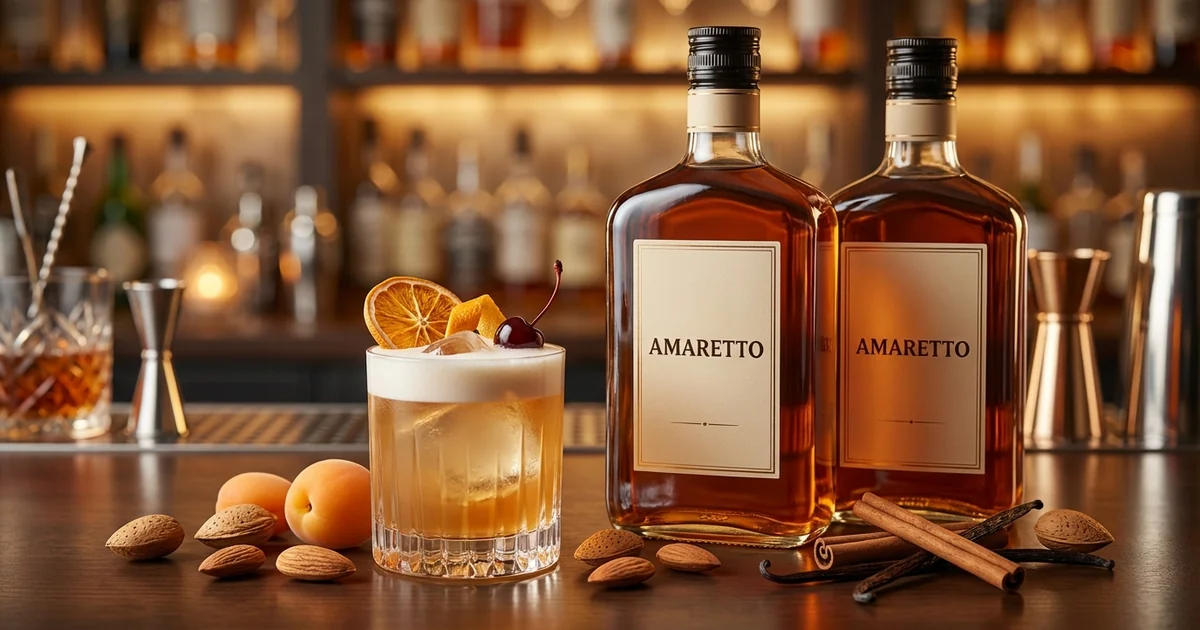
Few liqueurs capture the essence of Italian craftsmanship quite like amaretto. This amber-hued spirit, with its distinctive almond-like sweetness and subtle bitter undertones, has become a cornerstone ingredient in bars worldwide. What makes amaretto particularly compelling is the culinary chemistry behind its signature flavour: despite tasting unmistakably of almonds, authentic amaretto is traditionally made from apricot pits, not almonds. The pits contain amygdalin, a compound that, when processed, produces benzaldehyde — the same aromatic molecule responsible for the almond flavour in marzipan. Whether you're sipping a sophisticated Godfather or indulging in a frothy Amaretto Sour, this versatile liqueur transforms ordinary cocktails into memorable experiences. Its chameleon-like ability to pair with robust whiskeys, brighten citrus drinks, add depth to coffee cocktails, and create luxurious cream-based concoctions makes it one of the most useful bottles on a home bar shelf.
Flavor Notes
What Amaretto tastes like
- Almond-like sweetness — the dominant note: rich, nutty, marzipan character derived from apricot kernel compounds rather than actual almonds
- Subtle apricot fruit — a delicate stone-fruit undertone from the apricot pit base that adds depth beneath the almond foreground
- Vanilla warmth — present in most commercial amarettos, rounding out the nuttiness and preventing the sweetness from becoming one-dimensional
- Bitter almond finish — a gentle, pleasant bitterness from amygdalin compounds that distinguishes quality amaretto from cloyingly sweet imitations
- Caramelised sugar richness — from the burnt sugar colouring used in production, contributing complexity to the sweetness
Buying Guide
What to look for
- Disaronno ($25-30) — the market-leading benchmark; consistent, balanced, and works reliably across all amaretto cocktail applications
- Lazzaroni Amaretto ($25) — more pronounced almond character and less sweetness than Disaronno; excellent in spirit-forward drinks like the Godfather
- Luxardo Amaretto ($30) — nuanced, less sweet profile with subtle bitter almond notes; particularly distinguished in the Amaretto Sour
- Store-brand or own-label amaretto — acceptable for heavily mixed or batch cocktails where cost matters; not recommended for spirit-forward builds
- Avoid artificially flavoured "almond liqueurs" that are not amaretto — they lack the apricot-kernel complexity that makes amaretto distinctive
History
The Story of Amaretto
Amaretto's story begins, according to the most widely told account, in 16th-century Saronno, a town in Lombardy. The legend holds that a local innkeeper mixed apricot kernels, brandy, and herbs to create a gift for Renaissance artist Bernardino Luini, who was painting a fresco for the Sanctuary of Santa Maria delle Grazie. Whether or not this origin tale is literally true, it effectively positions amaretto as a product of the Italian Renaissance — sophisticated, artisanal, and rooted in local ingredients.
The modern amaretto industry consolidated around a handful of producers in the 19th and 20th centuries. Lazzaroni, founded in 1851 in Saronno, produces both the famous Amaretti di Saronno almond biscuits and their liqueur from the same apricot kernel base, maintaining a documented connection between the amaretto tradition and Italian confectionery. Disaronno (originally called "Amaretto di Saronno" until 2001) was commercially produced from the early 20th century and became the dominant global brand through aggressive post-war marketing. By the 1970s and 1980s, Disaronno's distinctive square bottle and the Amaretto Sour cocktail had made the liqueur a staple of American bars.
The craft spirits renaissance of the 21st century brought renewed attention to the category's artisanal roots. Producers like Luxardo — better known for their maraschino liqueur — and smaller Saronno distillers began offering more complex, less sweet amaretto expressions that appealed to bartenders seeking nuance. Today the category sits at an interesting intersection: Disaronno remains the approachable, crowd-pleasing benchmark, while craft alternatives offer the sophistication that contemporary cocktail culture demands.
Key Takeaways
What you’ll learn
- Amaretto is made from apricot pits, not almonds — a fascinating culinary chemistry that creates its signature almond-like flavour
- The Amaretto Sour is the definitive amaretto cocktail, elevated with egg white for silky texture and an optional bourbon float for complexity
- Amaretto pairs beautifully with whiskey, citrus, coffee, and cream — four distinct cocktail families that demonstrate its versatility
- Disaronno dominates the market, but Lazzaroni and Luxardo offer more artisanal, less sweet alternatives worth exploring
- Balance amaretto's inherent sweetness with complementary acidity, spirit depth, or coffee bitterness for best results