Cocktail Techniques for Beginners: Master Fundamentals

Learn essential cocktail techniques for beginners. Master shaking, stirring, muddling, and straining to craft bar-quality drinks at home.
Advertisement
Cocktail Techniques for Beginners: Master Fundamentals
When you're starting your journey into home bartending, it's tempting to invest in premium spirits and exotic ingredients. While quality ingredients certainly matter, the truth is that proper cocktail techniques for beginners can transform even modest bottles into exceptional drinks. A perfectly shaken Daiquiri made with mid-shelf rum will outshine a poorly mixed version using top-shelf spirit every single time.
Key Takeaways
- Proper technique matters more than expensive ingredients for quality cocktails
- Shaking adds aeration and dilution; stirring maintains clarity and texture
- Gentle muddling releases oils from herbs without bitterness
- Understanding when to use each technique elevates your home bartending
- Common mistakes like over-muddling can ruin an otherwise perfect drink
The good news? These essential cocktail techniques for beginners aren't difficult to master. With a bit of practice and understanding of the fundamentals, you'll be crafting bar-quality drinks in your own kitchen. Let's explore the core techniques that every aspiring home bartender needs to know.
The Art of Shaking: More Than Just Vigorous Movement
Shaking is perhaps the most iconic bartending technique, but there's much more to it than dramatically tossing a cocktail shaker around. When done correctly, shaking serves three critical purposes: it chills the drink, dilutes it to the perfect strength, and incorporates air to create a lighter, more refreshing texture.
When to Shake a Cocktail
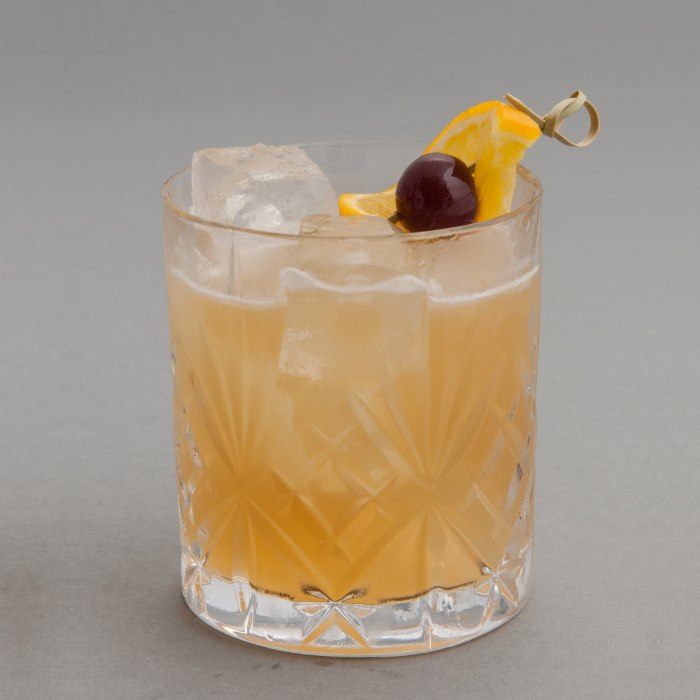
The general rule is simple: shake any cocktail that contains citrus juice, cream, egg whites, or other opaque ingredients. Drinks like Margaritas, Whiskey Sours, Daiquiris, and Cosmopolitans all benefit from the vigorous agitation that shaking provides. The rapid movement emulsifies ingredients that wouldn't naturally blend together, creating a cohesive, well-integrated cocktail.
Before you start shaking, make sure you have the essential bar tools needed for proper technique.
Proper Shaking Technique
Start by filling your shaker tin about two-thirds full with ice. Large, solid cubes work better than small, crushed ice as they dilute more slowly while still providing adequate chilling. Add your ingredients, seal the shaker firmly, and shake with purpose for 12-15 seconds. This isn't a gentle rocking motion—you want to create enough force to break up the ice slightly while aerating the liquid.
The motion should come from your shoulders and core, not just your wrists. Hold the shaker at a slight angle and use a back-and-forth motion rather than just up and down. You'll know it's ready when the exterior of the shaker becomes frosty and almost too cold to hold comfortably.
A common beginner mistake is over-shaking. After about 15 seconds, you've achieved maximum dilution and chilling. Shaking longer will only water down your cocktail without improving it. Listen for the sound of the ice—when it changes from a sharp crack to a more muted, sloshing sound, you're done.
Stirring: The Gentleman's Technique
While shaking gets all the attention, stirring is equally important and often more appropriate for certain cocktails. This technique is all about control, precision, and maintaining the silky texture of spirit-forward drinks.
When to Stir Instead of Shake
The classic bartending wisdom states: "Shake if there's citrus, stir if there isn't." More specifically, stir cocktails that contain only spirits and spirit-based modifiers—drinks like Martinis, Manhattans, Negronis, and Old Fashioneds. These cocktails benefit from gentle dilution and chilling without the aeration and cloudiness that shaking introduces.
Stirring maintains the clarity and viscous, silky texture that makes spirit-forward cocktails so elegant. A properly stirred Martini should be crystal clear, ice-cold, and have a luxurious mouthfeel that a shaken version simply can't match.
Bar Spoon Technique and Timing
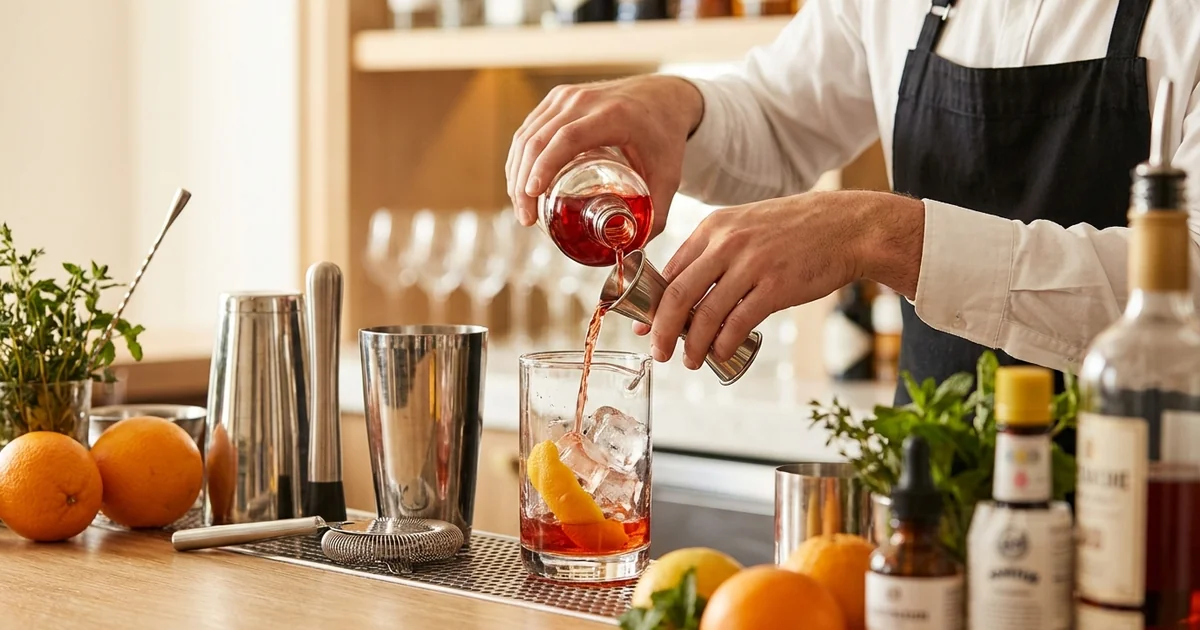
Fill your mixing glass about two-thirds full with ice, then add your ingredients. Using a bar spoon (or any long-handled spoon), place the back of the spoon against the inside wall of the glass. Stir in a smooth, circular motion, keeping the spoon in contact with the glass as it rotates around.
The key is consistency and rhythm. Aim for about 30-40 rotations, which typically takes 30-45 seconds. You're looking for the same frosty exterior on the mixing glass that you'd see with shaking. Some bartenders count rotations, others go by temperature—experiment to find what works for you.
The motion should be almost effortless, with the spoon gliding smoothly around the glass. If you're working hard, you're doing it wrong. Think of it as a meditation rather than a workout.
Muddling: Gentle Persuasion, Not Brutal Force
Muddling is one of the most misunderstood techniques in cocktail making. The goal isn't to pulverize ingredients into oblivion—it's to gently release essential oils and juices without extracting bitter compounds. Learning proper muddling is a cornerstone of cocktail techniques for beginners.
How to Muddle Herbs Properly
When muddling herbs like mint, basil, or cilantro, think "press" not "mash." Place the herbs in the bottom of your shaker or glass, and use a muddler to gently press down and give a slight twist. One or two firm presses are usually sufficient.
Over-muddling herbs is the fastest way to ruin a Mojito or Mint Julep. When you tear the leaves too aggressively, you release chlorophyll and bitter tannins that create an unpleasant, vegetal taste. The leaves should remain mostly intact—you're just bruising them to release their aromatic oils.
Extracting Juice from Fruit
Fruit requires more aggressive muddling than herbs. Citrus wedges, berries, and stone fruit can handle—and benefit from—thorough muddling to extract their juices and flavors. Press down firmly and twist several times until you've broken down the fruit structure and extracted the juice.
For drinks like Caipirinhas or Brambles, you want to fully muddle the citrus to extract not just juice but also oils from the peel. This is where you can apply real pressure without worry.
The Most Common Muddling Mistakes
The biggest error beginners make is treating all ingredients the same. Remember: gentle for herbs, aggressive for fruit. Another common mistake is muddling in the wrong order. Always muddle first, before adding spirits or ice, so you can see exactly what you're doing and adjust as needed.
Straining: The Final Filter
Proper straining ensures your carefully crafted cocktail arrives in the glass without unwanted ice chips, pulp, or herb fragments. There's more to it than just pouring through a strainer. Master this technique to complete your foundation of essential cocktail techniques for beginners.
Hawthorne vs. Julep Strainers
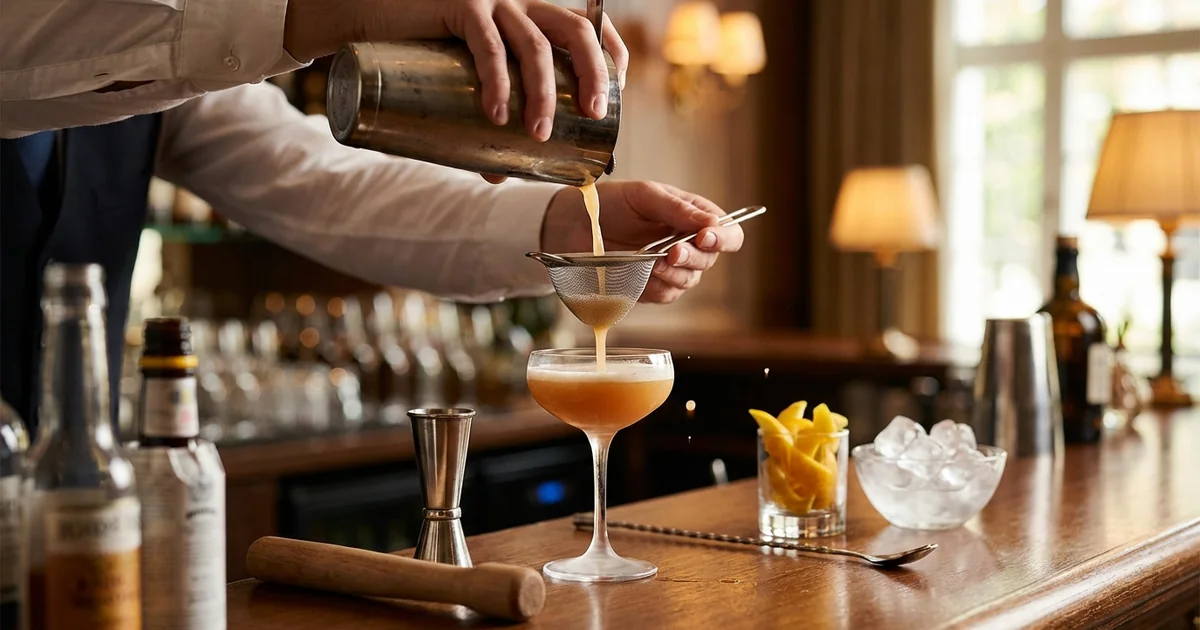
The Hawthorne strainer (the one with the coiled spring) is the workhorse of cocktail straining. It fits snugly over the top of a shaker tin and catches ice and large particles. Use this for any shaken cocktail.
The julep strainer (the perforated, spoon-shaped strainer) is designed for mixing glasses and works best with stirred cocktails. Its concave shape fits perfectly into a mixing glass, holding back ice while allowing the cocktail to flow through.
Double Straining for Refinement
For cocktails with muddled ingredients or those that need an extra-smooth texture, double straining is essential. After straining through your primary strainer, pour the cocktail through a fine-mesh sieve held over the glass. This catches tiny ice shards, citrus pulp, herb fragments, and any other particles that made it through the first strainer.
Double strain any cocktail with muddled herbs, fresh citrus juice, or when you want a perfectly clear, refined presentation. Whiskey Sours, Margaritas, and anything with fresh berries all benefit from this extra step.
Building: Simplicity in the Glass
Not every cocktail requires a shaker or mixing glass. Building—constructing the drink directly in the serving glass—is the simplest technique and perfectly appropriate for certain cocktails.
When to Build Your Cocktail
Highballs, Gin and Tonics, Rum and Cokes, Old Fashioneds, and other simple combinations are typically built in the glass. These drinks don't require the integration that shaking or stirring provides, or they'll be stirred by the drinker as they consume the cocktail.
Fill your glass with ice, add your spirits and modifiers in order, then give a quick stir with a bar spoon to combine. The key is using enough ice—a glass filled to the brim with ice will dilute much more slowly than a partially filled glass.
The Art of Layering
Building also encompasses layering, where you create visually striking drinks with distinct layers of different densities. Pour heavier, sweeter liquids first, then slowly pour lighter spirits over the back of a spoon so they float on top.
This technique is more about presentation than flavor (the layers will mix as you drink), but it's impressive for special occasions. B-52s, Irish Coffee, and Pousse-Café cocktails all use this technique.
Dry Shaking: The Foam Foundation
Dry shaking is a specialized technique used primarily for cocktails containing egg whites or aquafaba (chickpea liquid). It creates that beautiful, silky foam cap that elevates sours and fizzes. This advanced technique builds on the foundational cocktail techniques for beginners.
The Egg White Technique
Dry shaking simply means shaking without ice first. Add all your ingredients, including the egg white, to the shaker and shake vigorously for about 15 seconds. This emulsifies the egg white without dilution, creating maximum foam.
After the dry shake, add ice and shake again for another 12-15 seconds to chill and dilute the cocktail. This two-step process ensures both excellent foam and proper temperature. Some bartenders prefer to reverse dry shake (shaking with ice first, then straining out the ice and shaking again), which can produce even more impressive foam.
Aquafaba as a Vegan Alternative
Aquafaba—the liquid from canned chickpeas—works as an excellent vegan substitute for egg whites. Use about 30ml (1 oz) of aquafaba per cocktail and follow the same dry shaking technique. The results are remarkably similar to egg whites, creating stable, long-lasting foam without any animal products.
Common Mistakes That Sabotage Your Cocktails
Even with solid technique, certain mistakes can undermine your efforts. Here's what to watch out for:
Over-Muddling Herbs
We've mentioned this before, but it bears repeating: destroying mint leaves releases bitter chlorophyll. Press gently and stop as soon as you smell the aromatic oils. Your Mojito will thank you.
Under-Diluting Your Drinks
Beginners often fear dilution, but water is actually a crucial ingredient in cocktails. Proper shaking or stirring adds about 25-30% water to your drink, which opens up flavors and creates the right texture. A cocktail that's too strong is just as bad as one that's too weak—it needs balance.
Don't be afraid of melting ice. The dilution it provides is intentional and necessary. If your cocktail tastes harsh or spirit-forward even after proper mixing, you probably didn't shake or stir long enough.
Using the Wrong Technique
Shaking a Manhattan or stirring a Daiquiri will produce inferior results. Learn which technique suits which style of drink. When in doubt, remember: shake citrus and cream, stir spirits-only drinks.
Insufficient or Improper Ice
Using too little ice, or ice that's too small, leads to over-dilution. Fill your shaker or mixing glass generously with large, solid ice cubes. Small, wet ice melts too quickly and waters down your drink before it's properly chilled.
Neglecting the Timing
Both shaking and stirring have optimal timeframes. Shaking for 5 seconds won't chill your drink enough; shaking for 30 seconds will water it down. Stirring for 10 seconds won't integrate ingredients; stirring for 2 minutes is just showing off without improving the cocktail. Find that sweet spot and stay consistent.
Building Your Home Bar
Ready to practice these cocktail techniques for beginners? Check out our comprehensive guide on how to build a home bar to ensure you have all the essential tools and ingredients you need. Once you've mastered these fundamentals, you'll be ready to explore spirit-specific recipes like our bourbon cocktails for beginners guide.
Frequently Asked Questions
How long should I shake a cocktail? Shake for 12-15 seconds until the shaker becomes frosty and almost too cold to hold. This provides optimal chilling and dilution without over-watering the drink.
What's the difference between shaking vs stirring cocktails? Shaking is used for cocktails with citrus, cream, or egg whites—it aerates and emulsifies ingredients. Stirring is for spirit-forward drinks like Martinis and Manhattans, maintaining clarity and silky texture without aeration.
How do I muddle mint without making it bitter? Press gently, don't pulverize. One or two firm presses with a slight twist is enough to release the aromatic oils. If you tear the leaves aggressively, you'll extract bitter chlorophyll compounds.
Do I really need to double strain cocktails? For cocktails with muddled herbs, fresh citrus juice, or when you want a refined, smooth texture, yes. Double straining removes fine particles that make it through the regular strainer, creating a more elegant final product.
Can I shake a Martini instead of stirring it? You can, but it will create a different drink—cloudy rather than clear, with more dilution and aeration. James Bond preferred it that way, but traditional Martinis are stirred to maintain their silky, crystal-clear quality.
What's the best ice for cocktail making? Large, solid cubes are best for both shaking and stirring. They provide adequate chilling while diluting slowly. Avoid small, wet ice from automatic ice makers if possible, as it melts too quickly.
Mastering these fundamental cocktail techniques will transform your home bartending. Start with the basics—practice your shaking rhythm, perfect your stirring motion, and learn the gentle art of muddling. Remember that technique matters more than expensive ingredients, and consistency comes with practice.
The beauty of cocktail making is that these techniques apply across hundreds of different recipes. Once you've mastered shaking, you can make everything from Daiquiris to Margaritas to Whiskey Sours. Perfect your stirring, and the entire world of spirit-forward classics opens up.
So grab your shaker, fill it with ice, and start practicing. Your journey from beginner to confident home bartender begins with these fundamental cocktail techniques for beginners. Cheers to better cocktails!
Advertisement
About Marcus
Advanced Mixology Expert at Hero Cocktails, passionate about crafting exceptional cocktails and sharing mixology expertise.
Advertisement