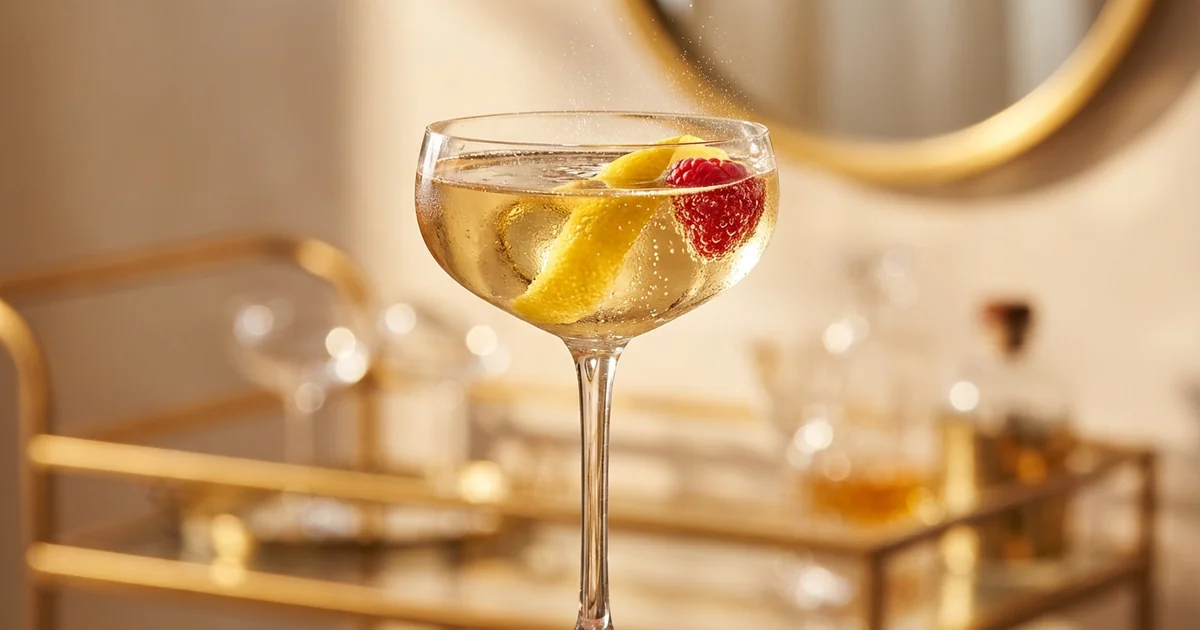
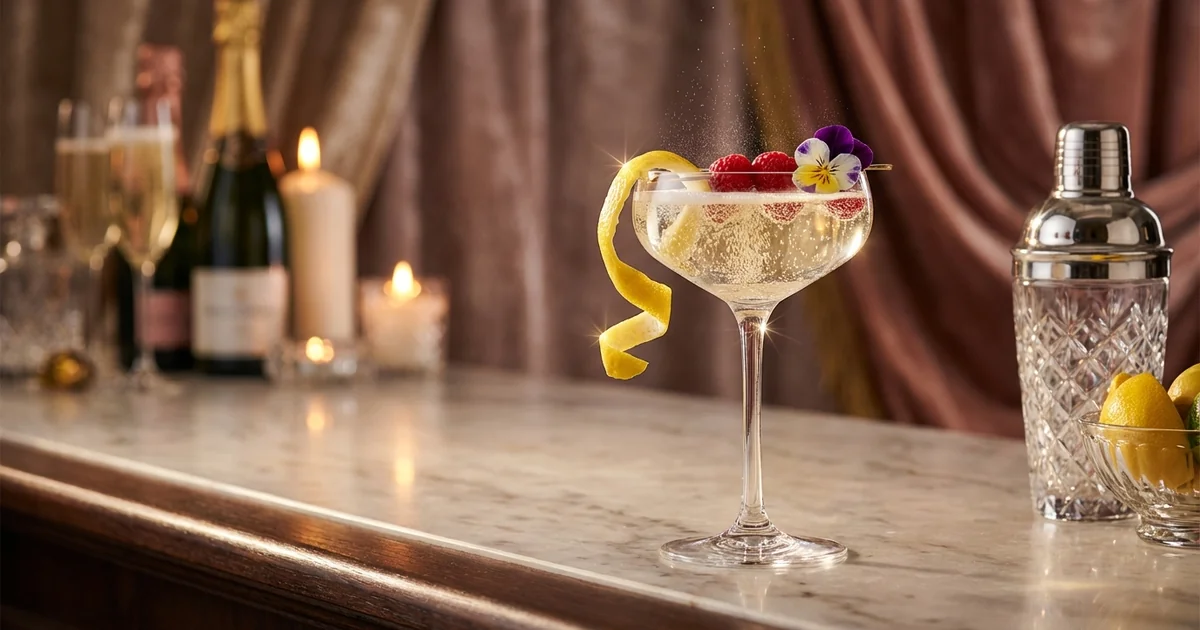
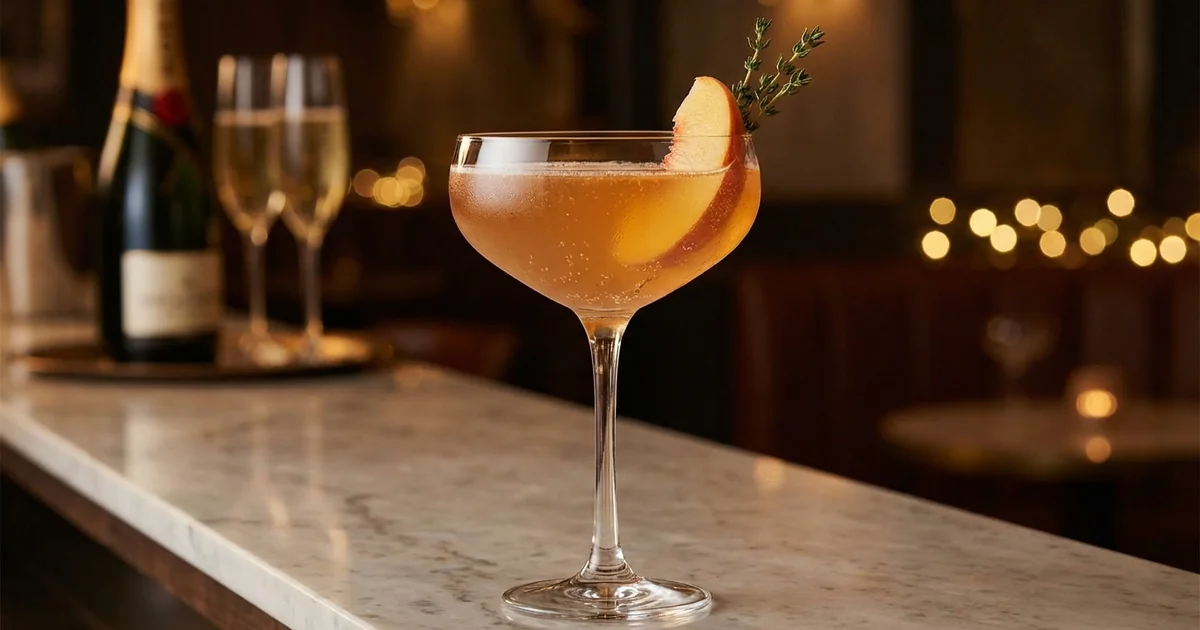
Mimosa Recipe: Classic Champagne Brunch Cocktail
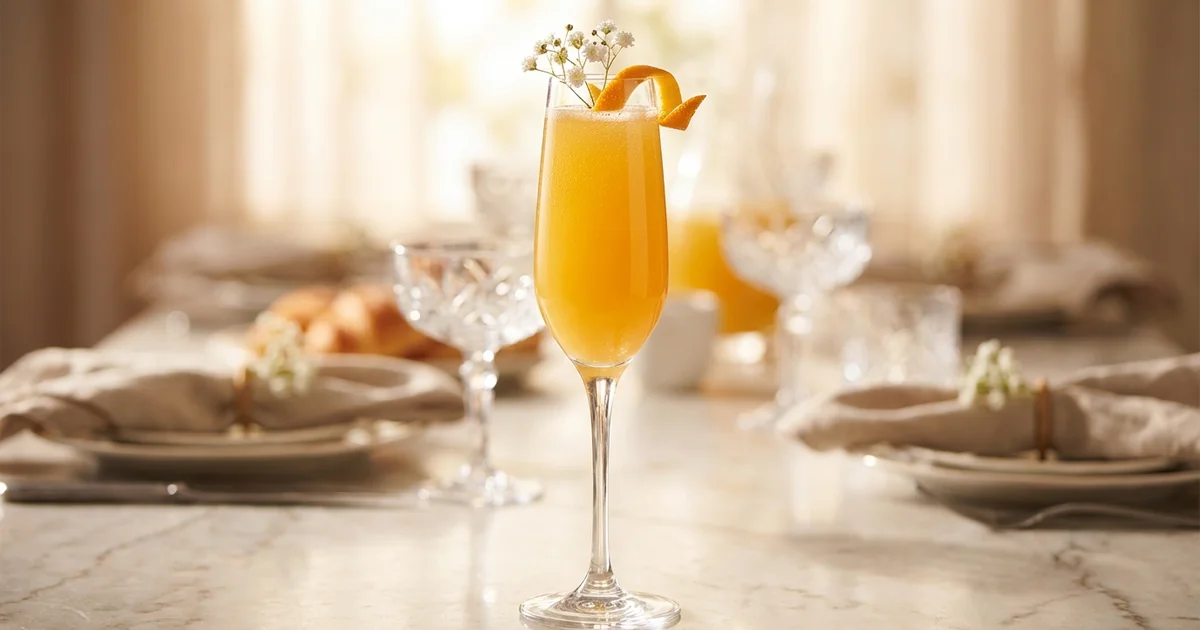
Perfect mimosa recipe: fresh orange juice, champagne, 1925 Ritz origins, ratios, and variations. Master the classic brunch cocktail.
Advertisement
Mimosa Recipe: The Ultimate Brunch Cocktail Guide
The mimosa recipe has been the undisputed champion of brunch cocktails since its creation at the Ritz Paris in 1925. This elegant two-ingredient drink combines the effervescence of champagne with the bright sweetness of fresh orange juice to create the perfect morning cocktail. Whether you're hosting a bridal shower, celebrating Mother's Day, or simply elevating your weekend brunch, learning how to make a mimosa properly is an essential skill for any cocktail enthusiast.
Key Takeaways
- The Mimosa was created in 1925 at the Ritz Paris and named after the yellow mimosa flower
- Fresh-squeezed orange juice is essential for the best flavor and quality
- The classic ratio is 1:1 champagne to orange juice, though 2:1 offers a drier version
- Prosecco and Cava are excellent affordable alternatives to champagne for brunch parties
The Elegant History of the Mimosa
The Mimosa cocktail was invented in 1925 at the Hotel Ritz Paris by bartender Frank Meier. Named after the yellow mimosa flower whose color it resembles, this sparkling cocktail quickly became synonymous with luxury and celebration. The drink appeared in Meier's 1936 book "The Artistry of Mixing Drinks," cementing its place in cocktail history.
Interestingly, the Mimosa has close cousins in the world of champagne cocktails: the Buck's Fizz, created in 1921 at London's Buck's Club, and the elegant French 75. While the drinks are similar, the Buck's Fizz traditionally uses a 2:1 ratio of champagne to orange juice and sometimes includes a splash of grenadine. The Mimosa, with its equal parts ratio, became the more popular version globally and remains the brunch standard nearly a century later.
The cocktail's timing was perfect. Created just after Prohibition began in the United States, the Mimosa represented European sophistication and elegance. When Prohibition ended in 1933, the drink made its way to American brunch tables and has remained there ever since. Today, it's estimated that over 50 million Mimosas are consumed annually during brunch service across the United States alone.
The Classic Mimosa Recipe
The beauty of a perfect mimosa recipe lies in its simplicity. With just two ingredients, quality and technique become paramount. Here's the classic formula that has delighted brunchers for nearly a century.
Ingredients
- 3 oz (90ml) chilled champagne or sparkling wine
- 3 oz (90ml) fresh-squeezed orange juice, chilled
- Fresh orange slice for garnish
Instructions
-
Juice fresh oranges: Use a citrus juicer to extract juice from fresh oranges. Strain if you prefer no pulp, though a little pulp adds character.
-
Chill your glassware: Place champagne flutes in the refrigerator for at least 15 minutes before serving. A cold glass keeps your Mimosa effervescent longer.
-
Pour orange juice first: Add 3 oz of fresh orange juice to your chilled champagne flute. Pouring the juice first prevents excessive foaming.
-
Top with champagne: Slowly pour 3 oz of chilled champagne down the side of the glass. This gentle technique preserves the bubbles.
-
Stir gently: Give the drink one gentle stir with a bar spoon to combine. Over-stirring will kill the carbonation.
-
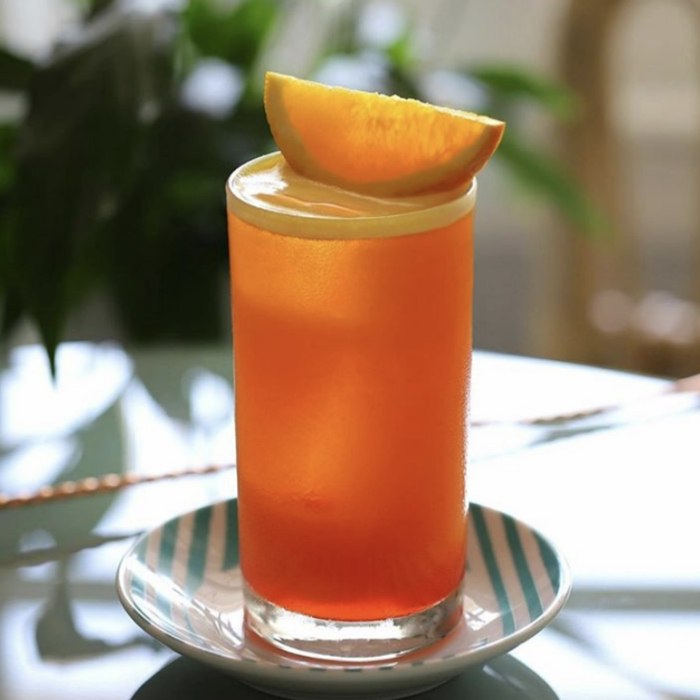
Garnish: Add a fresh orange slice to the rim of the glass for a classic presentation.
The Critical Importance of Fresh Orange Juice
When it comes to making an exceptional mimosa recipe, the single most important factor is using fresh-squeezed orange juice. The difference between fresh and store-bought is night and day.
Why Fresh Juice Matters
Flavor complexity: Fresh-squeezed orange juice contains volatile aromatic compounds that disappear quickly after juicing. These compounds provide depth, brightness, and a natural sweetness that pre-packaged juice simply cannot match. When you juice oranges fresh, you're capturing the essence of the fruit at its peak.
No preservatives: Packaged orange juice, even "not from concentrate" varieties, undergoes pasteurization and often sits in oxygen-depleted tanks for months. Manufacturers add back "flavor packs" to restore taste, but these are artificial recreations of what was lost. Fresh juice needs no such intervention.
How to Choose and Juice Oranges
Orange selection: Valencia and Navel oranges are both excellent for Mimosas. Valencias tend to be juicier, while Navels are sweeter. Blood oranges create a stunning crimson-hued variation with a slightly tart, berry-like flavor profile.
Juicing technique: Roll oranges firmly on the counter before juicing to break down the internal membranes and release more juice. One medium orange typically yields 2-3 oz of juice, so plan on one orange per Mimosa. For larger batches, consider investing in an electric citrus juicer.
Timing: Ideally, juice oranges within 30 minutes of serving. If you must prep ahead, juice up to 2 hours in advance and keep refrigerated in an airtight container. The flavor will still be vastly superior to packaged juice.
The Pulp Question
This comes down to personal preference. Some people love the textural interest that pulp provides, while others prefer a smooth, refined drink. For brunch parties, consider offering both options by straining half your fresh juice through a fine-mesh strainer.
Champagne vs Prosecco vs Cava: Choosing Your Bubbles
Not all sparkling wines are created equal, and understanding the differences will help you make the best mimosa recipe for your occasion and budget. For more in-depth champagne cocktail knowledge, check out our complete champagne cocktails guide.
Champagne: The Traditional Choice
True champagne comes exclusively from the Champagne region of France and is made using the traditional method (méthode champenoise). It offers fine, persistent bubbles and complex flavors ranging from brioche and toast to citrus and apple.
Best for: Special occasions, upscale brunches, or when you want to impress. Look for Brut or Extra Brut styles for Mimosas.
Price point: $30-$60+ per bottle for quality options
Recommended: Veuve Clicquot, Moët & Chandon, Nicolas Feuillatte
Prosecco: The Popular Alternative
This Italian sparkling wine from the Veneto region uses the Charmat method, resulting in lighter, fruitier bubbles with notes of pear, apple, and white flowers. Prosecco's gentle sweetness complements orange juice beautifully.
Best for: Casual brunches, large parties, mimosa bars where volume matters
Price point: $12-$25 per bottle
Recommended: La Marca, Mionetto, Ruffino
Cava: The Spanish Secret
Spain's answer to champagne, Cava is made using the traditional method but with different grape varieties. It offers excellent value with flavors of green apple, citrus, and almonds, plus fine bubbles that hold up well in cocktails.
Best for: Budget-conscious hosts who don't want to sacrifice quality, outdoor brunches
Price point: $10-$20 per bottle
Recommended: Freixenet, Segura Viudas, Anna de Codorníu
The Verdict
For most home brunches, Prosecco offers the best balance of quality, flavor, and value. Save champagne for milestone celebrations, and don't overlook Cava as an excellent middle ground. The most important factors are that your sparkling wine is dry (Brut or Extra Dry), well-chilled, and fresh.
Mastering the Mimosa Ratio
The ratio of champagne to orange juice in your mimosa recipe dramatically affects the final cocktail's character. Understanding these ratios allows you to customize the drink to your preference.
The Classic 1:1 Ratio
Equal parts champagne and orange juice (3 oz each) creates the traditional Mimosa served at the Ritz Paris. This balanced approach lets both ingredients shine and creates a drink that's neither too sweet nor too dry.
Best for: Traditional brunches, guests who prefer sweeter cocktails, daytime drinking
Flavor profile: Balanced, fruity, accessible
The Sophisticated 2:1 Ratio
Two parts champagne to one part orange juice (4 oz champagne, 2 oz juice) creates a drier, more wine-forward cocktail. This is the traditional Buck's Fizz ratio and is preferred by many cocktail professionals.
Best for: Wine enthusiasts, lighter drinking occasions, those who find standard Mimosas too sweet
Flavor profile: Elegant, crisp, champagne-forward
The Grand Mimosa 3:1 Ratio
Three parts champagne to one part orange juice (5 oz champagne, 1.5 oz juice) is sometimes called a "Grand Mimosa" and is the driest version.
Best for: Serious wine lovers, when using premium champagne, mid-afternoon celebrations
Flavor profile: Sophisticated, bubbly, subtle citrus accent
The Buck's Fizz Connection
While discussing the mimosa recipe, it's important to understand its relationship to the Buck's Fizz, as confusion between the two cocktails is common.
The Buck's Fizz was created in 1921 by Pat McGarry at Buck's Club in London, predating the Mimosa by four years. The original Buck's Fizz recipe called for:
- 2 parts champagne
- 1 part orange juice
- Optional: A dash of grenadine for color
The key differences are the ratio (2:1 vs 1:1) and the occasional addition of grenadine. Some cocktail historians argue that the Mimosa is simply a rebranded Buck's Fizz with a more appealing name. Others maintain that the equal-parts ratio creates a fundamentally different drinking experience.
Today, in the United States, "Mimosa" has become the dominant term, while "Buck's Fizz" remains more common in the United Kingdom. Regardless of what you call it, both represent the perfect marriage of citrus and sparkling wine.
Batching Mimosas for Brunch Parties
One of the biggest challenges when hosting brunch is making cocktails for a crowd. Fortunately, the mimosa recipe scales beautifully for batch service while maintaining quality.
The Mathematics of Batching
One standard 750ml bottle of champagne yields approximately 25 oz of liquid, while one bottle of orange juice (64 oz) yields enough for multiple batches. For a 1:1 ratio:
- 1 bottle champagne (25 oz) + 25 oz orange juice = 12-13 servings
- For 20 guests: 2 bottles champagne + 50 oz fresh juice
- For 50 guests: 5 bottles champagne + 125 oz fresh juice
The Pitcher Method
For intimate gatherings of 6-10 people, a large pitcher works perfectly:
- Juice oranges fresh and strain into a large pitcher (chill for 30 minutes)
- Just before serving, slowly add chilled champagne to the pitcher
- Stir very gently once
- Pour immediately into chilled flutes
- Garnish individual glasses
Pro tip: Add frozen orange juice cubes instead of ice to keep the pitcher cold without dilution.
The Build-to-Order Station
For larger parties or when you want maximum freshness, set up a DIY Mimosa station:
- Station 1: Fresh-squeezed orange juice in a dispenser with ice bath
- Station 2: Multiple bottles of well-chilled sparkling wine
- Station 3: Garnishes (orange slices, berries, herbs)
- Station 4: Clean, chilled flutes
Provide instruction cards showing the proper ratio and pouring technique. This interactive approach keeps bubbles at their peak and allows guests to customize their drinks.
Make-Ahead Strategies
While you cannot pre-mix Mimosas without losing carbonation, you can prep everything else:
- Juice oranges up to 2 hours ahead, strain, and refrigerate
- Chill glasses in the refrigerator
- Pre-slice orange garnishes and store in water
- Set up your serving station the night before
The actual assembly takes minutes when everything is prepped and organized.
Creative Mimosa Variations
Once you've mastered the classic mimosa recipe, these variations offer exciting new flavor profiles while maintaining the spirit of the original. These twists are similar in spirit to the elegant Bellini, which uses peach puree and champagne.
Grapefruit Mimosa
Replace orange juice with fresh-squeezed grapefruit juice for a tart, sophisticated twist. The slight bitterness of grapefruit balances champagne's acidity beautifully.
- 3 oz champagne
- 3 oz fresh grapefruit juice
- Garnish: Grapefruit slice and fresh rosemary sprig
Flavor profile: Tart, refreshing, herbaceous
Pomegranate Mimosa
This stunning ruby-red variation is perfect for winter holidays and Valentine's Day brunches.
- 3 oz champagne
- 2 oz fresh orange juice
- 1 oz pomegranate juice
- Garnish: Pomegranate arils
Flavor profile: Sweet-tart, fruity, festive
Mango Mimosa
A tropical twist that brings sunshine to any brunch table.
- 3 oz champagne
- 3 oz fresh mango puree (blend fresh mango with a splash of water)
- Garnish: Mango slice
Flavor profile: Tropical, sweet, exotic
Peach Bellini Mimosa Hybrid
This variation borrows from the classic Bellini while maintaining Mimosa structure.
- 3 oz champagne
- 2 oz fresh orange juice
- 1 oz white peach puree
- Garnish: Peach slice
Flavor profile: Delicate, fruity, elegant
Blood Orange Mimosa
When blood oranges are in season (December through March), this variation is absolutely stunning.
- 3 oz champagne
- 3 oz fresh blood orange juice
- Garnish: Blood orange wheel
Flavor profile: Complex, slightly tart, visually striking
The French 75 Mimosa
Add a sophisticated kick with a splash of gin and lemon.
- 2.5 oz champagne
- 2 oz fresh orange juice
- 0.5 oz gin
- 0.25 oz fresh lemon juice
- Garnish: Lemon twist and orange slice
Flavor profile: Botanical, bright, elevated
Building the Perfect Mimosa Bar
A Mimosa bar transforms a simple brunch into an interactive, memorable experience. Here's how to create an Instagram-worthy setup that your guests will love. Similar in concept to an Aperol Spritz station, a mimosa bar lets guests customize their own mimosa recipe.
Essential Elements
Juice Station: Offer 3-4 fresh juice options in glass dispensers with ice baths beneath:
- Classic fresh orange juice (always have this)
- Grapefruit juice
- Cranberry juice
- Pineapple juice
Sparkling Wine: Provide 2-3 bottles of well-chilled Prosecco or Cava for every 10 guests. Keep backup bottles in an ice bucket or wine refrigerator.
Glassware: Calculate 2 glasses per person for a 2-hour brunch. Have extras on hand. See our essential bar tools guide for champagne flute recommendations.
Garnish Station
Create visual appeal with a dedicated garnish area:
Citrus: Orange wheels, grapefruit slices, lemon twists Berries: Fresh raspberries, strawberries, blueberries Herbs: Rosemary sprigs, mint leaves, fresh thyme Exotic: Pomegranate arils, edible flowers, candied ginger Rim sugar: Colored sugar for glass rims (optional)
Flavor Enhancers
Small bottles or pour spouts of:
- Elderflower liqueur (St. Germain)
- Peach schnapps
- Chambord
- Grand Marnier
- Simple syrup for sweetness adjustment
Setup and Signage
Flow: Arrange in logical order: glasses → juice → sparkling wine → garnishes → enhancements
Signage: Create beautiful cards showing:
- Classic Mimosa ratio instructions
- Suggested combinations
- Name ideas for variations
Aesthetics: Use risers to create height variation, fresh flowers for decoration, and cohesive serving vessels
Pro Tips for Success
- Temperature control: Keep everything cold. Use ice baths, wine chillers, and refrigerate glasses
- Traffic flow: Position your bar away from food to prevent congestion
- Replenishment: Designate someone to monitor and refill stations every 20-30 minutes
- Waste management: Provide a discrete bus tub for used glasses
- Non-alcoholic option: Always offer sparkling water or sparkling cider for non-drinkers
Frequently Asked Questions
Conclusion
The mimosa recipe represents the perfect marriage of elegance and simplicity. From its glamorous origins at the Ritz Paris to its current status as the essential brunch cocktail, the Mimosa continues to delight with its bright flavors and festive presentation. Whether you're making a single glass with the classic 1:1 ratio or setting up an elaborate mimosa bar for fifty guests, the key lies in fresh-squeezed orange juice, quality sparkling wine, and proper technique.
Remember that the best Mimosa is the one that suits your taste. Start with the classic equal-parts recipe, then experiment with ratios, different citrus fruits, and creative variations until you find your perfect combination. The beauty of this cocktail is its versatility and accessibility.
Now that you're armed with everything you need to know about making perfect mimosas, it's time to chill your champagne, squeeze some fresh oranges, and toast to the good life. Here's to lazy Sunday mornings, celebratory brunches, and the timeless elegance of this classic cocktail.
Cheers to perfect brunches!
Advertisement
About Willow
Seasonal & Winter Cocktails Expert at Hero Cocktails, passionate about crafting exceptional cocktails and sharing mixology expertise.
Advertisement