
Vintage Cocktail
Tom and Jerry

- Prep Time
- 20 min
- Glass
- goblet
- Difficulty
- Advanced
- ABV
- 18%
- Yields
- 1 serving
Der Tom and Jerry ist ein vintage cocktail auf Basis von Rum. In nur 20 Minuten zubereitet — perfekt für die Heimbar.
Key Takeaways
What you’ll learn
- Jerry Thomas's signature creation from the 1862 "Bon-Vivant's Companion" — the recipe he promoted as his personal showpiece throughout his career.
- Built on a spiced egg batter (beaten separately — whites and yolks) preserved with Jamaican rum, then finished with brandy and boiling water or hot milk per glass.
- Thomas theatrically withheld the drink until the first snowfall of the season — a marketing gesture that made it a New York winter sensation in the 1860s–1880s.
- The name "Tom and Jerry" may pre-date Thomas, appearing in American print as early as 1827 and potentially derived from Pierce Egan's 1821 novel.
- David Wondrich's "Imbibe!" (2007) is the definitive modern scholarly source restoring the documented recipe and Thomas's historical context.
Advertisement
Ingredients
- Serves
- 1 serving
- Glass
- goblet
- Prep
- 20 min
- 12Eggs
- 1/2 lbFine-powdered sugar
- 1/2 tspGround cinnamon
- 1/4 tspGround cloves
- 1/4 tspGround allspice
- 1 wineglass (1½ oz) to preserve batterJamaican rum (for batter)
- 1 wineglass (1½ oz)Brandy
- 1 wineglass (1½ oz)Jamaican rum
- to fillBoiling water or hot milk
- grated, to garnishNutmeg
Origin
History & Origins
Jerry Thomas opened his 1862 bar guide with the Tom and Jerry. Not as the first recipe, but as the spiritual centerpiece — the drink he returned to in performance and in print as proof that American bartending was a craft worthy of a book.
The Tom and Jerry is a hot egg punch built in two stages. First, a spiced batter of beaten eggs, powdered sugar, cinnamon, cloves, allspice, and a preserving measure of Jamaican rum is prepared in quantity. Then, to order, a tablespoon of batter is placed in a warmed goblet, brandy and rum are added, and the whole is filled with boiling water or hot milk. Grated nutmeg finishes it. Thomas wrote: "This preparation is attributed to the author of this work, and was first manufactured by him at the Planters' House, St. Louis, in the year 1847."
The claim is contested. Punch historian David Wondrich found references to a hot egg drink called "Tom and Jerry" in American newspapers of the 1820s, likely borrowing the name from Pierce Egan's enormously popular 1821 serial "Life in London," whose protagonists Corinthian Tom and Jerry Hawthorn lent their names to a generation of hot egg punches. What Thomas definitively did was codify the recipe, attach his personal mythology to it, and promote it with theatrical flair unmatched by any bartender before or since.
At his San Francisco saloon at 15 Montgomery Street — and later at his New York establishments — Thomas kept a gleaming silver punch bowl of batter during winter. He refused to open the bowl until the first flake of snow fell, creating the kind of manufactured scarcity that made people line up. The spectacle worked: the Tom and Jerry was considered THE winter drink in New York in the 1860s and 1870s.
At his San Francisco saloon at 15 Montgomery Street — and later at his New York establishments — Thomas kept a gleaming silver punch bowl of batter during winter.
Post-Prohibition, the drink survived in modified form in Midwestern diners, particularly in Wisconsin and Minnesota, often prepared with whiskey or even fruit syrups rather than brandy and rum. These regional versions diverged significantly from Thomas's original but kept the egg-batter structure alive through the cocktail dark ages.
The craft renaissance restored the original. Wondrich's 2007 "Imbibe!" — the first serious modern scholarship on Thomas — sparked a wave of historically accurate recreations. Today the Tom and Jerry appears on seasonal menus each winter at bars committed to historical programming, served in the warmed goblets Thomas specified.
Advertisement
Bartender’s Insight
Pro Tips
The batter keeps refrigerated for up to three days. Make a full batch for parties; individual portions take under a minute once batter is ready.
From Arthur
Use a Jamaican rum with funky ester character (Smith & Cross, Appleton 12) — Thomas specified Jamaican, and the rum's molasses depth stands up to the egg and spice.
Warm your goblets or mugs in hot water before building the drink. Cold vessels immediately cool the batter and flatten the texture.
Whole milk produces a richer, creamier result than water. Thomas listed both; use milk for dessert-style service, water for a lighter after-dinner version.
Beat the whites and yolks separately and fold at the last moment for maximum volume. A flat batter makes a flat drink.
At the Table
Perfect Pairings
Beyond the Classic
Variations
Non-alcoholic Tom and Jerry
Omit brandy and rum entirely; use hot apple cider instead of boiling water. The spiced egg batter alone creates a rich, warming drink. This is a legitimate historical variant — temperance versions appeared in period cookbooks.
Bourbon Tom and Jerry
Substitute American rye or bourbon for the brandy. More accessible than period-correct Cognac and gives a caramel-vanilla backbone that pairs well with the allspice and clove in the batter.
Single-Egg Tom and Jerry
Scale the recipe to one egg per serving: beat 1 egg, add 1 tsp powdered sugar and a pinch of spice. Build as normal. Practical for small households; texture is slightly less voluminous but the flavor is identical.
Questions
Frequently Asked
- Yes, there are several ways to adapt a Tom and Jerry. If you cannot source Eggs, look for a similar alternative that matches its flavor profile. Keep in mind that substitutions may alter the balance of the cocktail, so start with a smaller quantity and adjust to taste. The variations section above lists popular alternatives bartenders use.
- Some of the most popular Tom and Jerry variations include Non-alcoholic Tom and Jerry, Bourbon Tom and Jerry, Single-Egg Tom and Jerry. Each variation puts a unique twist on the original recipe while retaining the essential character of the classic cocktail.
- The Tom and Jerry is traditionally served in a goblet. Using the right glassware is important because it affects the aroma, temperature retention, and overall drinking experience. If you do not have a goblet on hand, a similar shaped glass will work.
- Yes, a mocktail version of the Tom and Jerry is possible. Replace the base spirit with a non-alcoholic spirit alternative (there are many quality options available) and keep all other components the same. The result will capture much of the original's flavor profile while being suitable for guests who prefer alcohol-free options.
Other Rum Cocktails
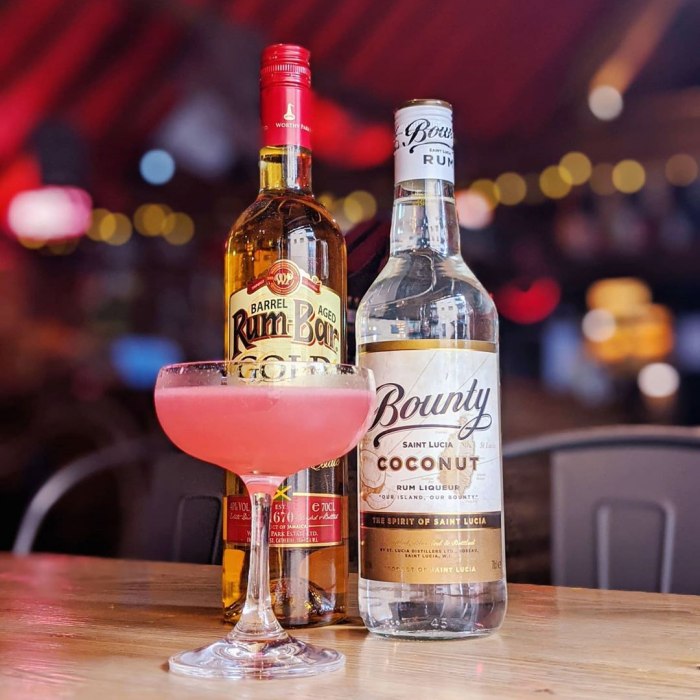
Bounty Hunter
Der "Bounty Hunter" ist ein exotischer Cocktail, der die Aromen tropischer Früchte mit einem Hauch von Rum vereint. Er begeistert mit einer erfrischenden Mischung aus Ananas, Kokosnuss und einem Spritzer Limette, perfekt für einen sonnigen Tag oder einen entspannten Abend. Ein echter Genuss für alle, die das Abenteuer lieben!
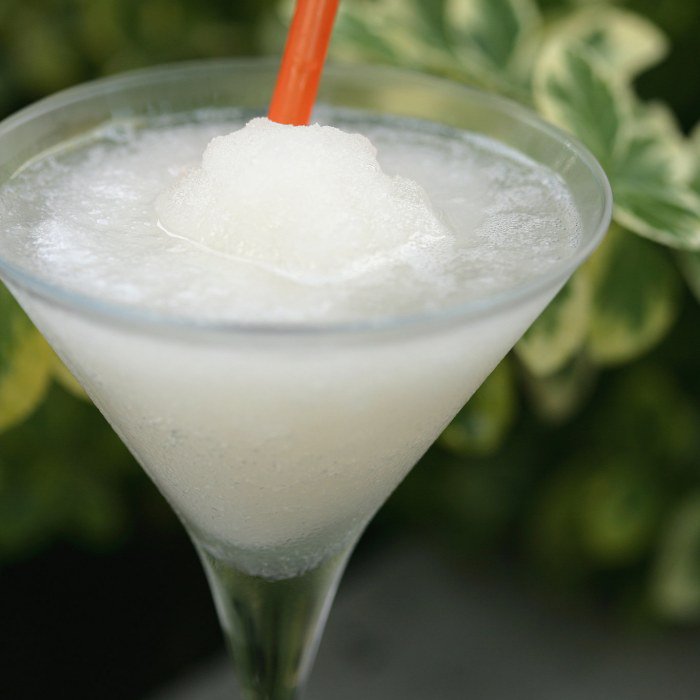
Frozen Daiquiri
Der Frozen Daiquiri ist ein erfrischender Cocktail, der aus gefrorenen Früchten, Rum, Limettensaft und Zucker besteht. Diese köstliche Mischung wird in einem Mixer zubereitet, bis sie eine slushige Konsistenz erreicht, und ist perfekt für warme Tage oder als fruchtiger Genuss. Mit seinem süßen und sauren Geschmack ist der Frozen Daiquiri ein beliebter Klassiker in vielen Bars und Strandresorts.
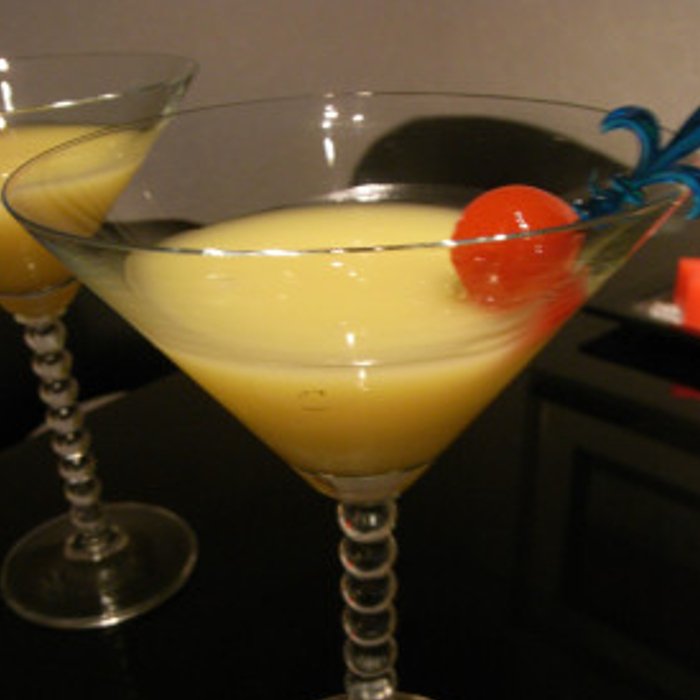
Casa Blanca
Der Casa Blanca ist ein erfrischender Cocktail, der mit einer harmonischen Mischung aus weißem Rum, Triple Sec, Limettensaft und einem Hauch von Grenadinesirup zubereitet wird. Sein fruchtiger Geschmack und die leichte Süße machen ihn zu einem perfekten Begleiter für warme Sommerabende. Genießen Sie diesen eleganten Drink in einem stilvollen Glas, garniert mit einer Limettenscheibe oder einer Kirsche.
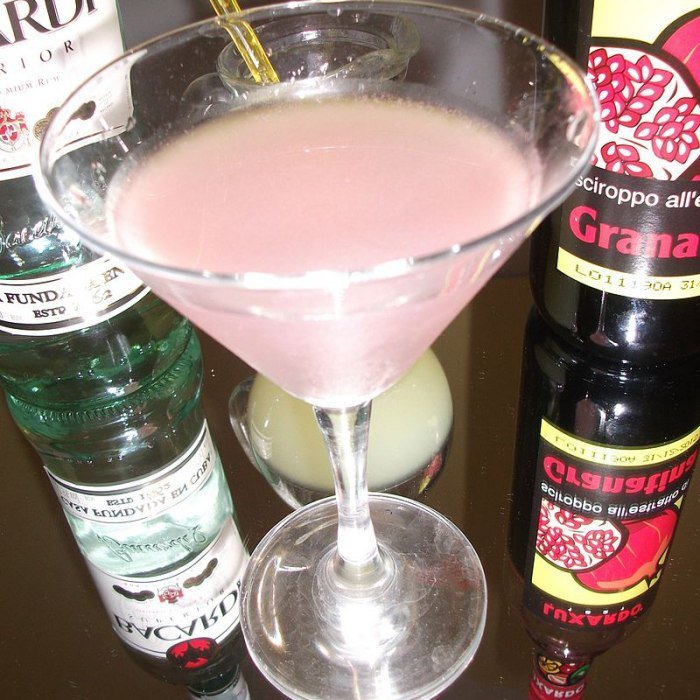
Bacardi Cocktail
Der Bacardi Cocktail ist ein erfrischender und fruchtiger Drink, der aus Bacardi Rum, Limettensaft und Grenadinesirup besteht. Diese Kombination verleiht ihm eine lebendige rote Farbe und einen ausgewogenen Geschmack, der perfekt für heiße Sommertage ist. Genießen Sie diesen klassischen Cocktail als Highlight jeder Feier!
Advertisement