Techniques & Skills
Cocktail Garnish Guide: Techniques & Tips
Master cocktail garnishes with essential techniques. Learn citrus twists, herb presentation, rim techniques, and professional garnishing tips for stunning drinks.

Advertisement
Cocktail Garnish Guide: Techniques & Tips
A perfectly crafted cocktail deserves a perfectly executed garnish. While it might be tempting to dismiss garnishes as mere decoration, they serve critical functions beyond aesthetics. A properly expressed citrus peel adds aromatic complexity, a salt rim balances sweetness, and fresh herbs contribute both fragrance and flavor to each sip. This comprehensive cocktail garnish guide will transform your home bartending from amateur to professional-level presentation.
Whether you're mixing a simple gin and tonic or an elaborate tiki creation, understanding garnish techniques elevates the entire drinking experience. The visual appeal draws people in, but the aromatics, flavors, and textures that garnishes provide are what make cocktails truly memorable. Let's explore the essential garnishing techniques every home bartender should master.
Understanding the Purpose of Cocktail Garnishes
Before diving into specific techniques, it's important to understand why garnishes matter. A well-chosen garnish serves three primary functions:
Aromatic Enhancement: Citrus oils, fresh herbs, and edible flowers contribute aromatic compounds that you smell with each sip, dramatically affecting the perceived flavor of the cocktail.
Functional Flavor: Garnishes like olives in a Martini, salt on a Margarita rim, or a cherry in a Manhattan actually contribute flavor to the drink, not just decoration.
Visual Appeal: Humans drink with their eyes first. An attractive garnish signals care, quality, and attention to detail, making the cocktail more appealing before the first sip.
The best garnishes do all three simultaneously. A properly expressed lemon twist over a Martini adds citrus aroma, subtle flavor from the oils, and an elegant visual element—all from one simple garnish executed correctly.
Citrus Garnishes: The Foundation of Cocktail Presentation
Citrus is the most common and versatile garnish category in cocktail making. Mastering these techniques is essential for any serious home bartender.
The Classic Citrus Twist
The citrus twist is perhaps the most elegant and aromatic garnish in cocktail making. It's not just about the peel in the glass—the technique of expressing the oils is where the magic happens.
How to Create a Perfect Twist:
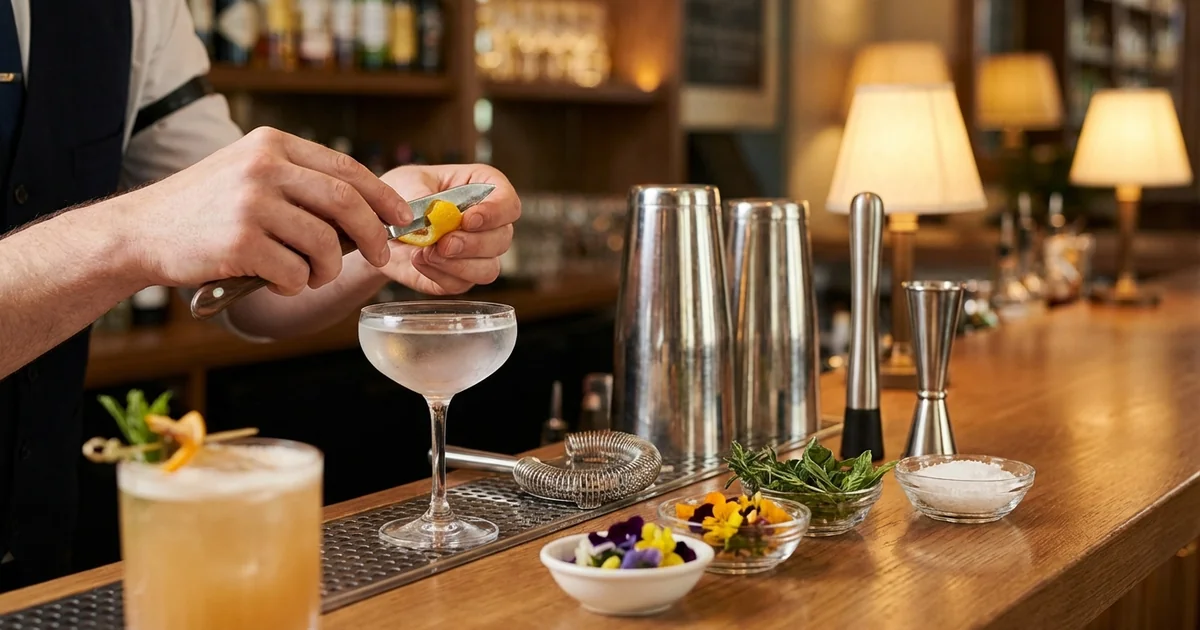
Start with a fresh, room-temperature citrus fruit. Cold fruit from the refrigerator doesn't express oils as readily. Using a sharp paring knife or Y-peeler, cut a strip of peel about 1 inch wide and 2-3 inches long. The key is to get just the colored zest, avoiding as much of the white pith as possible, which adds bitterness.
Hold the peel over the cocktail, colored side down, between your thumb and fingers. Quickly snap it or twist it to break the oil cells, sending a fine mist of citrus oil across the drink's surface. You should see the oils spray and may even see them catch the light. This step is crucial—it's not optional decoration.
After expressing, you can either run the peel around the rim of the glass to add oils there, then drop it into the drink, or twist it into a spiral and perch it on the rim. For a more refined look, use a channel knife to create a long, thin spiral of peel.
Citrus Wheels and Half-Wheels
Wheels are sliced cross-sections of citrus fruit, typically about 1/4 inch thick. They're perfect for highballs, Collins drinks, and any cocktail where you want a bold citrus presence without overwhelming the drink.
Cut straight across the fruit, ensuring even thickness for a professional appearance. For smaller glasses or more subtle garnishes, cut the wheel in half to create half-wheels or "flags" when combined with a cherry.
To make a wheel sit attractively on the rim, make a small cut from the center to the edge, allowing you to slide it onto the glass. Avoid cutting all the way through, which can cause the wheel to fall apart.
Citrus Wedges
Wedges are functional garnishes that allow drinkers to add additional citrus juice to taste. They're essential for drinks like Gin and Tonics, Cuba Libres, and beer cocktails.
Cut the citrus fruit in half lengthwise, then cut each half into 3-4 wedges, depending on size. Remove any visible seeds before garnishing. The wedge should be substantial enough to squeeze easily but not so large it overwhelms the glass.
For lime wedges in particular, cutting off the pithy center core before serving makes them easier to squeeze and less bitter. This small detail separates professional presentations from amateur efforts.
Expressing Citrus Oils: The Secret Technique
The difference between a good garnish and a great one often comes down to proper oil expression. Those aromatic citrus oils—limonene from lemons, linalool from oranges—dramatically enhance the drinking experience.
Always express oils over the drink, not off to the side. Hold the peel 3-4 inches above the cocktail and give it a sharp twist or snap. You should see a fine mist of oil settle on the drink's surface. In dim lighting, you might even see the oils ignite briefly if near a flame—this "flamed peel" technique is advanced but impressive.
After expressing, many bartenders will run the peel around the rim of the glass, depositing oils where the drinker's nose will encounter them with each sip. This attention to detail transforms the entire drinking experience.
Cocktail Cherries: Quality Matters
Not all cocktail cherries are created equal. The fluorescent red maraschino cherries from your childhood are a far cry from what belongs in a serious cocktail.
Luxardo Maraschino Cherries
These Italian cherries are the gold standard for cocktail garnishing. Unlike bright red maraschino cherries, Luxardo cherries are dark, complex, and sophisticated. They're candied Marasca cherries preserved in syrup, with no artificial colors or flavors.
The deep flavor profile includes notes of cherry, almond, and subtle spice. They're essential for classic cocktails like Manhattans, Old Fashioneds, and Whiskey Sours. While expensive (around $20 for a jar), they last for months and the quality difference is immediately apparent.
Brandied Cherries
For a homemade alternative, brandied cherries offer rich, boozy complexity. You can make your own by soaking pitted cherries in brandy or bourbon with sugar and spices. After a few weeks, you'll have gourmet garnishes that rival anything you can buy.
These work exceptionally well in spirit-forward cocktails, where their boozy nature complements rather than conflicts with the drink's flavor profile.
Presentation Techniques
For most cocktails, drop the cherry into the glass after building the drink. For certain classics like the Manhattan, the cherry traditionally sits at the bottom of the glass.
For a more elaborate presentation, spear the cherry with a cocktail pick along with a citrus flag (half-wheel). This classic combination adorns drinks like Whiskey Sours and adds both visual interest and functional garnish elements.
Fresh Herb Garnishes: Aromatic Elegance
Herbs bring freshness, aroma, and visual appeal to cocktails. Proper preparation is essential—wilted, bruised, or improperly presented herbs detract from rather than enhance the drink.
Mint: The Mojito's Crown
Mint is perhaps the most common herb garnish, appearing in Mojitos, Mint Juleps, and countless tiki drinks. The key to perfect mint garnish is the "slap" or "spank" technique.
Hold a mint sprig between your palms and clap once, firmly. This ruptures the cell walls and releases aromatic oils without bruising the leaves. You should immediately smell fresh mint. Place the slapped sprig on top of the drink, positioned where the drinker's nose will encounter it.
For Mint Juleps, a full bouquet of mint creates both visual impact and intense aroma. Use a generous handful of fresh sprigs, slapped and arranged to create a "mint forest" rising from the crushed ice.
Always use fresh, vibrant mint. Check that leaves are green, not yellowing or spotted. Rinse gently and pat dry before using.
Rosemary: Pine-Forward Complexity
Rosemary brings an herbal, pine-like quality that pairs beautifully with gin, whiskey, and citrus-forward cocktails. A single fresh sprig is usually sufficient.
To enhance the aroma, you can lightly torch the rosemary sprig before placing it in the drink. This releases aromatic oils and creates a subtle smoky element. Alternatively, simply slap it as you would mint to activate the oils.
Rosemary is sturdy enough to use as both garnish and stirrer, adding subtle flavor as the drinker stirs their cocktail.
Thyme, Basil, and Beyond
Other herbs offer unique aromatic profiles. Thyme adds earthy, savory notes perfect for gin cocktails. Basil brings a sweet, spicy quality that complements fruit-forward drinks. Thai basil offers licorice notes ideal for tropical cocktails.
For delicate herbs like basil, avoid slapping—instead, gently press the leaves between your fingers to release oils. Place on top of the drink or tuck into a garnish arrangement for visual appeal.
Olive Selection for Martinis
The Martini garnish deserves special attention. The choice between olives and a lemon twist is more than personal preference—it fundamentally changes the cocktail's character. Learn more about this iconic drink in our Martini history guide.
Stuffed vs. Plain Olives
Traditional Martini olives are Spanish green olives, either plain or stuffed. Blue cheese-stuffed olives add savory, funky notes that complement vermouth beautifully. Pimento-stuffed olives offer milder, slightly sweet flavor.
For a classic Martini, use 1-3 olives on a cocktail pick. An odd number is traditional (one or three), though two works fine. Avoid cheap, water-logged olives from jars—seek out quality Spanish olives packed in brine.
Dirty Martini Considerations
For a Dirty Martini, where olive brine is added to the cocktail, use plain olives. The brine already provides the olive flavor, and stuffed olives can make the drink too busy.
Always spear olives cleanly through the center on a cocktail pick. Bent, broken, or poorly speared olives look sloppy and unprofessional.
The Olive vs. Twist Debate
Generally, vodka Martinis pair better with olives, while gin Martinis shine with a lemon twist. The botanicals in gin complement citrus oils, while vodka's neutral character benefits from the savory complexity of olives.
That said, personal preference rules. Some gin Martini lovers swear by olives, and vodka purists prefer twists. Experiment to find your preference.
Edible Flowers: Beautiful and Functional
Edible flowers add stunning visual appeal and subtle flavor to cocktails. However, not all flowers are safe to consume—never use flowers from florists, which are often treated with pesticides.
Safe Edible Flowers for Cocktails
Violas and Pansies: Mild, slightly sweet flavor with beautiful colors Nasturtiums: Peppery, bold flavor and vibrant orange/red hues Hibiscus: Tart, cranberry-like flavor, often used dried in syrups Lavender: Floral, perfumed quality (use sparingly—easy to overpower) Borage: Cucumber-like flavor with striking blue star flowers Rose Petals: Delicate, romantic appearance and subtle flavor
Purchase edible flowers from specialty grocers, farmers markets, or grow your own. Rinse gently and pat dry before use. Float them on the surface of the cocktail or freeze them into ice cubes for a stunning presentation.
Presentation Techniques
For maximum impact, use edible flowers in light-colored or clear cocktails where they're visible. Float a single large flower or several small blossoms on the surface. For carbonated drinks, the bubbles will carry the flowers up and down, creating visual interest.
Frozen flowers in ice cubes work beautifully for punch bowls or individual cocktails. Freeze flowers in layers, filling the ice mold partially, freezing, adding flowers, adding more water, and freezing again to suspend the flowers in the center of the cube.
Rim Treatments: Sweet, Salty, and Spicy
Rim garnishes add flavor, texture, and visual appeal. They're essential for Margaritas, Sidecars, and various other cocktails.
Salt Rims for Margaritas
Coarse kosher salt or sea salt works best for Margarita rims. Fine table salt dissolves too quickly and tastes harsh. For the perfect rim:
- Run a lime wedge around the outer edge of the glass rim only—not inside
- Pour salt onto a small plate
- Roll the outer edge of the glass through the salt
- Tap gently to remove excess
- Fill the glass without disturbing the rim
Pro tip: Only rim half the glass, allowing drinkers to alternate between salty and non-salty sips. This prevents palate fatigue and gives the drinker control over their experience.
Sugar Rims for Sweet Cocktails
Sugar rims work beautifully for dessert cocktails, Sidecars, and lemon drops. Use superfine sugar for the most elegant presentation—it adheres better and doesn't fall off as easily.
For added complexity, infuse the sugar with citrus zest, vanilla bean, or spices. Mix sugar with finely grated lime zest for tropical cocktails, or blend with cinnamon for autumn-themed drinks.
Tajín and Spicy Rims
Tajín—a Mexican spice blend of chili peppers, lime, and salt—has become incredibly popular for Margarita rims. It adds complexity, heat, and tangy flavor that complements tequila beautifully.
For custom spicy rims, blend salt with cayenne, smoked paprika, or dried chili powder. Experiment with ratios to find your preferred heat level.
Advanced Rim Techniques
For multi-textured rims, combine ingredients. Try salt with sugar for a sweet-savory balance, or layer different colors for visual impact.
You can also use flavored liquids instead of citrus juice to adhere the rim. Honey, simple syrup, or even the cocktail itself works. Be creative but remember that the rim should complement, not overwhelm, the drink.
Essential Garnishing Tools
Having the right tools makes garnishing faster, easier, and more professional. These are the essentials for your cocktail garnish arsenal:
Y-Peeler or Channel Knife
A sharp Y-peeler creates wide citrus peels perfect for twists. A channel knife (also called a zester) creates thin, elegant citrus spirals ideal for more delicate presentations.
Invest in quality tools—cheap peelers tear the peel rather than cutting cleanly, resulting in ragged garnishes that lack the elegant oil-rich surface you want.
Paring Knife
A sharp 3-4 inch paring knife is essential for cutting citrus wheels, removing pith, and detailed garnish work. Keep it sharp—dull knives are dangerous and produce inferior results.
Cocktail Picks
Stock both short picks for spearing olives and cherries, and longer picks for elaborate garnish arrangements. Bamboo picks work fine, but stainless steel picks look more professional and can be washed and reused.
Cutting Board
Dedicate a small cutting board exclusively to bar use. You don't want onion or garlic flavors contaminating your citrus garnishes. A small bamboo or plastic board works perfectly.
Tweezers
Fine-tipped tweezers are invaluable for placing delicate garnishes like edible flowers or arranging elements precisely. They're inexpensive and dramatically improve your ability to create refined presentations.
Before you start garnishing, make sure you have the proper essential bar tools to execute these techniques correctly.
Storage and Preparation Tips
Proper garnish preparation and storage ensures you can create beautiful cocktails quickly without scrambling for supplies.
Mise en Place: Prep Before Guests Arrive
Professional bartenders prepare garnishes before service begins. Adopt this approach at home:
- Cut citrus wheels and wedges in advance, store in airtight containers
- Pre-wash and dry herbs, wrap in damp paper towels in the refrigerator
- Prepare rim salts and sugars in small bowls
- Spear olives and cherries on picks for quick garnishing
For larger gatherings, prep 2-3 hours ahead. Citrus cut too far in advance dries out and loses visual appeal.
Citrus Storage
Whole citrus lasts weeks at room temperature, but cut citrus requires refrigeration. Store prepared garnishes in airtight containers with damp (not wet) paper towels to maintain moisture.
Bring refrigerated citrus to room temperature before expressing oils—cold fruit doesn't release aromatics as readily.
Herb Freshness
Fresh herbs are delicate. Purchase or pick them the day you plan to use them if possible. Store stems in water like flowers, or wrap in barely damp paper towels in the crisper drawer.
Wilted, browning herbs are worse than no garnish at all. Always inspect herbs before using and discard any that look tired or spotted.
Ice Considerations
While not technically a garnish, quality ice dramatically affects presentation. Large, clear ice cubes look professional and dilute slowly. Consider investing in silicone molds for 2-inch cubes, or use directional freezing techniques to create crystal-clear ice at home.
Cloudy ice full of impurities looks cheap, no matter how well you execute other garnish elements.
Matching Garnishes to Cocktails
Certain garnishes are classic pairings with specific cocktails. While creativity is encouraged, these traditional combinations exist for good reason:
Martini: Lemon twist or olives Manhattan: Luxardo cherry Old Fashioned: Orange peel and cherry Margarita: Lime wedge, salt rim (half-rim) Mojito: Mint bouquet Gin & Tonic: Lime wedge or cucumber ribbon Whiskey Sour: Lemon wheel and cherry flag Bloody Mary: Celery, lemon wedge, olives, pickles (or everything) Cosmopolitan: Flamed orange peel Negroni: Orange peel
Understanding these classics provides a foundation for your own creative variations while respecting cocktail traditions.
Questions
Frequently Asked
Tags
Advertisement