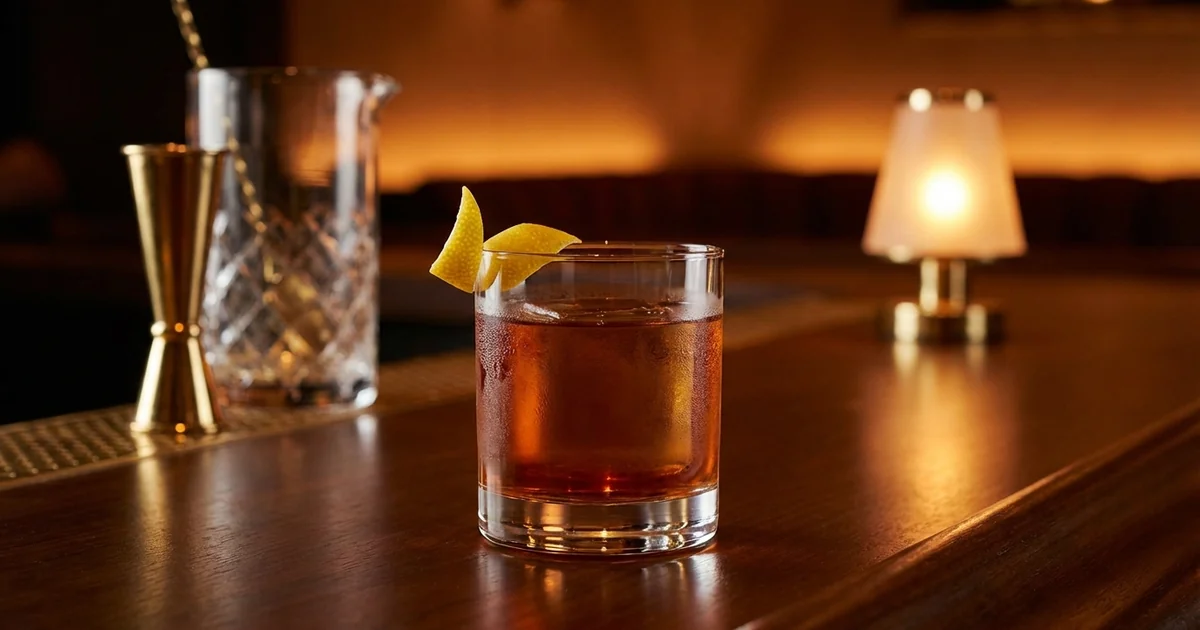
Ordinary Drink
Sazerac
El Sazerac es un cóctel clásico originario de Nueva Orleans, que combina whisky de centeno, azúcar, amargo de Peychaud y un toque de absenta. Se sirve en un vaso corto, con un aroma a limón y un sabor intenso y complejo, que refleja la rica historia de la coctelería sureña. Este trago es conocido por su elegancia y sofisticación, siendo un símbolo de la cultura de los cócteles en Estados Unidos.
- amargo
- especiado
- dulce
- anisado

- Prep Time
- 5 min
- Glass
- Old-fashioned glass
- Difficulty
- Advanced
- ABV
- 35%
- Yields
- 1 serving
El Sazerac es un ordinary drink a base de bourbon, reconocido por su carácter amargo and especiado — uno de los "cena elegante" más buscados. Con solo 5 minutos de preparación, es ideal para celebraciones especiales y fácil de preparar en casa. Si buscas "celebración", esta es tu receta.
Key Takeaways
What you’ll learn
- The Sazerac is widely recognised as America's first cocktail, originating in 1830s New Orleans at Antoine Amédée Peychaud's pharmacy.
- The classic recipe requires rye whiskey, though the original used French Cognac — a legitimate and elegant alternative.
- Peychaud's bitters are absolutely non-negotiable; Angostura creates a fundamentally different cocktail.
- The absinthe rinse is a signature technique that coats the glass with aromatic anise essence without adding it to the mix.
- Traditionally served neat (without ice) in a chilled Old Fashioned glass after stirring over ice.
Advertisement
Ingredients
- Serves
- 1 serving
- Glass
- Old-fashioned glass
- Prep
- 5 min
- 1 tspRicard
- 1/2 tsp superfineSugar
- 2 dashesPeychaud bitters
- 1 tspWater
- 2 ozBourbon
- 1 twist ofLemon peel
Method
Preparation
- 01
Enjuaga un vaso old-fashioned frío con absenta, añade hielo triturado y déjalo a un lado. Mezcla los ingredientes restantes con hielo y déjalo a un lado. Desecha el hielo y cualquier exceso de absenta del vaso preparado, y cuela la bebida en el vaso. Añade la cáscara de limón como adorno.
Origin
History & Origins
The Sazerac stands as a monument to American cocktail culture, with origins in 1838 New Orleans. Antoine Amédée Peychaud, a Creole apothecary, began serving a proprietary blend of bitters mixed with French Cognac at his pharmacy at 437 Royal Street in the French Quarter. He served these medicinal tonics in a double-ended egg cup called a "coquetier" — Americans' mispronunciation of which may have given us the word "cocktail" itself, though this etymology is debated.
The drink took its current name from the Sazerac Coffee House, which opened in 1850 and began serving Peychaud's creation using Sazerac de Forge et Fils Cognac. The 1870s brought a pivotal transformation: the phylloxera epidemic devastated French vineyards, making Cognac scarce and expensive. American rye whiskey became the substitute, and the spirit swap stuck. Meanwhile, the absinthe component entered the recipe in the mid-to-late 19th century, adding the distinctive anise character that defines the modern cocktail. When absinthe was banned in the United States in 1912, New Orleans entrepreneur J. Marion Legendre created Herbsaint as a legal substitute.
The drink took its current name from the Sazerac Coffee House, which opened in 1850 and began serving Peychaud's creation using Sazerac de Forge et Fils Cognac.
In 2008, the Louisiana State Legislature officially named the Sazerac the cocktail of New Orleans, and it appears on UNESCO's list of the city's intangible cultural heritage. The drink's ritualistic preparation — the deliberate absinthe rinse, the careful muddling of sugar with Peychaud's bitters, the neat service without ice — connects every Sazerac drinker to nearly two centuries of New Orleans history and cocktail tradition.
Advertisement
Bartender’s Insight
Pro Tips
Usar bourbon de centeno como el espíritu principal para un estilo auténtico de Nueva Orleans
From Arthur
el enjuague de absenta es esencial—recubre el vaso y desecha el exceso para notas sutiles de anís
servir en una copa de las rocas con hielo
usar bíter de Peychaud exclusivamente para precisión histórica y perfil de sabor apropiado
guarnecer con una cáscara de limón
At the Table
Perfect Pairings
Beyond the Classic
Variations
Sazerac con Cognac
Sustituye cognac por bourbon de centeno en la preparación al viejo estilo tradicional
Modern Sazerac
actualiza la receta con absenta moderna y selecciones de centeno contemporáneas
Sazerac Cocktail Variation
incorpora amargor aromático adicional para complejidad
Questions
Frequently Asked
- The Sazerac has a flavor profile that is amargo, especiado, dulce, anisado. It is crafted to balance these characteristics into a harmonious, satisfying drink that appeals to a wide range of palates.
- The Sazerac is ideal for celebraciones especiales, reuniones con amigos, cenas elegantes. Its flavor profile and presentation make it a versatile choice that works equally well as a social cocktail or a relaxed evening drink.
- Yes, there are several ways to adapt a Sazerac. If you cannot source Ricard, look for a similar alternative that matches its flavor profile. Keep in mind that substitutions may alter the balance of the cocktail, so start with a smaller quantity and adjust to taste. The variations section above lists popular alternatives bartenders use.
- Some of the most popular Sazerac variations include Sazerac con Cognac, Modern Sazerac, Sazerac Cocktail Variation. Each variation puts a unique twist on the original recipe while retaining the essential character of the classic cocktail.
- The Sazerac is traditionally served in a Old-fashioned glass. Using the right glassware is important because it affects the aroma, temperature retention, and overall drinking experience. If you do not have a Old-fashioned glass on hand, a similar shaped glass will work.
- Yes, a mocktail version of the Sazerac is possible. Replace the base spirit with a non-alcoholic spirit alternative (there are many quality options available) and keep all other components the same. The result will capture much of the original's flavor profile while being suitable for guests who prefer alcohol-free options.
Other Bourbon Cocktails
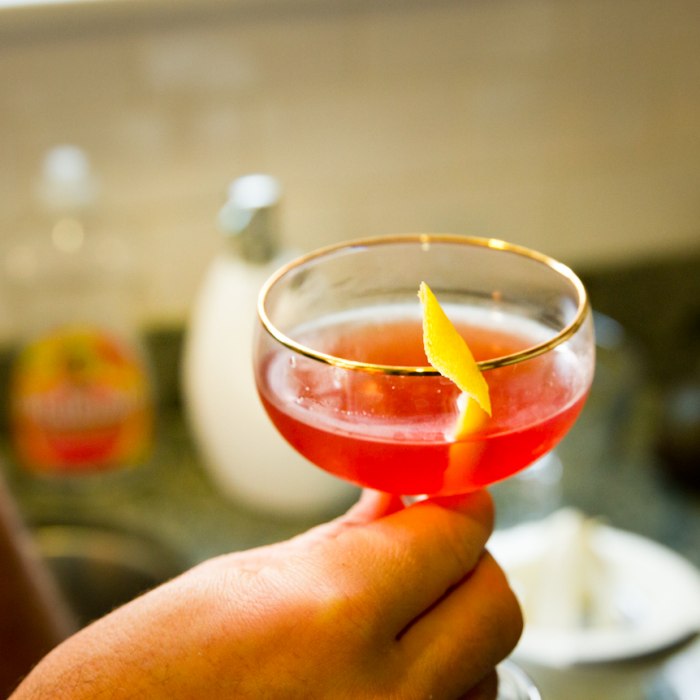
Allegheny
El cóctel Allegheny es una mezcla sofisticada que combina bourbon, vermut dulce y un toque de amargo de Angostura, creando un equilibrio perfecto entre dulzura y amargor. Su presentación elegante y su sabor profundo evocan la esencia de la región de los Apalaches, ideal para disfrutar en una noche especial.
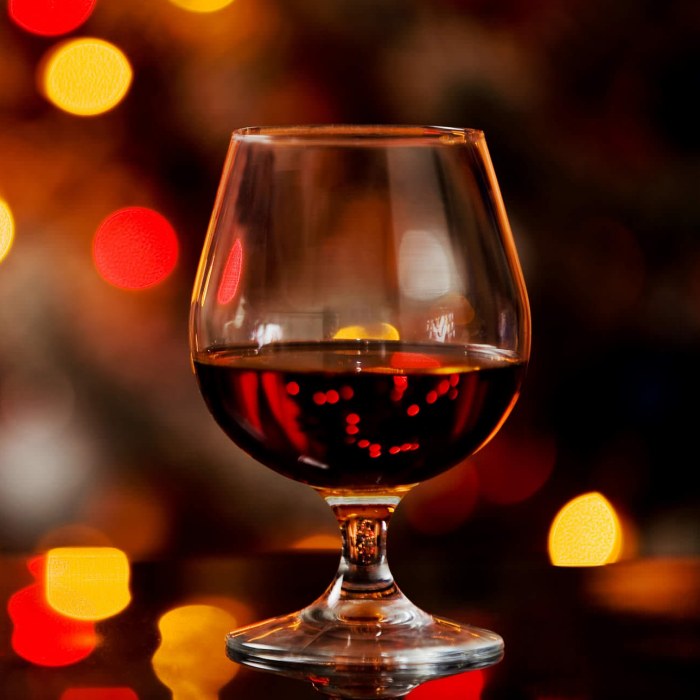
Kentucky B And B
El Kentucky B And B es un cóctel sofisticado que combina la riqueza del bourbon con la suavidad del brandy. Su mezcla equilibrada se realza con un toque de amargo, creando una experiencia de sabor única y reconfortante. Ideal para disfrutar en una velada elegante o como un capricho después de un largo día.
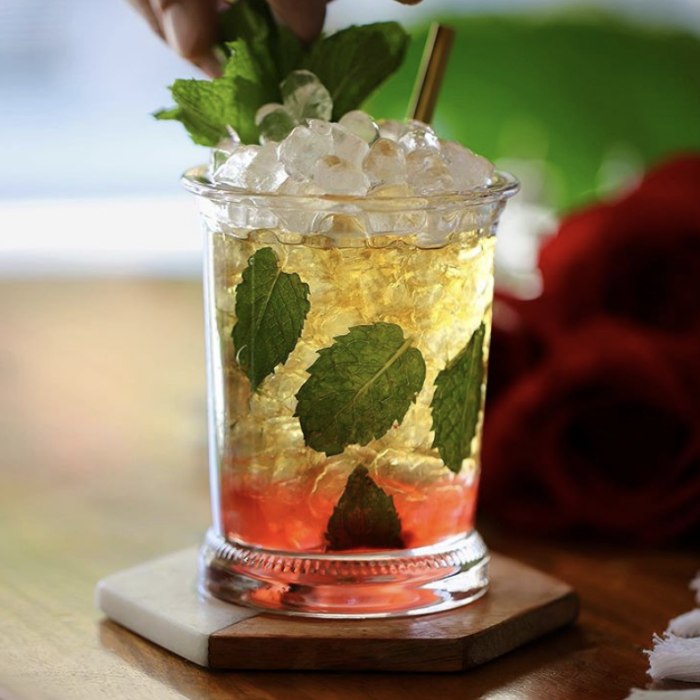
Raspberry Julep
El Raspberry Julep es un refrescante cóctel que combina la dulzura de las frambuesas frescas con la suavidad del bourbon y el sabor aromático de la menta. Servido sobre hielo picado, este trago es perfecto para disfrutar en un día caluroso, ofreciendo un equilibrio delicioso entre lo afrutado y lo herbáceo. Ideal para aquellos que buscan una variante vibrante del clásico julepe de menta.
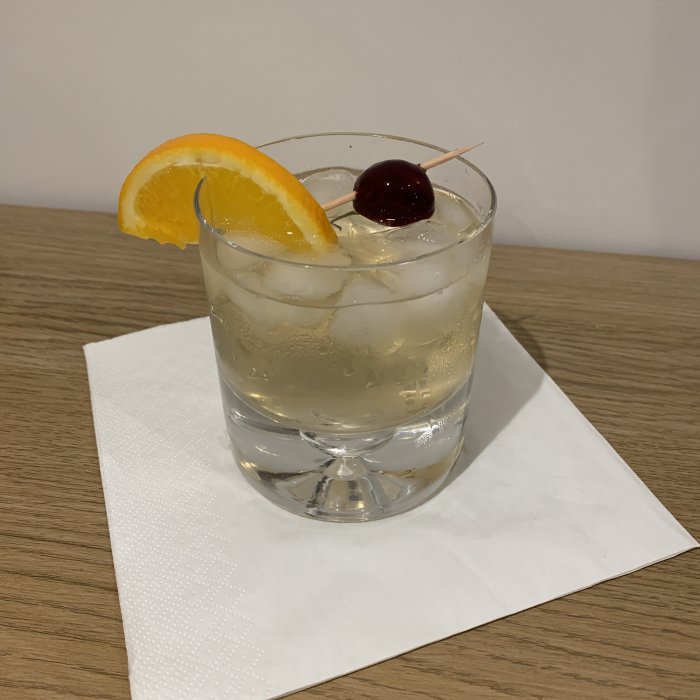
Classic Old-Fashioned
El Classic Old-Fashioned es un cóctel atemporal que combina whisky, azúcar, amargo y un toque de naranja. Servido en un vaso bajo, se mezcla con hielo y se adorna con una cáscara de naranja, ofreciendo un sabor robusto y equilibrado. Ideal para los amantes de los cócteles clásicos, evoca la elegancia de épocas pasadas.
Other celebraciones especiales Cocktails
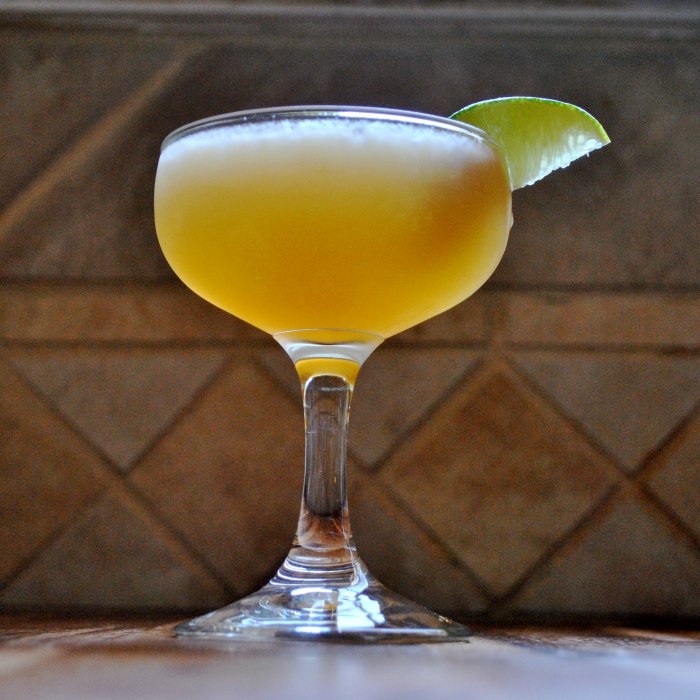
After Dinner Cocktail
El "After Dinner Cocktail" es una bebida sofisticada y reconfortante, ideal para disfrutar al finalizar una comida. Combinando sabores como el café, el licor y un toque de crema, este cóctel ofrece una experiencia placentera que invita a la conversación y el relax. Perfecto para los amantes de los sabores intensos y dulces.
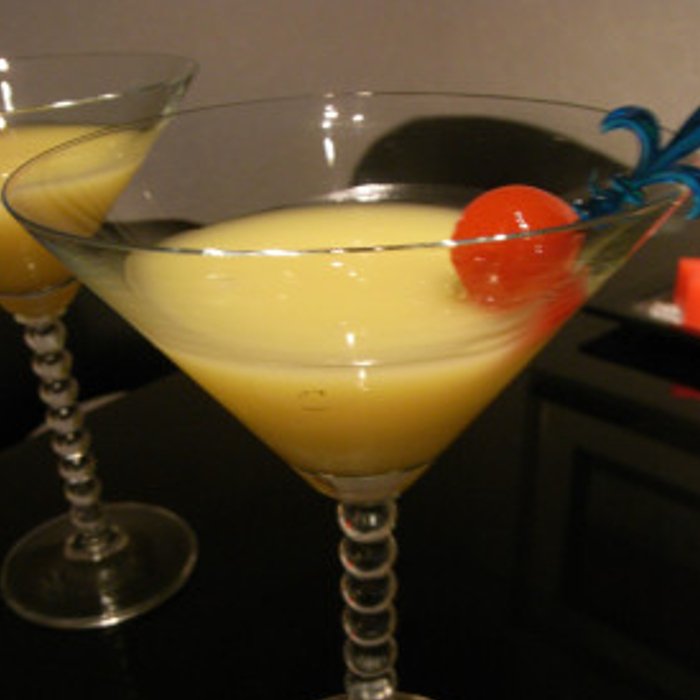
Casa Blanca
El Casa Blanca es un cóctel refrescante y elegante que combina la suavidad del ron blanco con el sabor cítrico del jugo de limón y un toque de licor de naranja. Servido en una copa de cóctel, este trago es perfecto para disfrutar en una tarde soleada. Su equilibrio de sabores lo convierte en una opción ideal para los amantes de las bebidas sofisticadas.
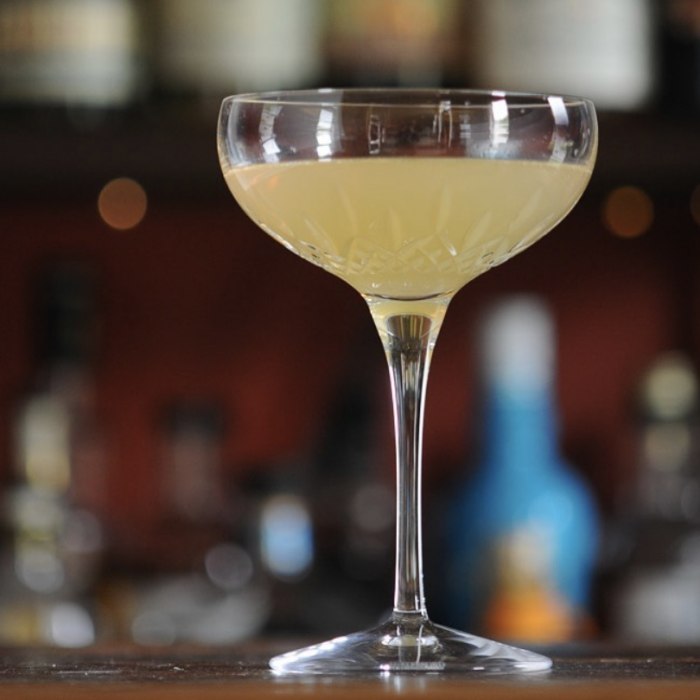
Death in the Afternoon
"Death in the Afternoon" es un cóctel elegante y refrescante que combina champán con absenta, creando una experiencia única y sofisticada. Este trago, popularizado por el famoso escritor Ernest Hemingway, ofrece un equilibrio perfecto entre la efervescencia del champán y el sabor intenso y herbal de la absenta. Ideal para brindar en ocasiones especiales, su nombre intrigante evoca un aire de misterio y aventura.
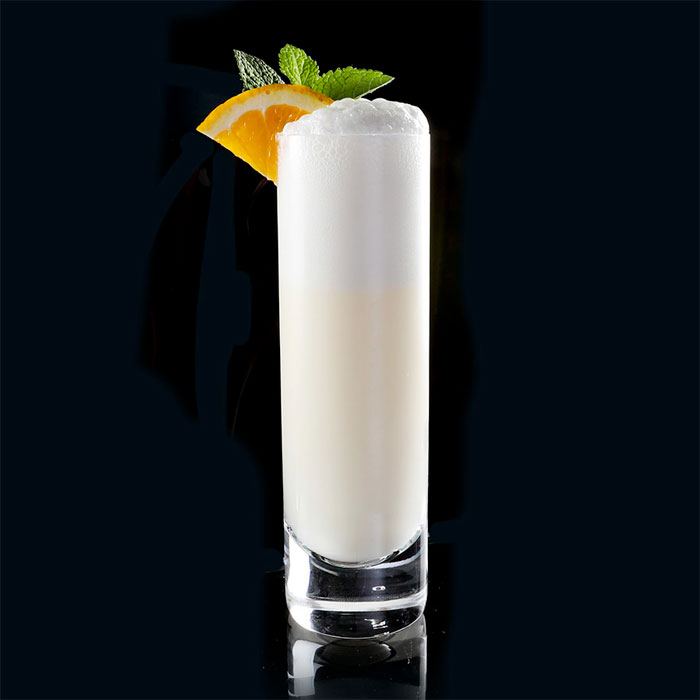
Ramos Gin Fizz
El Ramos Gin Fizz es un cóctel clásico de Nueva Orleans que combina ginebra, jugo de limón, jugo de lima, azúcar, crema y agua de flor de naranja. Su textura suave y espumosa se logra al agitar enérgicamente la mezcla, lo que resulta en una bebida refrescante y deliciosa, ideal para cualquier ocasión. Su distintivo sabor cítrico y su cremosidad lo convierten en un favorito atemporal.
Similar Flavor Profiles
After Dinner Cocktail
El "After Dinner Cocktail" es una bebida sofisticada y reconfortante, ideal para disfrutar al finalizar una comida. Combinando sabores como el café, el licor y un toque de crema, este cóctel ofrece una experiencia placentera que invita a la conversación y el relax. Perfecto para los amantes de los sabores intensos y dulces.
Classic Old-Fashioned
El Classic Old-Fashioned es un cóctel atemporal que combina whisky, azúcar, amargo y un toque de naranja. Servido en un vaso bajo, se mezcla con hielo y se adorna con una cáscara de naranja, ofreciendo un sabor robusto y equilibrado. Ideal para los amantes de los cócteles clásicos, evoca la elegancia de épocas pasadas.
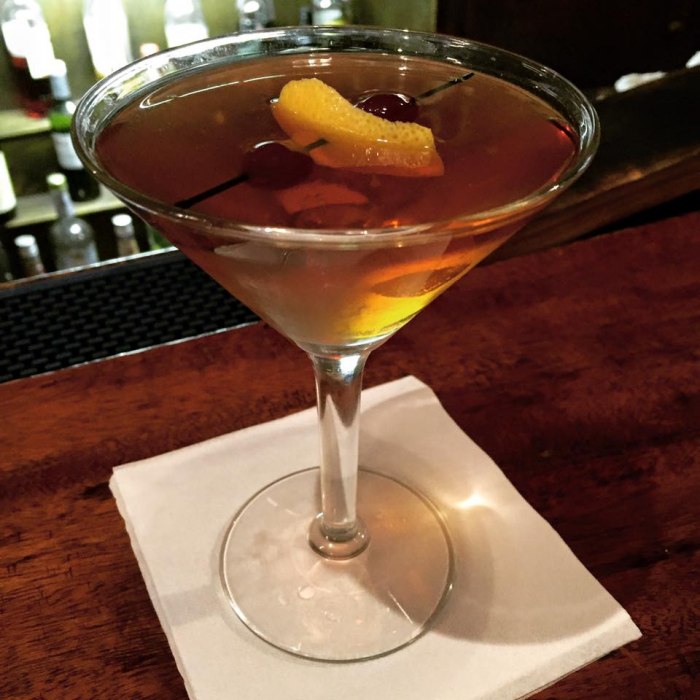
Manhattan
El Manhattan es un cóctel clásico que combina whisky de centeno, vermut dulce y un toque de angostura, creando una mezcla equilibrada y sofisticada. Servido en una copa de cóctel, se adorna típicamente con una cereza marrasquino, lo que le añade un toque de elegancia. Su sabor robusto y aromático lo convierte en una elección popular entre los amantes de los cócteles.
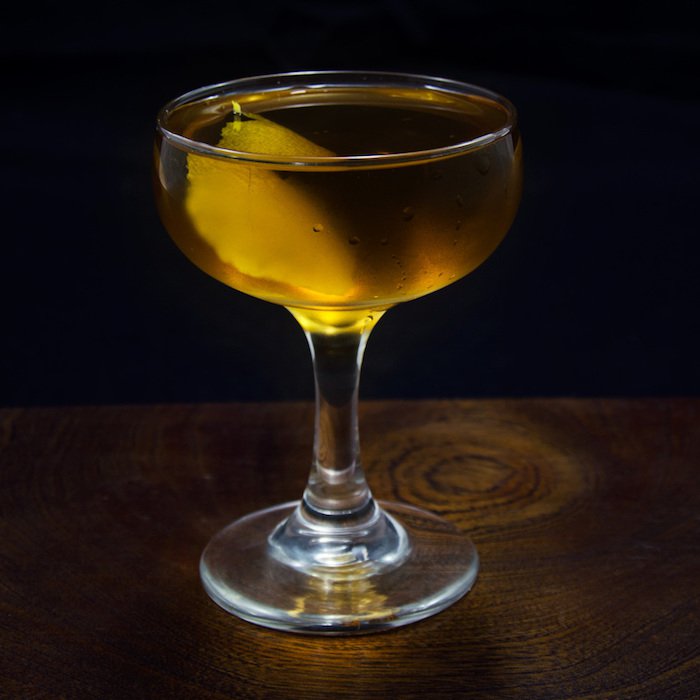
Bijou
El Bijou es un cóctel clásico que combina ginebra, vermut dulce y chartreuse verde, creando una mezcla equilibrada y aromática. Su nombre, que significa "joya" en francés, refleja su elegancia y sofisticación. Se suele servir en una copa de cóctel, adornado con un toque de cáscara de limón o una cereza.
Advertisement