Cocktail
Martini
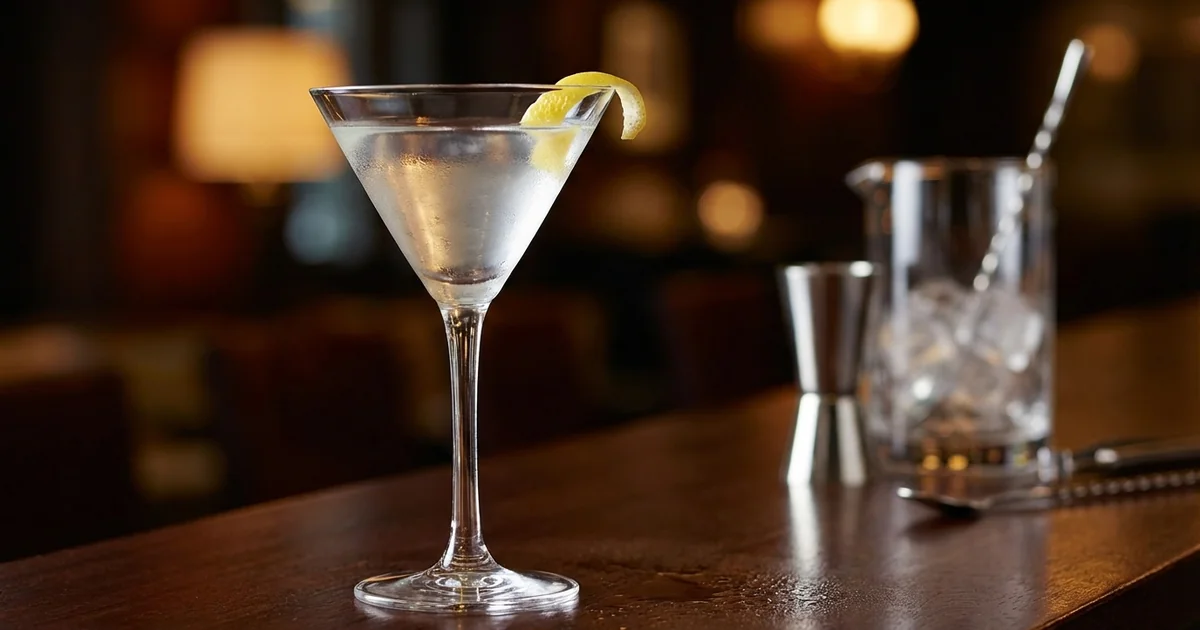
Le Martini est un cocktail classique, élégant et sophistiqué, préparé à base de gin et de vermouth sec, souvent garni d'une olive ou d'un zeste de citron. Sa saveur délicate et son apparence raffinée en font une boisson prisée dans les bars du monde entier. Que ce soit sec ou avec un peu de vermouth, le Martini est un symbole de la culture du cocktail.
- sec
- amer
- floral
- salé

- Prep Time
- 3 min
- Glass
- Cocktail glass
- Difficulty
- Intermediate
- ABV
- 31%
- Yields
- 1 serving
Le Martini est un cocktail à base de gin, reconnu pour ses notes sec and amer — parmi les "cocktail" les plus recherchés. Prêt en seulement 3 minutes, idéal pour soirées élégantes et simple à réaliser chez soi. Si vous cherchez "soirée", cette recette est pour vous.
Key Takeaways
What you’ll learn
- The classic martini ratio is 2.5:0.5 gin to dry vermouth (5:1), though the spectrum ranges from wet (2:1) to bone-dry — personal preference is the only rule.
- Stirring is the traditional method, producing a silky, crystal-clear cocktail; shaking makes it colder and cloudier but "bruises" the gin.
- Vermouth quality and freshness are as important as the gin — store it refrigerated and replace it every 3–4 weeks after opening.
- The garnish — lemon twist or olive — fundamentally changes the cocktail's aromatics and should be chosen deliberately, not randomly.
- Always pre-chill the glass for at least 15 minutes; a warm glass is the fastest way to ruin an otherwise perfect martini.
Advertisement
Ingredients
- Serves
- 1 serving
- Glass
- Cocktail glass
- Prep
- 3 min
- 1 2/3 ozGin
- 1/3 ozDry Vermouth
- 1Olive
Method
Preparation
- 01
Voici la traduction des instructions en français :
- 02
Direct : Versez tous les ingrédients dans un verre à mélange avec des glaçons. Remuez bien. Filtrez dans un verre à cocktail martini refroidi. Pressez l'huile de zeste de citron sur la boisson, ou décorez avec une olive.
Origin
History & Origins
The Martini stands alone at the apex of cocktail culture — a drink so refined, so perfectly balanced, that it has become synonymous with sophistication itself. No cocktail inspires more passionate discussion: from the gin versus vodka debate to the proper vermouth ratio, from stirred versus shaken to olive versus twist, every element of this deceptively simple cocktail has been analyzed, argued, and perfected over more than a century of mixing.
The Martini's origins are disputed. Multiple cities claim the invention — San Francisco's Occidental Hotel, the town of Martinez, California, and New York's Knickerbocker Hotel among them — but what is clear is that the drink emerged in the late 19th century from the Martinez cocktail, a sweeter precursor made with Old Tom gin, sweet vermouth, and maraschino liqueur. As London Dry gin became dominant and tastes moved toward drier expressions, the modern Martini evolved: dry vermouth replaced sweet, and the ratio tilted increasingly spirit-forward through the 20th century.
Multiple cities claim the invention — San Francisco's Occidental Hotel, the town of Martinez, California, and New York's Knickerbocker Hotel among them — but what is clear is that the drink emerged in the late 19th century from the Martinez cocktail, a sweeter precursor made with Old Tom gin, sweet vermouth, and maraschino liqueur.
The vodka martini gained prominence in the 1950s and 60s when vodka entered the American market, famously championed by Ian Fleming's James Bond. His "shaken, not stirred" prescription started one of cocktail culture's most enduring debates, though the gin-and-stir traditionalists have always maintained their ground. Today the Martini is a benchmark by which bartenders and bars are judged — a drink whose two-ingredient simplicity is deceptive, concealing depths that reveal themselves differently depending on the gin, vermouth, ratio, technique, and garnish chosen.
Advertisement
Bartender’s Insight
Pro Tips
Remuez, ne secouez jamais, pour obtenir un refroidissement approprié sans excès d'eau
From Elena
utilisez un gin London Dry de qualité
le vermouth doit être frais (dans les 3 mois suivant l'ouverture)
servez extrêmement froid dans un verre pré-refroidi
At the Table
Perfect Pairings
Beyond the Classic
Variations
Martini Sec
Moins de vermouth pour un profil spiritueux et moins botanique
Martini Parfait
Parts égales de vermouth sec et doux pour l'équilibre
Martini à la Vodka
Remplace le gin par la vodka, créant un profil plus propre
Watch
See it in action
Questions
Frequently Asked
- The Martini has a flavor profile that is sec, amer, floral, salé. It is crafted to balance these characteristics into a harmonious, satisfying drink that appeals to a wide range of palates.
- The Martini is ideal for soirées élégantes, anniversaires, dîners formels. Its flavor profile and presentation make it a versatile choice that works equally well as a social cocktail or a relaxed evening drink.
- Yes, there are several ways to adapt a Martini. If you cannot source Gin, look for a similar alternative that matches its flavor profile. Keep in mind that substitutions may alter the balance of the cocktail, so start with a smaller quantity and adjust to taste. The variations section above lists popular alternatives bartenders use.
- Some of the most popular Martini variations include Martini Sec, Martini Parfait, Martini à la Vodka. Each variation puts a unique twist on the original recipe while retaining the essential character of the classic cocktail.
- The Martini is traditionally served in a Cocktail glass. Using the right glassware is important because it affects the aroma, temperature retention, and overall drinking experience. If you do not have a Cocktail glass on hand, a similar shaped glass will work.
- Yes, a mocktail version of the Martini is possible. Replace the base spirit with a non-alcoholic spirit alternative (there are many quality options available) and keep all other components the same. The result will capture much of the original's flavor profile while being suitable for guests who prefer alcohol-free options.
Other Gin Cocktails
Blackthorn
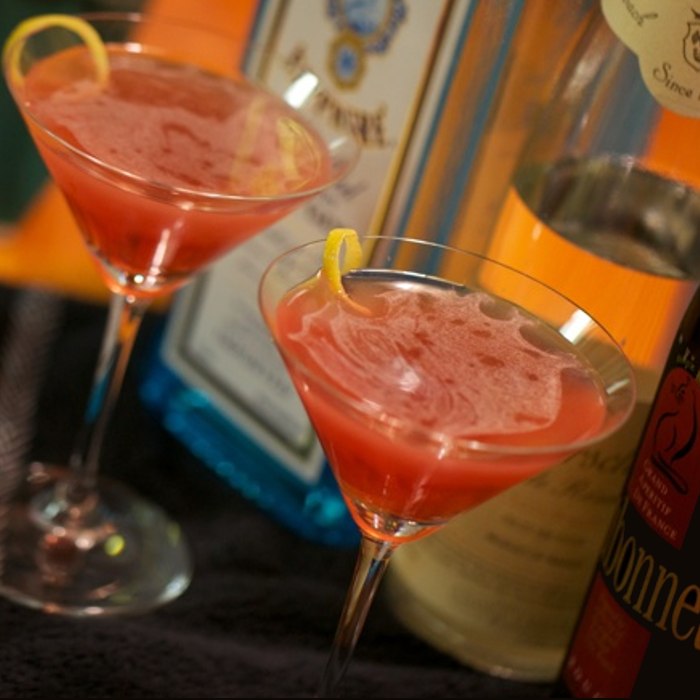
Le Blackthorn est un cocktail élégant et raffiné, alliant la richesse de la gin à la douceur de la liqueur de prunelles. Servi sur glace, il est souvent agrémenté d'un zeste de citron pour une touche d'acidité qui équilibre parfaitement les saveurs. Ce mélange savoureux évoque des notes fruitées et épicées, parfait pour les amateurs de cocktails classiques.
Rail Splitter
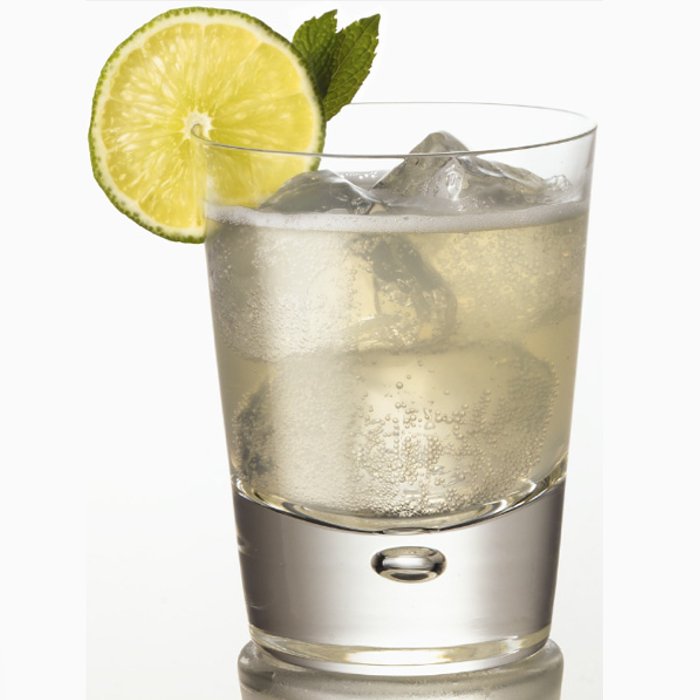
Le Rail Splitter est un cocktail audacieux qui marie habilement le bourbon, le jus de citron frais et un soupçon de sirop d'érable. Servi sur glace, il offre une expérience à la fois douce et réconfortante, évoquant les saveurs rustiques du terroir américain. Parfait pour les amateurs de cocktails classiques revisités, il saura séduire vos papilles.
The Philosopher
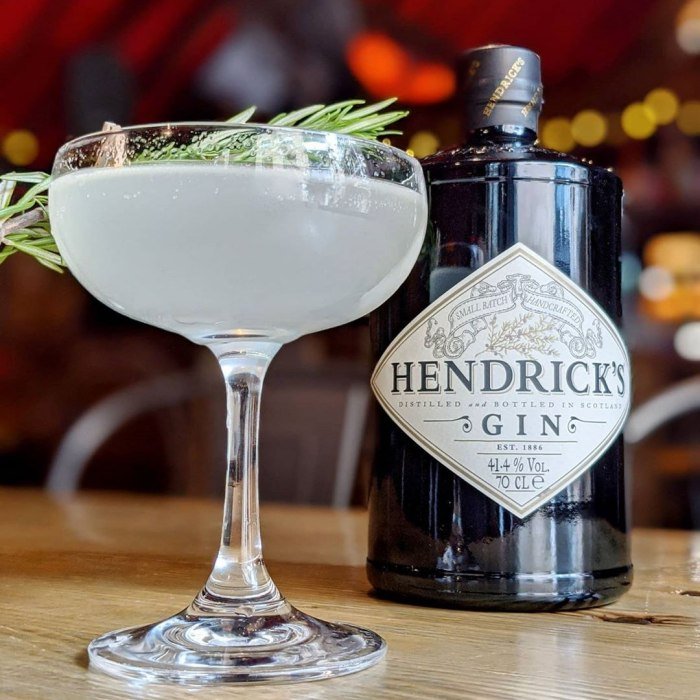
Le cocktail 'The Philosopher' est une création raffinée qui marie des saveurs complexes et des ingrédients inattendus. Avec une base de gin infusé aux herbes, agrémentée de tonic artisanal et d'une touche d'agrumes, il invite à la réflexion et à la contemplation. Ce breuvage élégant est parfait pour ceux qui aiment savourer chaque gorgée tout en discutant des grandes questions de la vie.
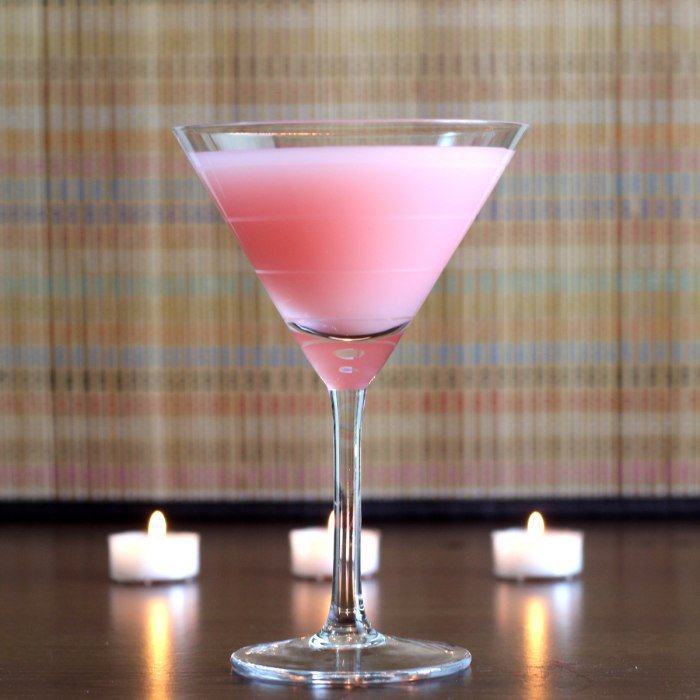
Ace
Le cocktail "Ace" est une délicieuse combinaison de saveurs rafraîchissantes, mêlant du gin artisanal, du tonic premium et une touche de citron vert. Servi avec des glaçons et une garniture de concombre, il offre une expérience à la fois élégante et désaltérante, parfaite pour les soirées estivales. Son équilibre subtil en fait un choix idéal pour les amateurs de cocktails sophistiqués.
Other soirées élégantes Cocktails
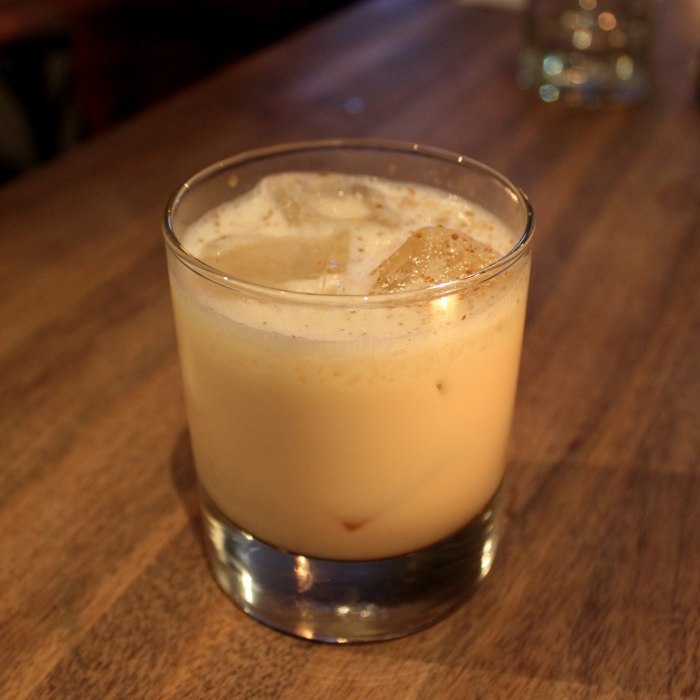
Brandy Alexander
Le Brandy Alexander est un cocktail crémeux et élégant, alliant du brandy, de la crème de cacao et de la crème. Servi dans un verre à cocktail, il est souvent garni de noix de muscade râpée, ajoutant une touche aromatique à cette délicieuse boisson. Idéal pour les soirées, il séduit par sa douceur et sa richesse en saveurs.
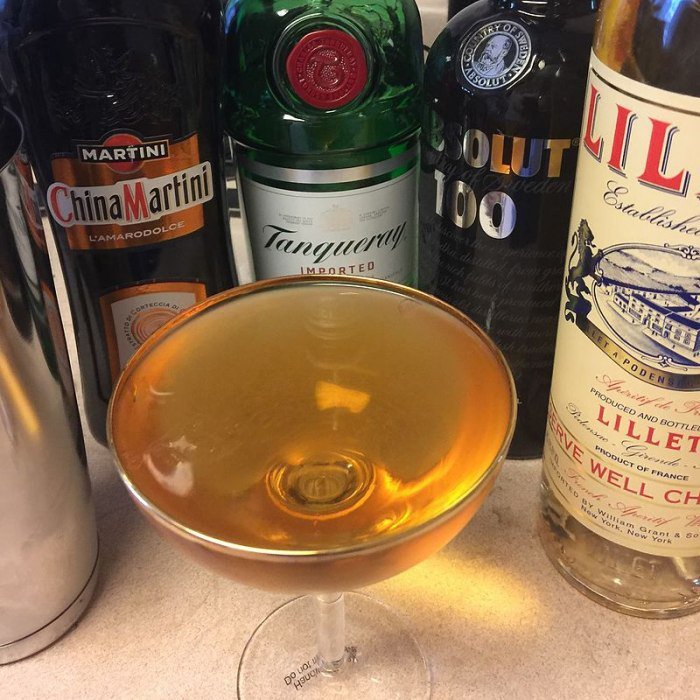
Vesper
Le Vesper est un cocktail emblématique, popularisé par James Bond dans le roman "Casino Royale". Il se compose de gin, de vodka et de vermouth blanc, souvent servi avec une garniture de zeste de citron, offrant un mélange élégant et rafraîchissant. Son goût distinctif et sa présentation sophistiquée en font un choix prisé pour les amateurs de cocktails.
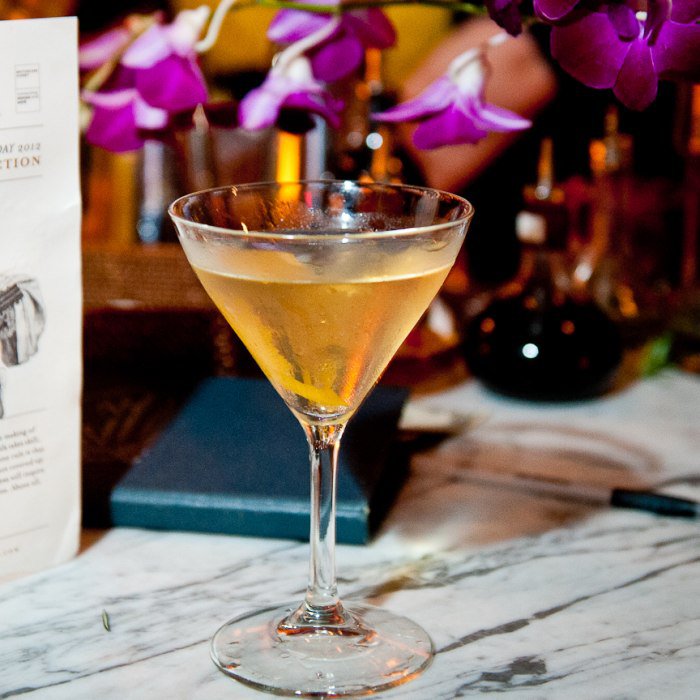
Highland Fling Cocktail
Le cocktail Highland Fling est une délicieuse fusion de saveurs écossaises, mêlant whisky tourbé, liqueur de framboise et un soupçon de citron frais. Servi sur glace avec une touche de soda, il offre une expérience rafraîchissante et aromatique, parfaite pour les amateurs de whisky. Ce cocktail évoque les paysages enchanteurs des Highlands tout en séduisant les palais modernes.
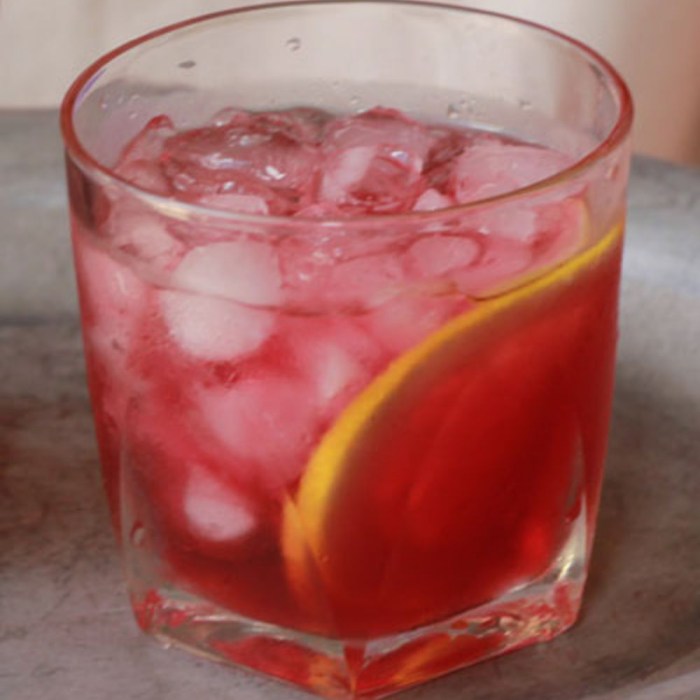
Queen Charlotte
Le cocktail 'Queen Charlotte' est une délicieuse fusion de saveurs florales et fruitées, alliant gin, liqueur de fleur de sureau et jus de citron frais. Servi dans un verre élégant, il est souvent garni de pétales de fleurs comestibles, offrant une présentation raffinée et un goût rafraîchissant. Parfait pour une soirée chic ou une célébration spéciale, ce cocktail évoque l'élégance et la sophistication.
Similar Flavor Profiles
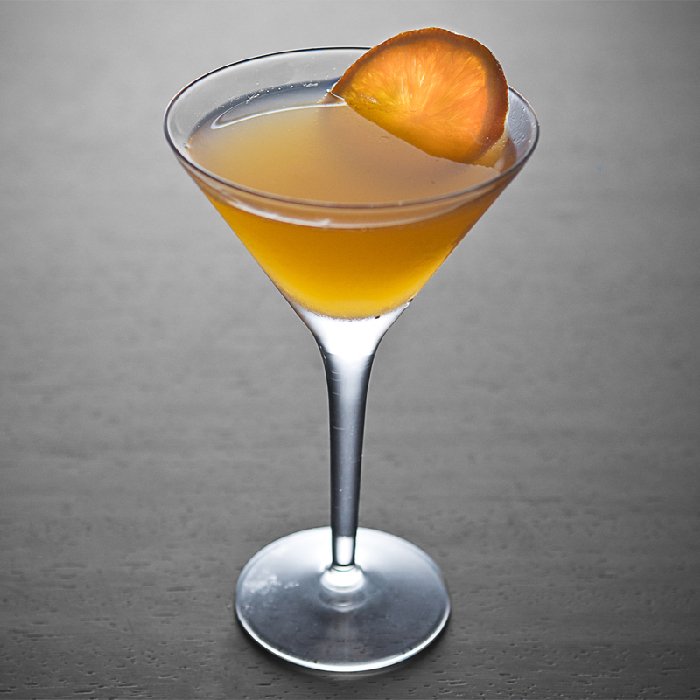
50/50
Le cocktail 50/50 est un mélange raffiné de gin et de vermouth doux, offrant un équilibre parfait entre la fraîcheur botanique et la douceur aromatique. Servi bien frais, il est souvent garni d'un zeste de citron ou d'une olive pour rehausser ses saveurs délicates. Idéal pour les amateurs de cocktails classiques, il incarne l'élégance et la simplicité.
Vesper
Le Vesper est un cocktail emblématique, popularisé par James Bond dans le roman "Casino Royale". Il se compose de gin, de vodka et de vermouth blanc, souvent servi avec une garniture de zeste de citron, offrant un mélange élégant et rafraîchissant. Son goût distinctif et sa présentation sophistiquée en font un choix prisé pour les amateurs de cocktails.
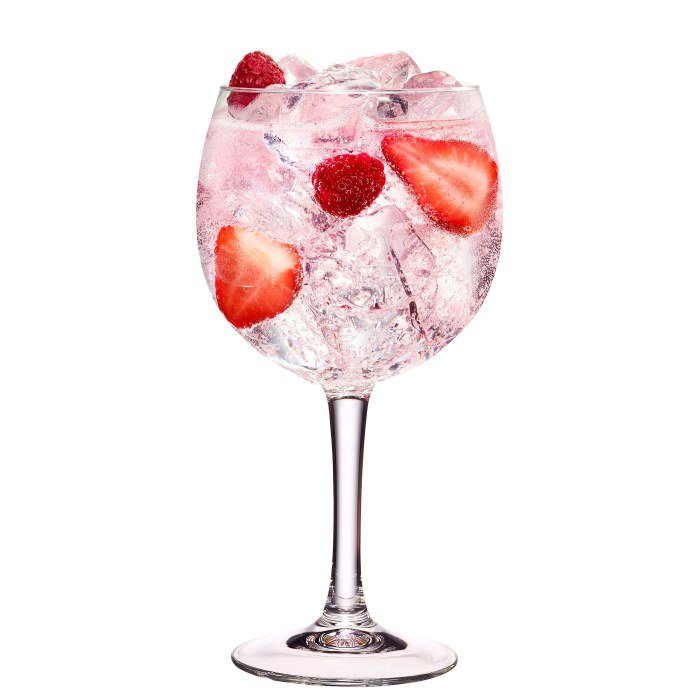
Pink Gin
Le Pink Gin est un cocktail élégant et rafraîchissant, composé principalement de gin et d'amer à la cerise. Sa couleur rose délicate provient généralement de l'ajout de quelques gouttes de cet amer, créant une boisson à la fois simple et sophistiquée. Servi avec un zeste de citron ou une cerise, il est parfait pour les amateurs de gin.
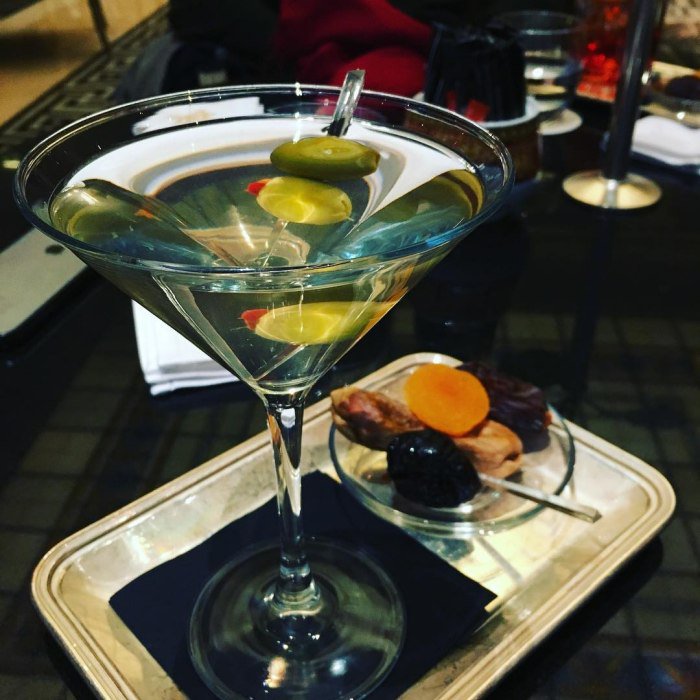
Dirty Martini
Le Dirty Martini est un cocktail élégant et savoureux, préparé à base de gin ou de vodka, mélangé avec un peu de vermouth sec et une touche de saumure d'olive. Ce mélange lui confère une saveur salée distinctive, souvent rehaussée par l'ajout d'olive pour la garniture. Idéal pour les amateurs de cocktails raffinés, le Dirty Martini est un incontournable des bars à cocktails.
Advertisement