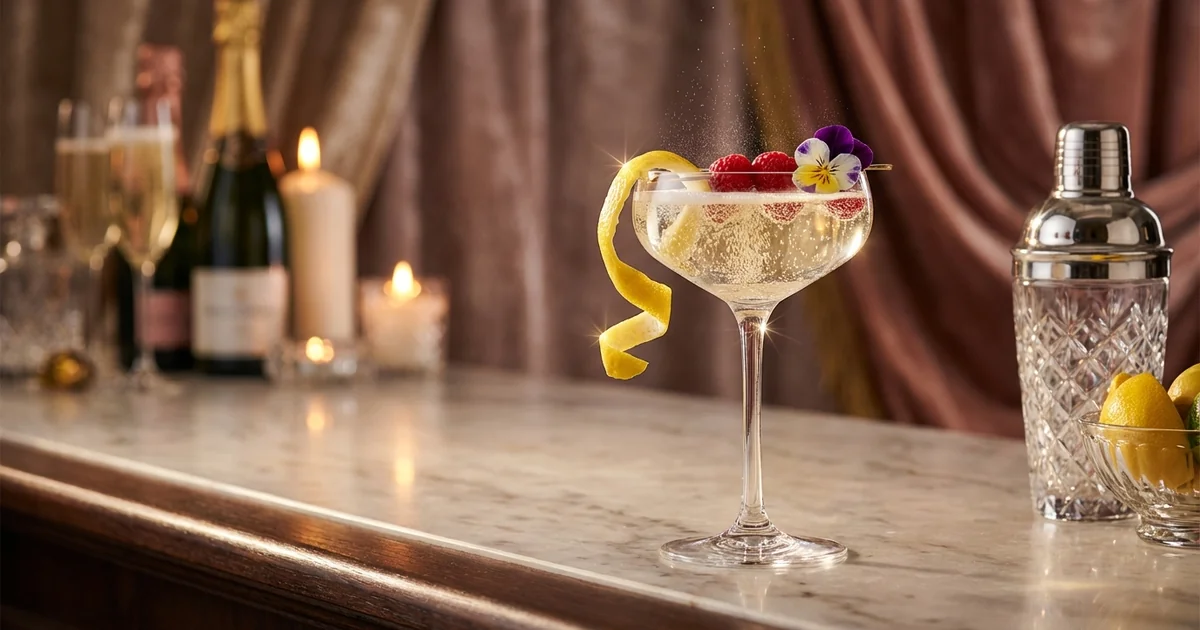
Ordinary Drink
French 75
Der French 75 ist ein eleganter Cocktail, der aus Gin, frischem Zitronensaft, Zuckersirup und Champagner besteht. Er besticht durch seine spritzige Frische und die feine Perlage, die ihn zu einem perfekten Aperitif für festliche Anlässe macht. Mit seinem ansprechenden Geschmack und der anmutigen Präsentation ist der French 75 ein zeitloser Klassiker in der Cocktailwelt.
- spritzig
- zitrus
- floral
- erfrischend
- Prep Time
- 5 min
- Glass
- Collins glass
- Difficulty
- Easy
- ABV
- 14%
- Yields
- 1 serving
Der French 75 ist ein ordinary drink auf Basis von Gin, bekannt für sein spritzig and zitrus Profil — eines der meistgesuchten Rezepte für "Hochzeit". In nur 5 Minuten zubereitet und ideal für Silvesterfeiern — perfekt für die Heimbar. Wer nach "Silvester" sucht, ist hier genau richtig.
Key Takeaways
What you’ll learn
- The French 75 was named after the powerful WWI-era 75mm field gun for its reputedly fierce kick.
- Both gin and cognac versions are historically valid; gin is the most popular modern interpretation while cognac is the French original.
- Proper technique requires shaking the base ingredients with ice before topping with champagne — never shake the sparkling wine itself.
- Always use brut champagne or quality sparkling wine to balance the simple syrup's sweetness.
Advertisement
Ingredients
- Serves
- 1 serving
- Glass
- Collins glass
- Prep
- 5 min
- 1 1/2 ozGin
- 2 tsp superfineSugar
- 1 1/2 ozLemon juice
- 4 oz ChilledChampagne
- 1Orange
- 1Maraschino cherry
Method
Preparation
- 01
Kombinieren Sie Gin, Zucker und Zitronensaft in einem Cocktailshaker, der mit Eis gefüllt ist. Schütteln Sie kräftig und seihen Sie die Mischung in ein gekühltes Champagnerglas. Füllen Sie es mit Champagner auf. Vorsichtig umrühren.
Origin
History & Origins
The French 75's origin story is as debated as the recipe itself. Most cocktail historians credit Harry MacElhone, the Scottish bartender who founded Harry's New York Bar in Paris, with creating the drink around 1925. Some accounts trace it back to the interwar period in London, while others suggest a WWI-era provenance — French and American soldiers in France were supposedly mixing gin with champagne as early as 1915.
What is certain is that the cocktail's name invokes the Canon de 75 modèle 1897, the rapid-fire French field gun that became the signature artillery piece of World War I. Early drinkers claimed the cocktail had such a kick that it felt like being hit by the cannon's shell — a claim that speaks more to its deceptive drinkability than any literal comparison. The drink appeared in "The Savoy Cocktail Book" in 1930 with a gin base, cementing its place in the classic canon.
Early drinkers claimed the cocktail had such a kick that it felt like being hit by the cannon's shell — a claim that speaks more to its deceptive drinkability than any literal comparison.
The gin-versus-cognac debate persists to this day. French sources from the same era often specified cognac, suggesting the cognac version may be the authentic Parisian recipe while the gin variant was popularised in English-speaking countries. Today the IBA lists the French 75 as an official cocktail with gin as the canonical spirit. Some bartenders serve the cognac version as "French 75 Moderne." Both versions are historically valid, and choosing between them is an exercise in personal preference and cocktail philosophy.
Advertisement
Bartender’s Insight
Pro Tips
Kühlen Sie alle Zutaten und Gläser vor der Zubereitung gründlich ab, um eine optimale Serviertemperatur zu erreichen
From Elena
verwenden Sie London Dry Gin, um das botanische Gleichgewicht zu wahren, ohne den Champagner zu überlagern
fügen Sie Champagner zuletzt hinzu, um die Kohlensäure zu bewahren und visuellen Reiz zu schaffen
rühren Sie, anstatt zu schütteln, um die Klarheit zu bewahren
At the Table
Perfect Pairings
Beyond the Classic
Variations
French 75 75
Verwendet 75 ml jeder Komponente (Gin, Champagner, Zitronensaft, Zuckersirup) für perfekte Proportionen und kräftige Präsentation
Champagne 75
Integriert mit Absinth gespülte Schalen für herbale Untertöne
Moderner French 75
Fügt einen Hauch Peychaud's Bitters für subtile Würze und Komplexität hinzu
Questions
Frequently Asked
- The French 75 has a flavor profile that is spritzig, zitrus, floral, erfrischend. It is crafted to balance these characteristics into a harmonious, satisfying drink that appeals to a wide range of palates.
- The French 75 is ideal for Silvesterfeiern, Hochzeiten, Jubiläen. Its flavor profile and presentation make it a versatile choice that works equally well as a social cocktail or a relaxed evening drink.
- Yes, there are several ways to adapt a French 75. If you cannot source Gin, look for a similar alternative that matches its flavor profile. Keep in mind that substitutions may alter the balance of the cocktail, so start with a smaller quantity and adjust to taste. The variations section above lists popular alternatives bartenders use.
- Some of the most popular French 75 variations include French 75 75, Champagne 75, Moderner French 75. Each variation puts a unique twist on the original recipe while retaining the essential character of the classic cocktail.
- The French 75 is traditionally served in a Collins glass. Using the right glassware is important because it affects the aroma, temperature retention, and overall drinking experience. If you do not have a Collins glass on hand, a similar shaped glass will work.
- Yes, a mocktail version of the French 75 is possible. Replace the base spirit with a non-alcoholic spirit alternative (there are many quality options available) and keep all other components the same. The result will capture much of the original's flavor profile while being suitable for guests who prefer alcohol-free options.
Other Gin Cocktails
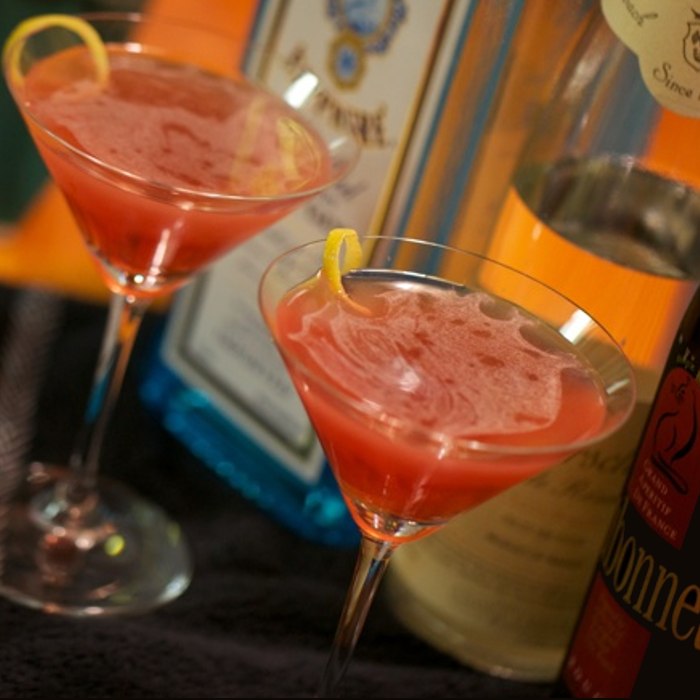
Blackthorn
Der Blackthorn ist ein klassischer Cocktail, der aus Gin, Süßem Wermut und einem Hauch von Bitterstoffen besteht. Sein ausgewogenes Geschmacksprofil kombiniert die herben Noten des Gins mit der Süße des Wermuts, während die Bitterkeit eine erfrischende Tiefe hinzufügt. Oft garniert mit einer Zitronenzeste, ist dieser Drink sowohl elegant als auch aromatisch.
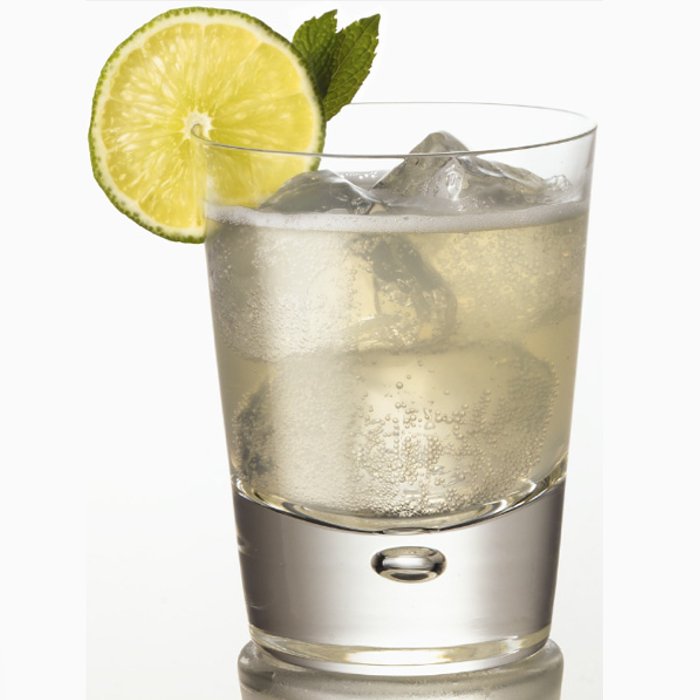
Rail Splitter
Der Rail Splitter ist ein erfrischender Cocktail, der mit einer harmonischen Mischung aus Bourbon, frischem Zitronensaft und einem Hauch von Honig zubereitet wird. Diese köstliche Kombination bietet eine perfekte Balance zwischen süßen und sauren Aromen, die den Gaumen verwöhnen. Ideal für gesellige Abende oder als Genuss nach einem langen Tag.
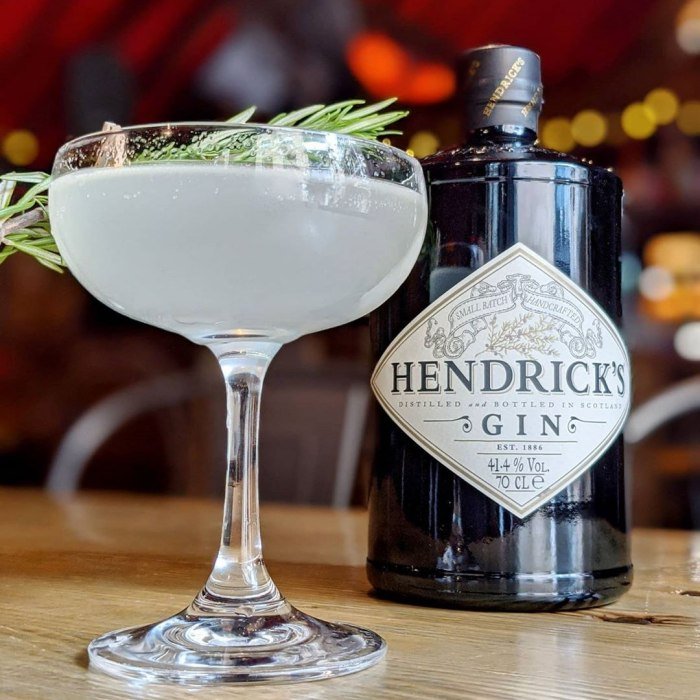
The Philosopher
Der Cocktail "The Philosopher" ist eine raffinierte Mischung aus edlem Gin, frischem Zitronensaft und einem Hauch von Kräuterlikör, die den Geist anregt und zum Nachdenken einlädt. Mit seiner ausgewogenen Süße und der feinen Bitterkeit bietet er ein geschmackliches Erlebnis, das sowohl den Gaumen als auch die Sinne inspiriert. Perfekt für gesellige Abende oder stille Momente der Reflexion.
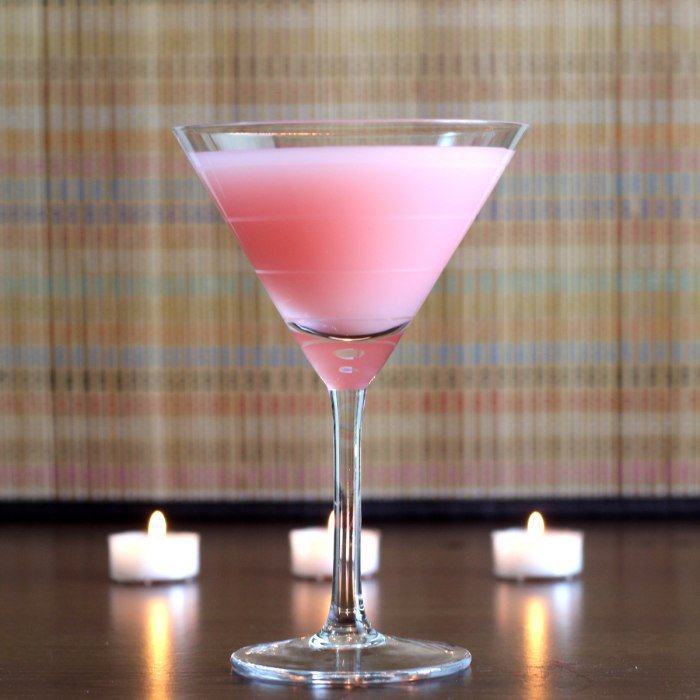
Ace
Der Cocktail "Ace" ist eine erfrischende Mischung aus hochwertigen Spirituosen, frischen Zitrusfrüchten und einem Hauch von Kräutern. Mit seinem ausgewogenen Geschmack und der ansprechenden Präsentation ist er der perfekte Begleiter für gesellige Abende. Genießen Sie diesen aufregenden Drink, der sowohl für Cocktailliebhaber als auch für Neulinge ein Erlebnis bietet.
Other Silvesterfeiern Cocktails
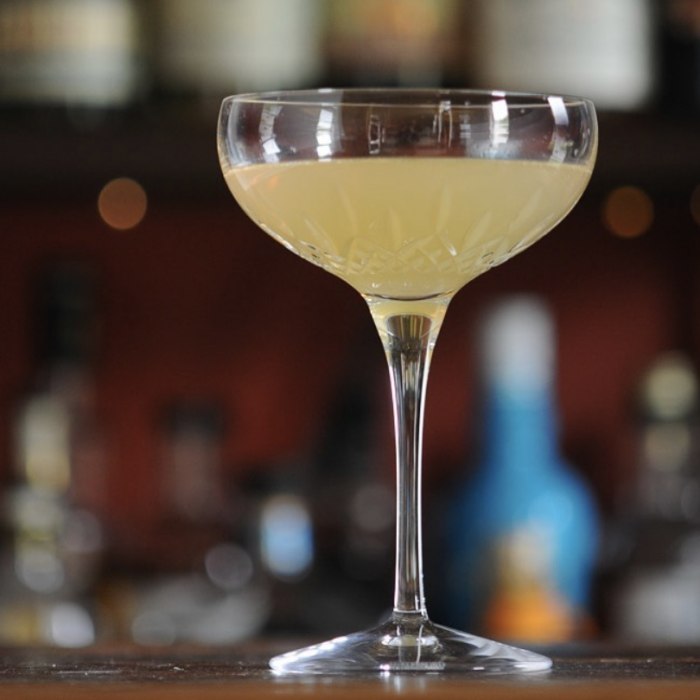
Death in the Afternoon
"Death in the Afternoon" ist ein erfrischender Cocktail, der aus einer Mischung von Champagner und Absinth besteht. Diese einzigartige Kombination kreiert einen komplexen Geschmack, der sowohl bitter als auch spritzig ist und perfekt für besondere Anlässe geeignet ist. Inspiriert von Ernest Hemingways berühmtem Rezept, verspricht dieser Drink ein unvergessliches Erlebnis.
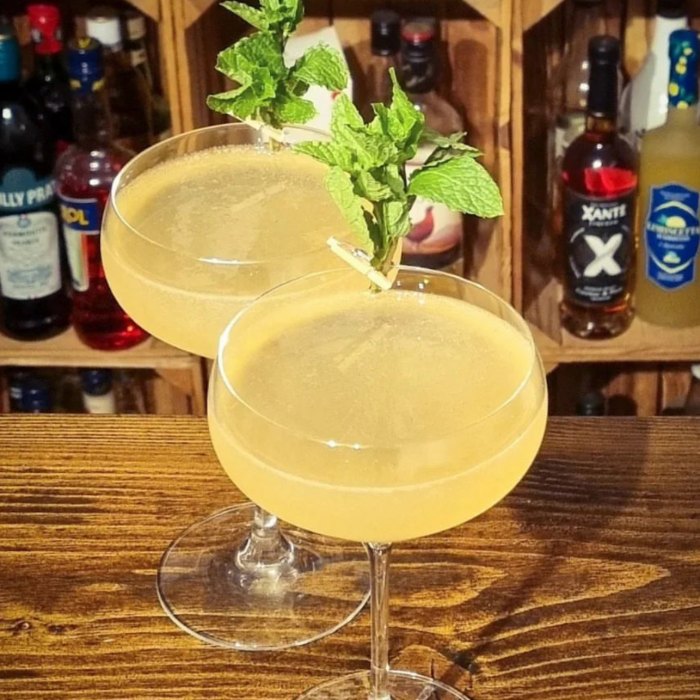
Old Cuban
Der Old Cuban ist ein eleganter Cocktail, der Rum, frischen Limettensaft, Minze und Champagner vereint. Diese erfrischende Mischung bietet eine harmonische Balance zwischen süßen und spritzigen Aromen, ideal für besondere Anlässe. Serviert in einem gekühlten Glas, ist der Old Cuban ein wahrer Genuss für Liebhaber klassischer Cocktails.
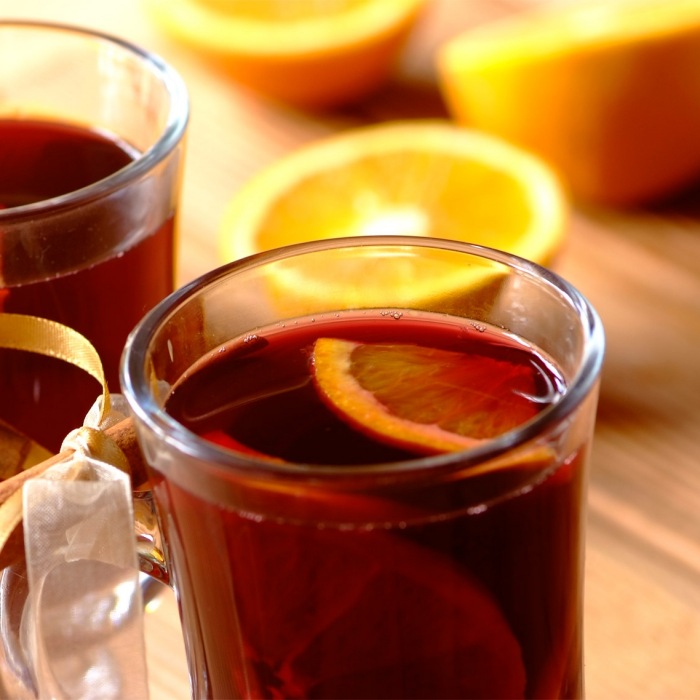
Gluehwein
Glühwein ist ein traditionelles, heißes Getränk, das besonders in der kalten Jahreszeit und auf Weihnachtsmärkten beliebt ist. Es wird aus Rotwein, Gewürzen wie Zimt und Nelken sowie Zitrusfrüchten zubereitet und sorgt mit seinem aromatischen Duft und warmen Geschmack für eine gemütliche Atmosphäre. Ideal für gesellige Abende und festliche Anlässe!
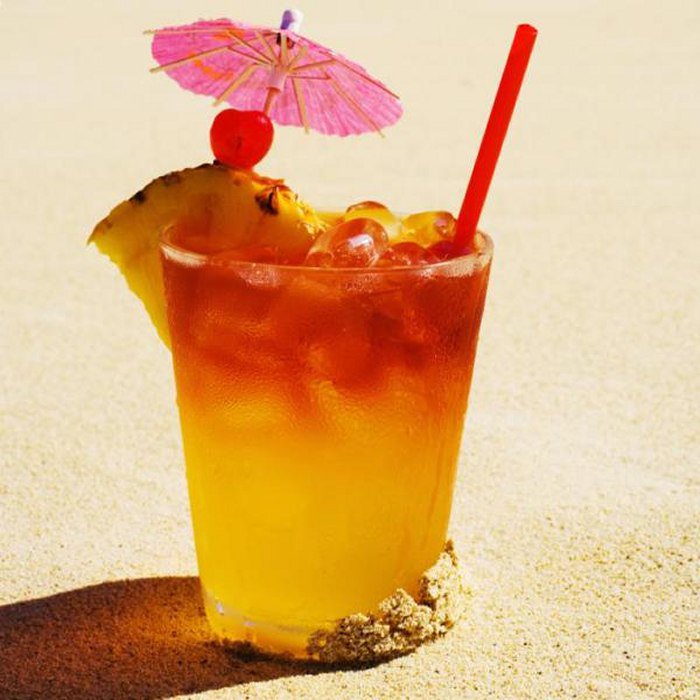
Space Odyssey
Der „Space Odyssey“ ist ein faszinierender Cocktail, der mit seiner leuchtenden Farbe und einzigartigen Aromen an die Weiten des Universums erinnert. Eine harmonische Mischung aus Wodka, Blue Curacao und frischem Limettensaft sorgt für ein erfrischendes Geschmackserlebnis, das die Sinne auf eine galaktische Reise entführt. Genießen Sie diesen Drink in einer stilvollen Umgebung und lassen Sie sich von seinem interstellarischen Flair verzaubern!
Similar Flavor Profiles
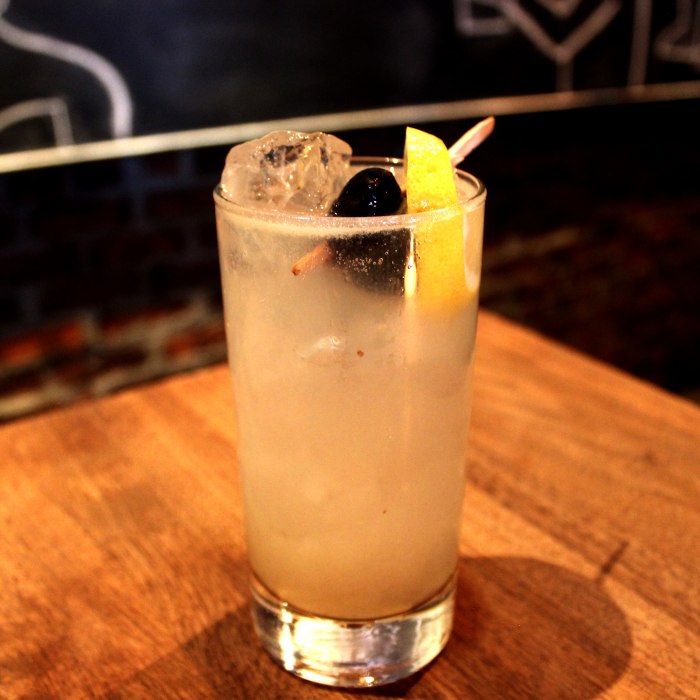
Tom Collins
Der Tom Collins ist ein erfrischender Cocktail, der aus Gin, frischem Zitronensaft, Zuckersirup und Soda besteht. Serviert in einem hohen Glas mit Eis und oft garniert mit einer Zitronenscheibe und einer Kirsche, ist er ein klassischer Drink, der perfekt für warme Tage ist. Sein spritziger Geschmack macht ihn zu einem zeitlosen Favoriten unter Cocktailliebhabern.
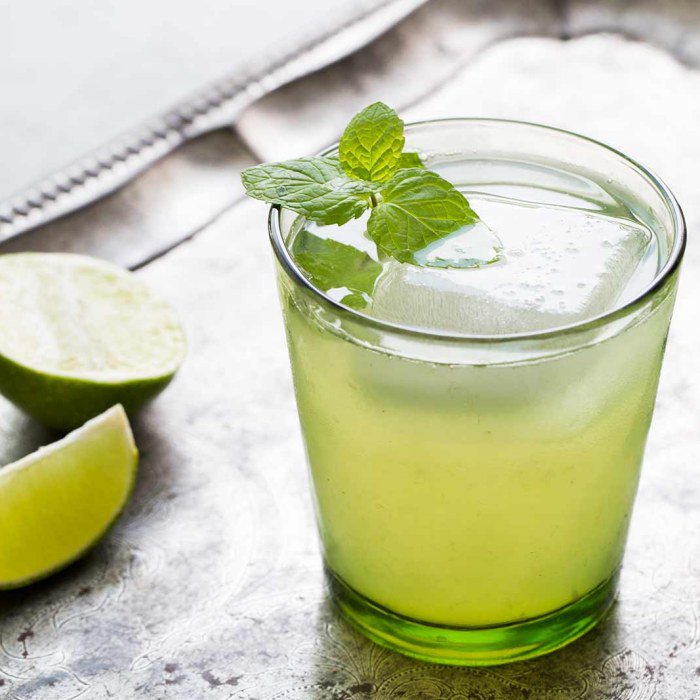
Limeade
Limeade ist ein erfrischender Cocktail, der die spritzige Säure von frischem Limettensaft mit süßem Zuckersirup kombiniert. Oft serviert mit einem Hauch von Minze und Soda, ist dieser Drink perfekt für heiße Sommertage und sorgt für eine belebende Geschmacksexplosion. Genießen Sie Limeade als köstliche Erfrischung zu jeder Gelegenheit!
Citrus Coke
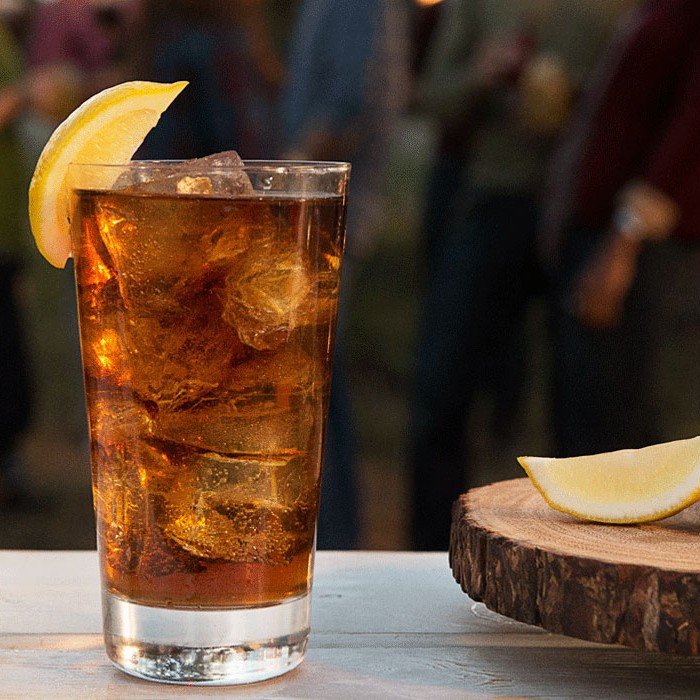
Citrus Coke ist ein erfrischender Cocktail, der die spritzige Süße von Cola mit der lebhaften Frische von Zitrusfrüchten kombiniert. Mit einem Hauch von Limette und Orange verleiht er dem klassischen Getränk eine fruchtige Note, perfekt für warme Sommerabende. Genießen Sie diesen köstlichen Mix, der sowohl einfach zuzubereiten als auch äußerst schmackhaft ist!
Vodka Fizz
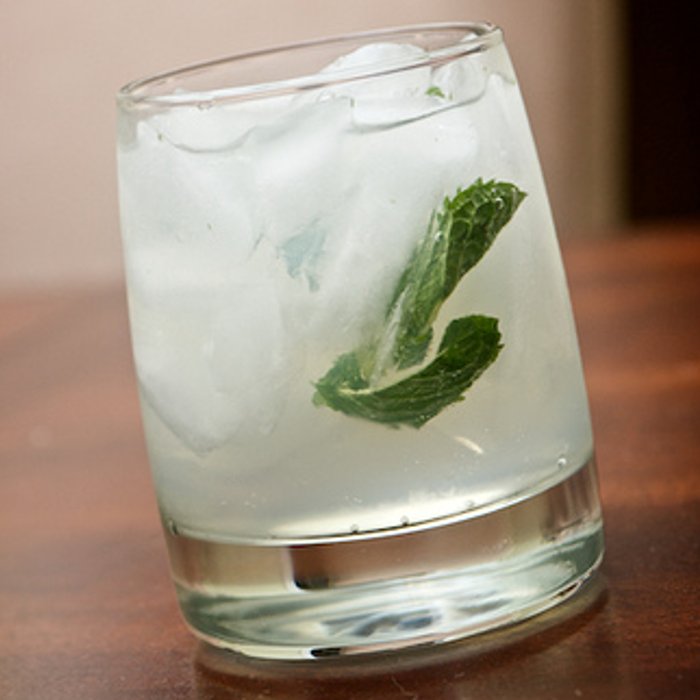
Der Vodka Fizz ist ein erfrischender Cocktail, der die spritzige Kombination aus Wodka, frischem Zitronensaft und sprudelndem Wasser vereint. Mit seiner leichten Süße und dem prickelnden Charakter ist er perfekt für warme Sommertage oder gesellige Abende. Genießen Sie diesen belebenden Drink mit einem Hauch von Zitrusfrüchten!
Advertisement